A carpet can look only mildly tired one day and suddenly seem beyond saving the next – especially after muddy shoes, coffee spills, pet mess or months of daily foot traffic. When people start comparing steam carpet cleaning versus shampooing, they usually want a simple answer: which one gets better results without creating more hassle? The honest answer is that one method is usually better for most modern carpets, but the right choice still depends on the carpet type, the level of soiling and how quickly you need the room back in use.
Steam carpet cleaning versus shampooing: what is the difference?
The main difference comes down to how each method cleans the fibres and what it leaves behind.
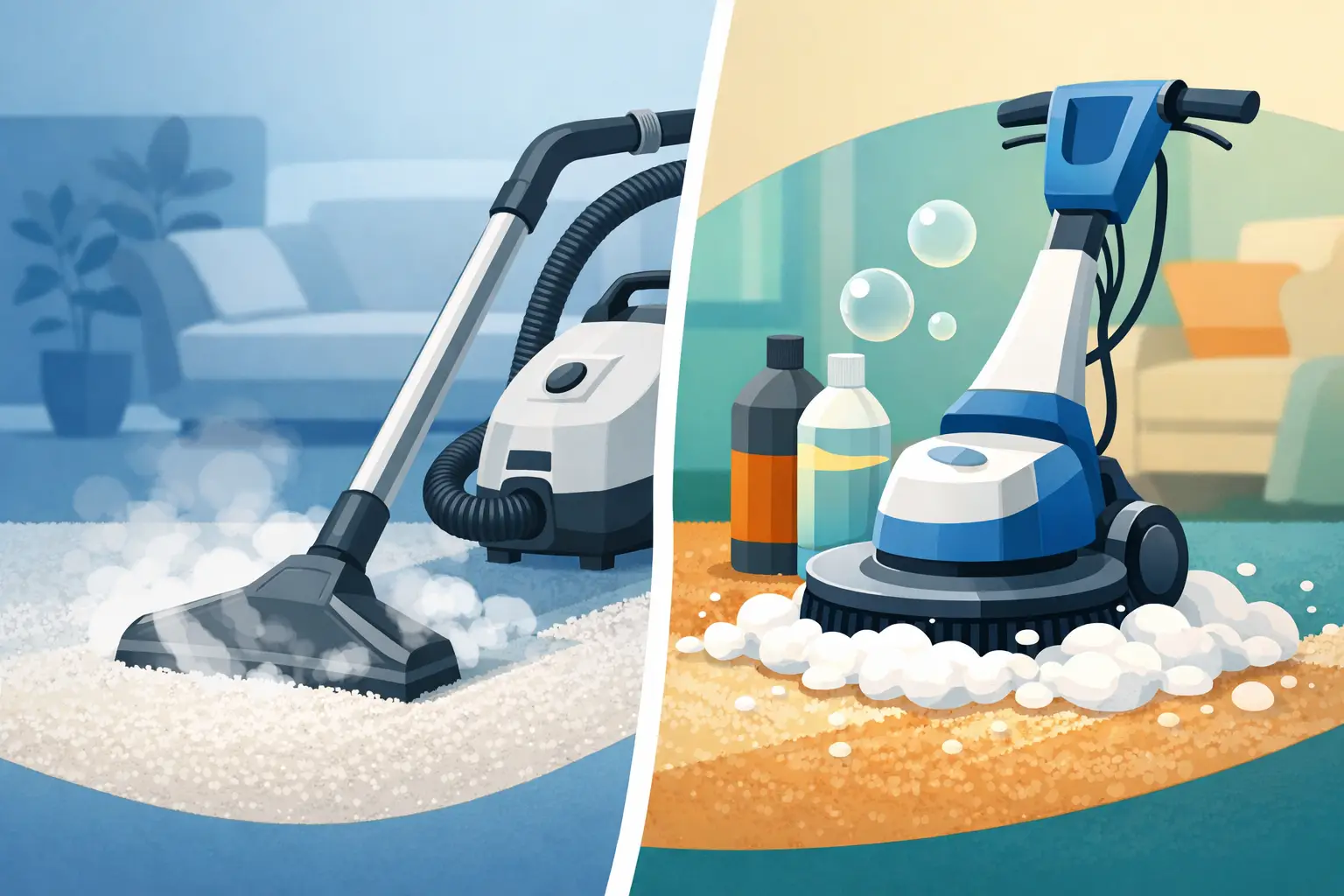
Steam cleaning, often called hot water extraction, uses hot water and cleaning solution pushed deep into the carpet and then extracted back out with powerful suction. Despite the name, it is not just steam drifting over the surface. It is a deeper rinse-style clean designed to remove soil, residues, allergens and a good amount of trapped grime from within the pile.
Carpet shampooing works more like a surface-heavy wash. A foaming detergent is worked into the carpet with a machine or brush, loosening dirt so it can be collected as it dries or extracted afterwards, depending on the system used. It can improve appearance quickly, but it tends to rely more heavily on chemical action and agitation.
That distinction matters because carpets do not just collect visible dirt. In homes and workplaces across London, they also trap dust, pollen, food debris, oily residue from shoes and airborne particles from everyday use. A method that cleans deeply and rinses thoroughly usually gives a better long-term result.
Why steam cleaning is often the first choice
For most domestic and commercial carpets, steam cleaning is the stronger all-round option. It is especially useful when hygiene matters as much as appearance.
Because hot water extraction reaches deeper into the fibres, it can remove embedded dirt rather than just improving the surface look. That makes a noticeable difference in high-traffic areas such as hallways, reception spaces, office walkways and living rooms. It is also generally better for reducing allergens and odours, particularly when a carpet has been holding onto pet smells or stale moisture.
Another big advantage is residue. Shampooing can leave detergent behind if it is not rinsed out properly. That leftover product can attract fresh dirt, so the carpet may look clean at first but become grubby again faster than expected. Steam cleaning, when carried out properly, is designed to extract much more of the solution along with the loosened soil.
For busy households and businesses, that often translates into better value. A clean that lasts longer usually means fewer repeat treatments and less disruption.
Where shampooing still has a place
That said, shampooing is not pointless. It can still work well in certain situations.
If a carpet is heavily soiled on the surface and needs aggressive agitation to break up old dirt, shampooing may help as part of the process. Some older carpets with compacted fibres can respond well to the brushing action, particularly when appearance is the main concern rather than deep sanitisation. It may also be used for spot treatment or as part of a broader restoration approach.
There is a trade-off, though. Shampooing tends to use more product, can leave more residue and often involves longer drying times if too much moisture is left in the carpet. In a home, that is inconvenient. In an office, shop or rental property, it can become a scheduling issue.
So while shampooing can improve a carpet’s look, it is not always the best standalone option for a thorough, low-hassle clean.
Drying time, disruption and everyday practicality
For most customers, the method is only half the question. The other half is what happens after the cleaning team leaves.
Drying time is one of the biggest practical differences in the steam carpet cleaning versus shampooing debate. Professional steam cleaning equipment is built to extract a large amount of water back out of the carpet, which can help reduce drying time significantly. Exact timing varies depending on ventilation, heating, carpet thickness and how heavily soiled the area was, but it is often more manageable than people expect.
Shampooing can leave carpets wetter for longer, especially if a lot of foam or water has been used and extraction is limited. That can mean a room stays out of action longer. It also increases the risk of musty smells if the carpet does not dry properly.
This matters even more in rented properties, end of tenancy cleans and commercial settings. If you are preparing a flat for new occupants, getting an office ready for the next working day or freshening up a showroom before customers arrive, a method with efficient extraction is usually the safer bet.
Which method is better for stains and smells?
People often assume shampooing must be stronger because it looks more like scrubbing. In reality, stain removal depends less on the name of the method and more on the stain type, how old it is and whether the carpet fibres can handle intensive treatment.
Steam cleaning is generally excellent for lifting many common stains because the hot water helps loosen particles and dissolve residues before extraction. It also performs well on odours caused by dirt build-up, food spills and light pet contamination. Because the system removes material from the carpet rather than pushing it around, the result often feels fresher.
Shampooing may help with visible traffic marks and surface dullness, but it is not automatically better for deep or set-in stains. In some cases, vigorous brushing can spread a stain or rough up delicate fibres. That is why professional assessment matters. Wool, synthetic blends and commercial carpet tiles do not all respond in the same way.
If a stain has been sitting for months or has soaked through to the underlay, neither method is a miracle cure. Honest cleaning advice should say that upfront.
What about carpet safety and wear?
A carpet is an investment, whether it is fitted in a family home, rental property or business premises. The wrong cleaning method can shorten its life.
Steam cleaning is often considered safer for many carpets because it focuses on flushing out dirt with controlled heat, solution and extraction rather than relying mainly on scrubbing. Done properly, it can refresh fibres without leaving them stiff or sticky.
Shampooing uses more mechanical agitation, which can be useful in some cases but harsher in others. On delicate carpets, repeated aggressive brushing may contribute to wear, fuzzing or pile distortion. It is not that shampooing always damages carpet – it is that it allows less room for error when the wrong machine, product or technique is used.
That is one reason professional cleaners assess fibre type, backing and condition before choosing a method. A quick, one-size-fits-all approach is rarely the right one.
Cost matters, but so does the result
Some customers start with price, and that is fair enough. Cleaning needs to fit the budget.
Shampooing can sometimes appear cheaper upfront, particularly if it is offered as a basic refresh. But lower initial cost does not always mean better value. If residue causes resoiling, if drying takes longer, or if the result does not deal properly with odours and trapped dirt, you may need the carpet cleaned again sooner.
Steam cleaning often gives better overall value because it is more thorough and tends to leave the carpet in a cleaner, fresher condition for longer. For landlords, that can help present a property well between tenancies. For businesses, it can support a better impression for staff and visitors. For homeowners, it simply means less stress and less living around a carpet that never quite feels clean.
So which should you choose?
If you want the short version, steam cleaning is usually the better choice for deep cleaning, hygiene, odour reduction and longer-lasting results. Shampooing can still be useful in selected cases, especially for surface-level restoration or heavily compacted dirt, but it is rarely the best option for every carpet.
The right method depends on the carpet material, its condition and how the space is used. A busy household with children and pets has different needs from a lightly used spare room. A medical practice, office or shop has different standards again. That is why the best cleaning decisions are based on the actual carpet in front of you, not just the label attached to the machine.
At The Ultimate Cleaners, we always favour the method that makes the job easier for the customer and gives a dependable result – not the one that simply sounds strongest on paper.
If your carpet looks tired, smells less than fresh or keeps collecting dirt faster than it should, the best next step is not guessing. It is getting the carpet assessed properly, choosing the method that suits the fibres and the level of soiling, and giving the room a clean that feels worth the effort when you walk back in.