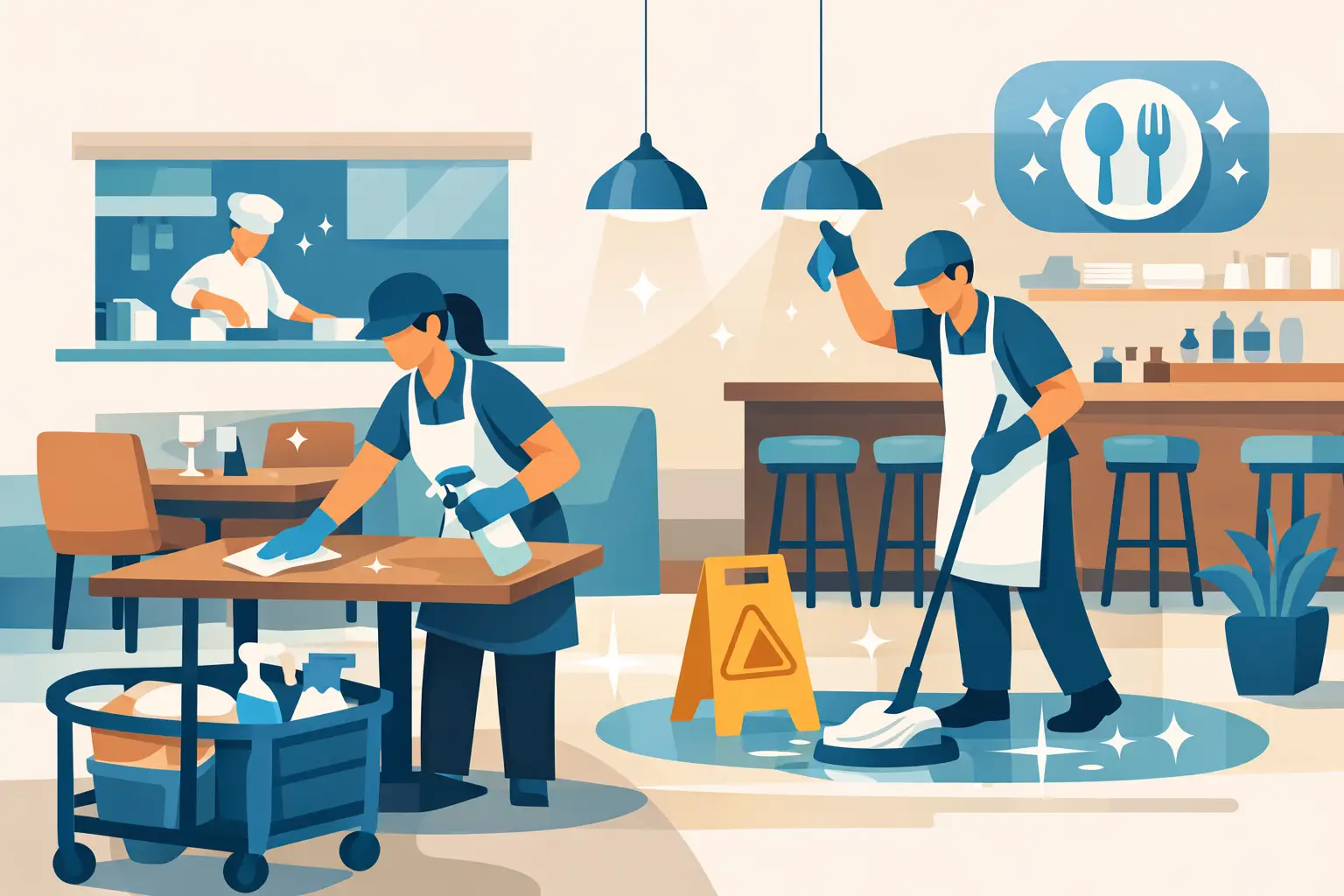
A busy restaurant can look spotless at 5 pm and feel worn out by 8 pm. Grease builds fast, washrooms get hammered, floors take a beating, and one missed cleaning task can quickly turn into a hygiene problem. That is why a clear restaurant cleaning example matters – not as paperwork for a folder, but as a working routine that keeps service moving and standards high.
For restaurant owners and managers, the challenge is rarely knowing that cleaning matters. The real issue is making sure it happens consistently during prep, through service, and after close. Staff are juggling deliveries, bookings, kitchen orders and customer requests. Cleaning needs to fit around that reality, not ignore it.
A practical restaurant cleaning example
The simplest way to build a useful cleaning routine is to split it into daily, shift-based and weekly tasks. That stops everything falling onto the closing team and helps everyone know what good looks like.
A restaurant cleaning schedule should cover front of house, back of house, washrooms, storage areas and touchpoints. It also needs to reflect your operation. A small café with light cooking has different needs from a high-volume takeaway or a full-service restaurant with fryers, grills and a bar. The principle is the same, but the level of cleaning changes.
Before opening
Before doors open, the goal is to start with a clean, safe environment rather than trying to catch up later. Kitchen counters should be sanitised, sinks checked, bins emptied if needed, and prep areas cleared of anything left overnight. Floors need a sweep and spot mop where necessary, especially around cook lines and under prep tables.
In the dining area, tables, chairs, menus, card machines and door handles should be wiped down. Glass at the entrance should be checked because first impressions happen before a guest even sits down. Washrooms need a full reset – toilets cleaned, basins sanitised, mirrors polished, soap and paper topped up, and floors checked.
If you open early, it is worth assigning these checks to named team members rather than leaving them vague. Vague tasks get skipped. Clear ownership saves time.
During service
This is where many cleaning plans fall apart. Staff often assume the proper clean happens later, but a restaurant stays under control when cleaning happens little and often.
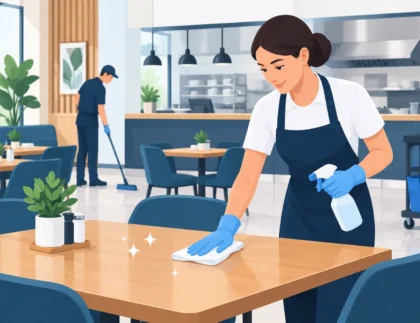
Tables should be wiped between covers, not just cleared. High-touch points such as payment terminals, door handles and bar surfaces need regular attention. Spillages on floors should be dealt with straight away to reduce slip risk. In the kitchen, sanitising cloths need changing regularly, not used all shift until they are spreading more grime than they remove.
Waste control also matters during service. Overflowing bins are unpleasant, but they also make the whole workplace harder to manage. Liners should be changed before bins are packed tight, and external waste areas should be checked if food waste is building up. Pest risk tends to rise where spills, crumbs and rubbish are left to sit.
After closing
The close-down clean is the backbone of the whole routine. This is when the deeper daily jobs happen and when standards for the next shift are set.
Cooking equipment should be degreased according to use. Hobs, grills, splashbacks, extraction surface areas and fryer exteriors all need proper attention. Worktops should be cleaned and sanitised, chopping areas reset, and sinks scrubbed through. Floors should be swept and mopped thoroughly, including edges and harder-to-reach sections that get ignored in a rush.
Front of house needs more than a quick wipe. Chairs should be checked for crumbs and spills, table bases wiped, and service stations cleaned out. If you run a bar, sticky shelving and drip areas should be dealt with daily. Washrooms need another full clean before the team leaves, particularly on busy nights.
Example of a restaurant cleaning checklist by area
A good restaurant cleaning example is specific enough to follow but not so detailed that staff stop reading it. In practice, each area needs its own priorities.
Kitchen
The kitchen carries the biggest hygiene risk, so standards here should be the strictest. Food prep surfaces, handles, taps, switches and fridge seals all need regular cleaning because they are touched constantly. Degreasing is a major part of the job in commercial kitchens. General surface spray alone will not cut through built-up oil around cooking equipment.
Cold storage also needs routine checks. Shelving should be wiped, spills removed quickly, and stock rotation supported by a clean environment. If shelves are sticky or containers are leaking, hygiene slips fast. It is not only about appearance – it affects food safety and staff efficiency too.
Dining area
Customers judge cleanliness quickly, often without realising it. Smudged glass, dirty skirting boards, dusty ledges or stained upholstery can make the whole place feel poorly run, even if the kitchen is immaculate.
The dining area should include regular wiping of tables, chairs, counters, menu holders, condiments, till points and entrance doors. Floors may need spot cleaning during service and a more complete mop after close. For carpeted sections, vacuuming and periodic deep cleaning are worth planning rather than leaving until marks become obvious.
Washrooms
A neglected washroom damages trust. Guests often assume that if the toilets are not being maintained, the kitchen may not be either. That may be unfair, but it is real.
Toilets, basins, taps, mirrors, dispensers, cubicle doors and bins all need frequent checks. Odour control matters just as much as visible cleanliness. In busy venues, one clean at the start and one at the end is rarely enough. Mid-shift inspections are usually needed.
Back-of-house and storage
Staff areas, corridors, stores and delivery points are easy to overlook because customers do not see them. But cluttered and dirty back-of-house spaces affect safety, morale and efficiency.
Dry stores should be kept clean and organised so stock stays protected and accessible. Shelving, corners and floor edges should be part of the routine. Delivery areas need regular sweeping, especially where packaging waste and outdoor dirt are tracked inside.
Daily tasks versus deeper cleaning
One of the biggest mistakes in restaurant cleaning is treating every task the same. Some jobs are daily essentials. Others need weekly, monthly or specialist attention.
Daily work covers obvious hygiene basics – sanitising surfaces, cleaning toilets, mopping floors, removing waste and keeping touchpoints under control. Weekly tasks often include cleaning behind movable equipment, descaling sinks and taps, washing wall tiles, detailing skirting and giving fridges a more thorough clean.
Then there is deep cleaning. This usually covers hard-to-reach grease, ventilation areas, heavier floor build-up, high-level surfaces and specialist kitchen cleaning that goes beyond what the team can realistically manage during normal shifts. If your restaurant has heavy cooking output, deep cleaning may need to happen more often than owners expect. It depends on volume, menu and layout.
Why your example should match your site
A restaurant in Soho serving hundreds of covers a day will not clean in the same way as a neighbourhood café in Muswell Hill. The pace, footfall and kitchen demands are different. That is why copying a generic checklist from online rarely works for long.
Your cleaning plan should reflect your opening hours, staffing levels, customer volume and equipment. If your team closes late, the night clean needs to be realistic. If the venue is compact, storage hygiene may matter more because clutter builds quickly. If you offer takeaway alongside dine-in, entrances and waiting areas may need more frequent checks than seated sections.
A tailored plan is easier to follow because it fits the actual day. That is also where professional support can make a real difference. Some restaurants handle day-to-day upkeep well but need help with regular deep cleans, kitchen degreasing, washroom sanitisation or out-of-hours commercial cleaning to keep standards where they should be.
What good restaurant cleaning looks like in practice
A strong cleaning routine should be visible in the right ways and invisible in others. Customers notice polished surfaces, fresh washrooms and tidy floors. What they should not notice is grime in corners, sticky menus or bins being changed too late.
For managers, good cleaning also means fewer last-minute problems. There is less firefighting, fewer unpleasant surprises during inspections, and less pressure on staff trying to recover standards after a busy week. Clean premises support smoother service. They also make a better place to work.
If you need a restaurant cleaning example, think less about creating a perfect document and more about building a routine your team can actually maintain. The best plan is one that gets used, checked and adjusted when the site changes. Cleanliness in a restaurant is never a one-off job. It is part of the service, and customers can feel the difference the moment they walk through the door.