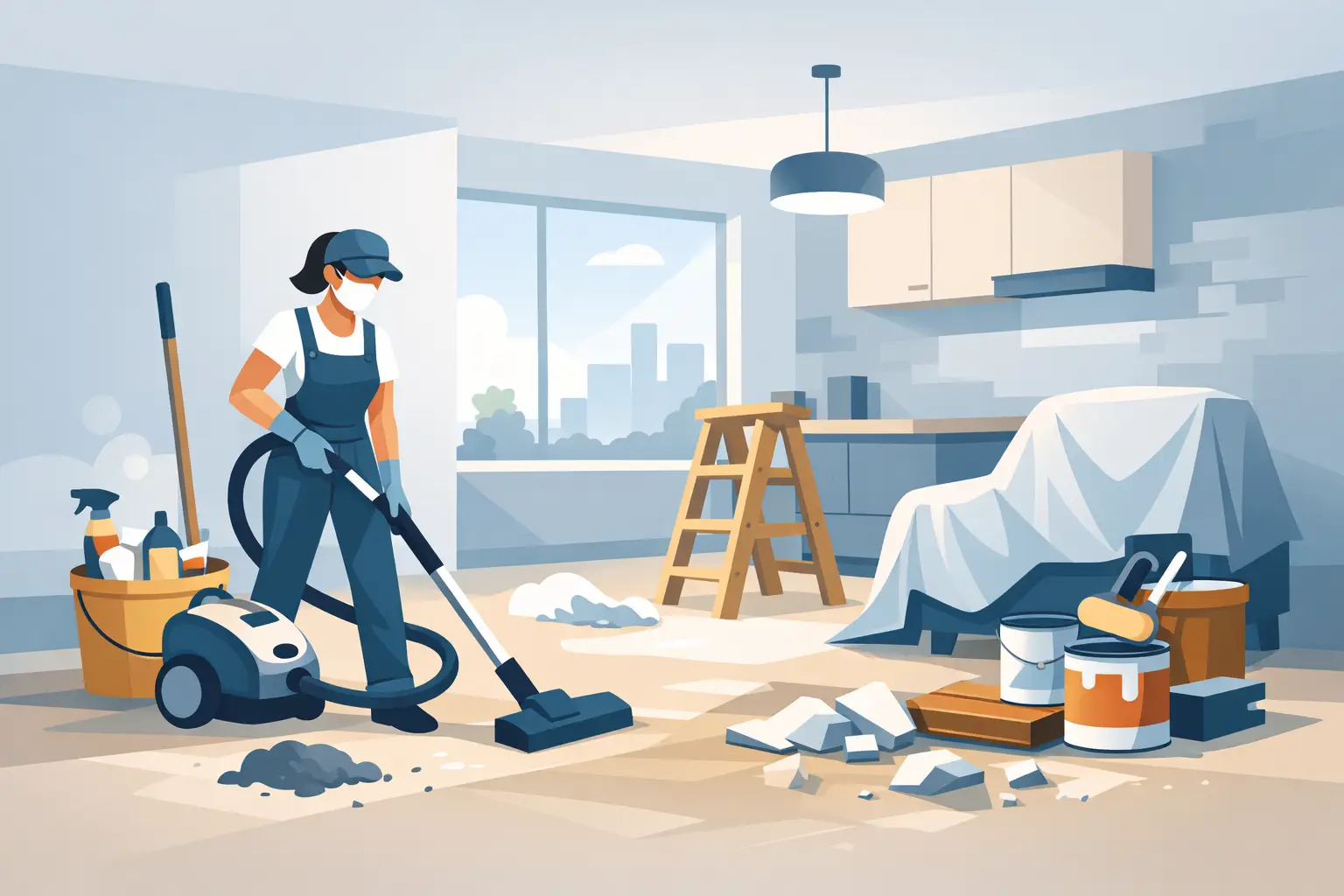
Fresh paint looks great. Fine plaster dust on every surface does not. If you’re wondering how to clean after renovation, the main thing to know is this: post-build cleaning is not just normal cleaning with a bit of extra effort. Renovation dust travels further than most people expect, settles into fabrics and vents, and keeps reappearing if you tackle jobs in the wrong order.
The good news is that a proper plan saves time. Whether you’ve had a kitchen refit, a loft conversion, new flooring, or a full commercial fit-out, the aim is the same – remove dust safely, protect new finishes, and get the space ready to use without dragging the mess through the rest of the property.
Why post-renovation cleaning is different
Builders usually remove the obvious waste, but that is only the first layer. The tricky part is the fine residue left behind from cutting, sanding, drilling, grouting and decorating. This dust lands on skirting boards, inside cupboards, along light fittings, on top of doors and even inside soft furnishings.
It also behaves differently from everyday dirt. If you sweep too aggressively or use the wrong cloth, you can push particles back into the air and end up chasing the same dust for days. On newly installed surfaces, the wrong product can leave marks or dull the finish. That is why knowing how to clean after renovation properly matters just as much as having the right equipment.
Start with safety and preparation
Before you begin, make sure the work is actually finished. There is little point deep cleaning if tradespeople are still sanding wood, sealing surfaces or touching up paintwork. Give fresh materials enough time to cure where needed, especially paint, silicone and varnish.
Then clear out anything loose. Remove packaging, offcuts, labels, protective film and any leftover building materials. Open windows if possible to improve ventilation, but be sensible if there is heavy outdoor traffic or pollen that could add to the mess.
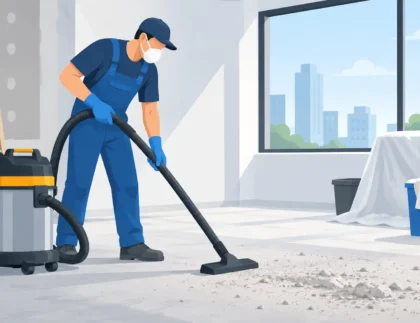
A basic post-renovation kit should include a vacuum with a good filter, microfibre cloths, a soft broom or dust mop, warm water, gentle cleaning products, rubbish sacks and gloves. For heavier jobs, a specialist dust extractor or professional-grade vacuum makes a big difference. Standard vacuums can struggle with fine construction dust, and some simply blow part of it back into the room.
How to clean after renovation in the right order
Order matters. If you clean the floor first and then dust shelves, you create extra work. The safest approach is top to bottom, dry removal first, wet cleaning second, detail work last.
Start high. Ceilings, cornices, extractor covers, curtain rails and light fittings collect more dust than people realise. Use a dry microfibre cloth or vacuum attachment rather than soaking these areas straight away. Once the highest points are clean, move to walls, doors, frames, skirting boards, radiators, sockets and hard surfaces.
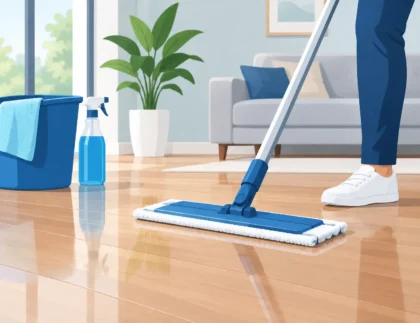
Floors should come near the end. Vacuum thoroughly, including edges and corners, and then mop only if the flooring type allows it. New timber, laminate, stone and tiles all need slightly different care. Too much water too soon can be a mistake, particularly if grouting or sealant is still settling.
Room-by-room cleaning after building work
Kitchens
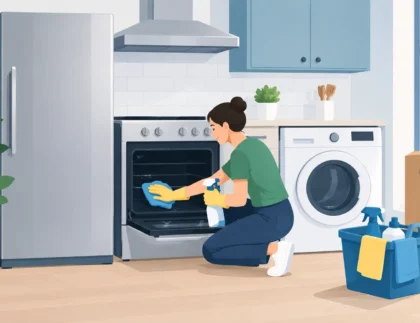
Kitchens usually need more attention because dust settles into cupboards, drawer runners, splashbacks and appliance gaps. Empty every cupboard and wipe both the inside and the outer faces. Pay close attention to tops of cabinets, especially if they were left uncovered during the works.
Appliances should be cleaned carefully. Stainless steel marks easily, and induction hobs can scratch if grit is dragged across them. Vacuum crumbs and dust first, then wipe with a soft cloth and suitable cleaner. If the renovation included new units or worktops, check the fitter’s care instructions before using anything strong.
Bathrooms
Bathrooms often look cleaner than they are because hard surfaces hide fine dust until steam or water brings out streaks. Wipe tiles, mirrors, taps, ledges and extractor fans thoroughly. Remove grout haze carefully if any has been left behind, but avoid abrasive pads on new fittings.
If sealant has just been applied, give it time before heavy cleaning. It’s one of those small details that can save you from doing the same job twice.
Living areas and bedrooms
Soft furnishings trap renovation dust fast. Vacuum sofas, mattresses, headboards and curtains, even if they were covered. If possible, wash removable fabrics after the main cleaning is done so they do not pick up new dust while surfaces are still being tackled.
Wardrobes, shelves and bedside units need internal cleaning too. One of the most common post-renovation frustrations is putting everything back neatly, then finding a layer of dust on clothes and folded linen the next day.
Offices and commercial spaces
In workplaces, presentation matters as much as hygiene. Desks, screens, sockets, skirting, reception areas and meeting rooms all need detailed attention after refits or repair works. Dust around cabling, vents and workstation edges can quickly make a newly updated office look unfinished.
For shops, restaurants, clinics and other customer-facing premises, there is also a practical issue: construction residue can affect air quality and first impressions. In those settings, speed matters, but so does doing the job thoroughly enough that staff can return without spending the first day wiping everything down again.
The surfaces that need extra care
Not every surface should be treated the same way. New paintwork can scuff if scrubbed too hard. Natural stone may react badly to acidic products. Timber floors can swell if over-wet mopped. Glass often needs more than one pass because renovation dust leaves a stubborn film rather than obvious marks.
If you are unsure, start with the gentlest method. Dry dust first, then use a barely damp cloth with a mild solution. Test products on an inconspicuous area. This is especially relevant after high-end renovations, where a rushed clean can undo some of the finishing work.
What people often miss
The obvious surfaces get cleaned first. The hidden ones are what keep the property feeling dusty afterwards. Air vents, extractor covers, tops of door frames, inside drawers, behind radiators, window tracks and the edges of blinds are common trouble spots.
Lighting is another one. Once daylight hits a room, missed dust on pendant fittings or recessed lights becomes much more visible. The same goes for internal glazing and black-framed doors, which show residue quickly.
If the property had carpet fitted during the works, take extra care. Fine dust can sit deep in the fibres even after a quick vacuum. Multiple passes are often needed, and in some cases professional carpet cleaning is the better option.
When a DIY clean is enough and when it isn’t
A light refresh after minor decorating is usually manageable. If the work was limited to one room and there was good dust protection in place, a structured clean can get the space back to normal without much drama.
It is different after larger renovations, open-plan refurbishments or commercial works. More square footage means more dust movement, and more trades usually means more residue from different materials. If there is paint splatter, adhesive marks, builders’ dust throughout ventilation points, or a deadline for handover, professional post-construction cleaning is often the more sensible route.
That is especially true for busy households, landlords preparing a property, or managers reopening a workspace. Time has a cost. So does re-cleaning a job that was not done properly the first time.
A practical approach for London properties
In London, renovation cleaning often comes with a few extra complications – limited storage space, tight stairwells, shared entrances, parking restrictions and neighbours close by. Dust control matters more in flats and converted properties because mess spreads easily beyond the work area.
For that reason, many people choose to book a one-off deep clean once the builders are fully finished. A professional team can move through the property in the right sequence, use eco-friendly products where appropriate, and deal with the detail work that tends to eat up an entire weekend. For homes and commercial spaces alike, that can be the difference between a place looking newly renovated and actually feeling ready.
If you do decide to bring in help, look for a company that understands post-build cleaning rather than standard housekeeping alone. The tools, timing and attention to residue are different. At The Ultimate Cleaners, that is exactly the kind of job we take on for clients who want the dust gone properly, not just pushed around.
A renovated space should feel like a fresh start, not one more task hanging over you. Get the order right, treat new surfaces with care, and do not underestimate the dust you cannot see at first glance.