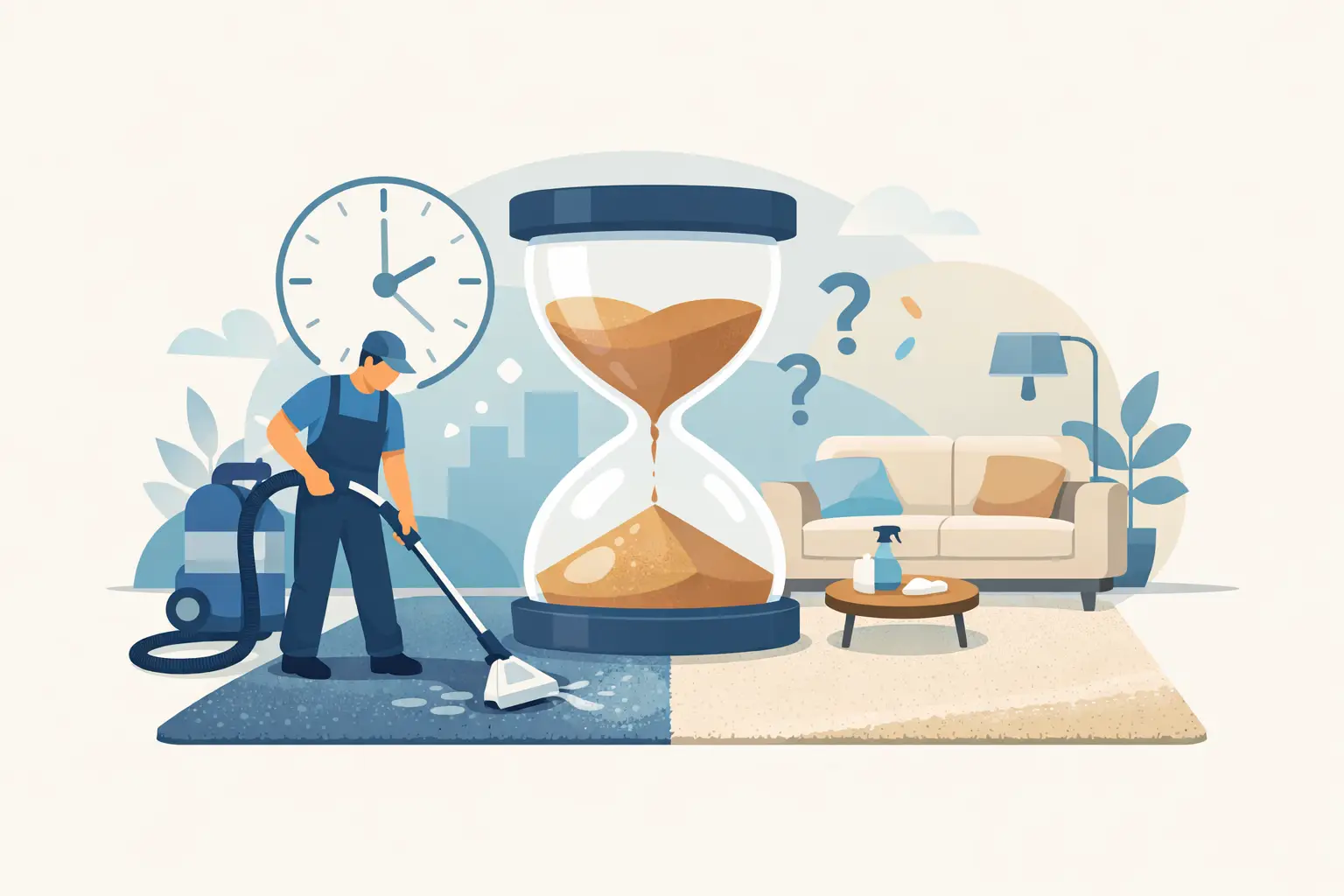
You have the cleaner booked, the furniture is about to be moved, and one question matters more than most – how long does carpet cleaning take? The short answer is usually between 20 minutes and an hour per room, with extra time for setup, stain treatment and drying. The real answer depends on the size of the space, the condition of the carpet, and the cleaning method being used.
If you are planning around work, school runs, tenants moving out, or office opening hours, timing matters. Nobody wants to block out half a day if the job will take 90 minutes, and nobody wants to expect a quick visit when the carpet needs deep treatment. That is why it helps to know what actually affects the clock.
How long does carpet cleaning take in most homes?
For a standard home appointment, professional carpet cleaning often takes between 1 and 3 hours on site. A small flat with one or two rooms can be finished faster. A larger house with stairs, landings and several bedrooms will naturally take longer.
A good working estimate is around 20 to 40 minutes per average room for the cleaning itself. Add time for inspection, preparing the equipment, pre-spraying, treating marks, and packing up afterwards. If there is heavy soiling or pet staining, the technician may need more than one pass, and that pushes the timeframe up.
In practical terms, a lounge and one bedroom might take about 1.5 to 2 hours from arrival to finish. A three-bedroom property with stairs and hallway could take 2.5 to 4 hours. If the carpets have not been cleaned in years, or the property is at end of tenancy stage, allow more time rather than less.
What affects carpet cleaning time?
The biggest factor is size. A box room is not the same as a large open-plan reception area, and a narrow hallway is much quicker than a fully furnished lounge. More carpeted area means more vacuuming, more machine passes and more drying time to think about.
Condition matters just as much. Light maintenance cleaning is relatively straightforward. Carpets with built-up dirt, food spills, muddy traffic lanes or pet odours need slower, more detailed work. Stain removal is especially variable because some marks lift quickly while others need specialist products and repeated treatment.
Furniture also changes the pace. An empty room is faster to clean than one filled with sofas, beds, desks and side tables. Some items can be worked around, some can be carefully moved, and some need to stay where they are. That means more stopping and starting, which adds time.
Then there is fibre type. Wool carpets often need a more careful approach than synthetic ones. Delicate materials, older carpets, or carpets with shrinkage risk are not jobs to rush. A professional cleaner should adapt the method to the carpet, not force speed at the expense of results.
Cleaning method makes a big difference
When people ask how long does carpet cleaning take, they often mean the full process, but there are really two timings to think about – cleaning time and drying time.
Hot water extraction, sometimes called steam cleaning, is one of the most common deep-cleaning methods. Despite the name, it does not usually fill the carpet with steam in the way people imagine. It uses heated water and cleaning solution, then extracts the dirt and moisture back out. This method gives a thorough clean, but it usually leaves the carpet damp for several hours afterwards.
Low-moisture cleaning can be quicker to dry and is sometimes used where fast turnaround matters, such as offices or commercial spaces. The trade-off is that it may not always deliver the same level of deep flushing on heavily soiled carpets. The right method depends on the carpet, the level of dirt and how quickly the area needs to be back in use.
A reliable cleaning company will explain that balance clearly. Fast is useful, but only if the carpet is actually properly cleaned.
Typical drying times after carpet cleaning
Drying usually takes longer than the cleaning itself. After hot water extraction, carpets often dry in 4 to 8 hours, though it can be quicker or slower depending on airflow, heating and the thickness of the pile. In some cases, especially during colder or more humid weather, drying can stretch closer to 12 hours.
Low-moisture methods may dry in 1 to 3 hours. That can be helpful in busy households or commercial settings where rooms need to be used again quickly.
Ventilation helps a lot. Opening windows, running heating sensibly, or using air movement can reduce drying time. Heavy pile carpets, poor airflow and cool weather will slow it down. So if your main concern is when you can walk on the carpet or move furniture back, ask about drying as well as cleaning.
How long does carpet cleaning take for offices and commercial spaces?
Commercial carpet cleaning follows the same principles, but scale and access make a difference. A small office may take only a couple of hours. A larger floor with desks, meeting rooms and corridors can take much longer, especially if the work is done in stages to avoid disrupting staff.
Out-of-hours cleaning is often the best option for businesses. It allows cleaners to work more efficiently and reduces interruption. In some premises, low-moisture methods are preferred because staff can return sooner. In others, a deeper extraction clean is worth the longer drying time because the carpets carry more foot traffic and more embedded dirt.
Restaurants, retail spaces, medical sites and shared commercial areas all come with their own practical requirements. Access, safety and timing around trading hours matter just as much as the size of the carpeted area. That is why proper scheduling is part of the service, not an afterthought.
Ways to help the job move faster
You do not need to do the cleaner’s job for them, but a bit of preparation can shave time off the appointment. Clearing small items from the floor helps straight away. Things like toys, laundry baskets, loose cables and lightweight chairs all slow the process if they need to be moved room by room.
If there are problem areas, point them out at the start. Fresh stains, pet accidents and high-traffic lanes can then be treated early rather than discovered halfway through. It also helps to mention parking, access restrictions or building rules in advance, especially in London where getting equipment in and out is not always simple.
For offices and commercial properties, planning access is even more useful. If the cleaner can work with fewer interruptions and clear entry to the relevant areas, the whole appointment tends to run more smoothly.
When the job takes longer than expected
Sometimes a carpet cleaning visit runs over, and it is not always a bad sign. A cleaner who takes extra time on stubborn staining, heavily soiled areas or careful fibre treatment is often doing the job properly. Rushing through difficult patches just to finish on the dot rarely gives the best result.
That said, you should still expect realistic time estimates before the appointment. A professional team should be able to give you a sensible range based on room count, property type and carpet condition. If there are likely delays because of access, heavy furniture or specialist treatment, they should tell you upfront.
For customers across London, that clarity matters. Busy households, landlords on changeover days and managers preparing commercial spaces all need timings they can actually work with.
So, what should you allow in your day?
If you want a simple rule of thumb, allow 1 to 3 hours for cleaning in an average home and several more hours for drying. For larger houses or heavily soiled carpets, give it longer. For offices and commercial spaces, timing varies more widely, but the same idea applies – cleaning time is one part of the schedule, drying time is the other.
The best approach is to book with a company that asks the right questions before giving you a time estimate. Room size, carpet type, level of soiling and access all matter. At The Ultimate Cleaners, that practical approach is part of making the job easier from the start.
A clean carpet should fit around your day, not throw it off course – and with the right plan, it usually can.