A waiting room can look spotless and still fall short where it matters most. In a medical setting, cleaning is not just about presentation. It is about reducing risk, protecting patients, supporting staff, and keeping the whole site ready for inspection, day after day. That is why any sensible guide to medical facility cleaning has to go beyond a quick wipe-down and focus on what actually keeps a healthcare environment safe.
Medical facilities deal with a mix of challenges that standard commercial cleaning does not. There are vulnerable patients, high-touch surfaces, bodily fluids, stricter compliance expectations, and rooms that need different levels of attention depending on how they are used. A GP surgery, dental clinic, physio practice, diagnostic centre, and private treatment room may all sit under the same broad category, but the cleaning plan should never be one-size-fits-all.
What makes medical facility cleaning different
The biggest difference is consequence. In a typical office, poor cleaning might lead to dust build-up, complaints, or a tired-looking space. In a healthcare environment, it can contribute to cross-contamination, illness transmission, and serious reputational damage. Patients notice cleanliness quickly, and so do regulators.
There is also the issue of traffic. Reception areas, toilets, consulting rooms, corridors, staff kitchens, and treatment spaces all carry different risks. Some areas need repeated touchpoint cleaning through the day. Others need careful end-of-day sanitation. The right approach depends on patient volume, service type, room turnover, and whether the space handles invasive procedures or only general consultations.
That is why the best cleaning plans are built around the facility itself. A small private clinic in London may need an agile schedule with early morning cleans and lunchtime refreshes. A larger site may need a combination of daily cleaning, periodic deep cleaning, and documented checks throughout the day.
A guide to medical facility cleaning starts with zoning
If you want a medical site cleaned properly, start by splitting it into zones based on risk and use. This keeps standards clear and helps cleaning teams prioritise the right tasks at the right time.
Low-risk areas usually include reception desks, waiting areas, offices, and general corridors. These still need frequent attention because they carry heavy footfall and constant hand contact, but the cleaning method is generally more straightforward.
Medium-risk areas include consultation rooms, standard treatment rooms, and patient toilets. These spaces need closer attention to surfaces, furniture, hand-contact points, and washroom hygiene. Turnaround times matter here, especially where multiple appointments happen back to back.
High-risk areas may include minor procedure rooms, decontamination spaces, or any room where exposure to bodily fluids is more likely. These areas need stricter protocols, the right products, and trained handling. This is where shortcuts create problems quickly.
Zoning also helps with colour-coded equipment, product selection, and task tracking. It reduces the chance that the same cloth, mop, or cleaning process is carried from a lower-risk space into a higher-risk one without proper control.
The areas that need the most attention
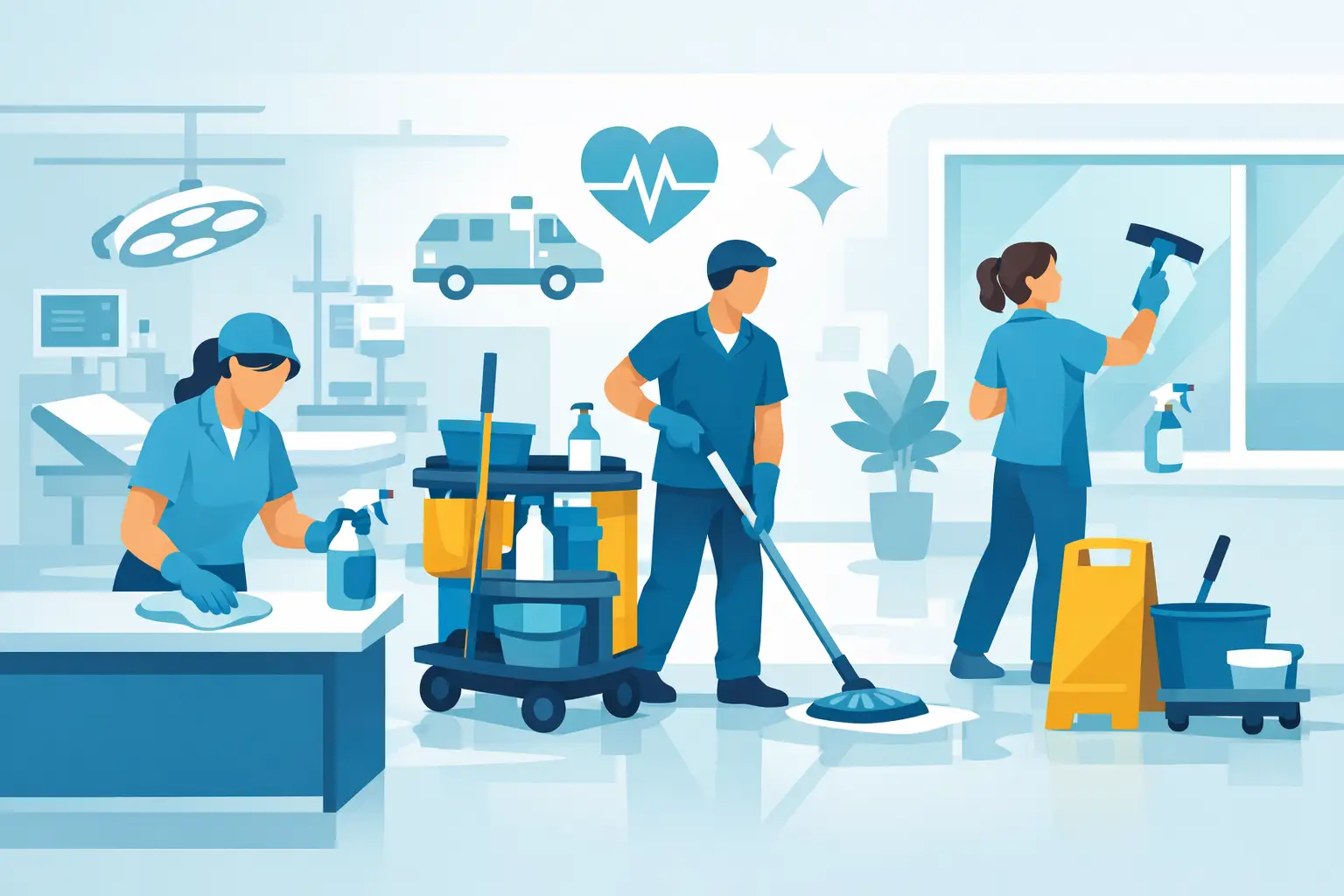
A polished floor often gets noticed first, but the surfaces that matter most are usually the ones people touch without thinking. Door handles, push plates, reception counters, card machines, armrests, light switches, tap handles, flush buttons, and treatment chairs can all become problem points if they are not cleaned often enough.
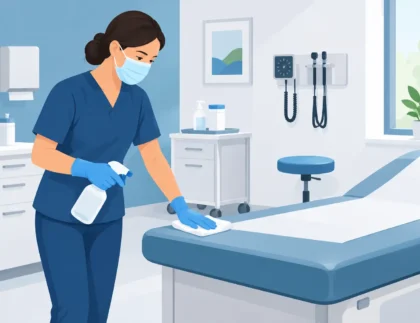
In waiting rooms, chairs, side tables, children’s play surfaces, and self-check-in screens deserve close attention. In consulting and treatment rooms, the focus shifts to beds, couches, stools, equipment housings, trays, sinks, and any surface touched by both staff and patients.
Washrooms are another key area. A medical toilet that looks neglected will damage trust immediately. More importantly, poor washroom cleaning can affect infection control across the site. Soap dispensers, hand dryers, bins, cubicle locks, and surrounding floors all need routine checks, not just a single daily clean.
Staff areas matter too. Break rooms, shared kettles, fridge handles, locker doors, and internal office equipment are easy to overlook. That is a mistake. Staff can carry contamination from one area to another just as easily as visitors can.
Products and methods matter more than strong fragrance
In healthcare cleaning, a strong smell is not proof of a better result. In fact, heavily perfumed products can be a poor fit for some patients and staff, particularly in enclosed clinics or spaces treating people with respiratory sensitivity. What matters is whether the product is suitable for the surface, effective for the cleaning task, and used correctly.
This is where many facilities get caught out. Using the wrong chemical can damage equipment, leave residues, or fail to sanitise properly. Using the right chemical in the wrong dilution can be just as ineffective. Contact time matters as well. If a disinfectant is wiped away too quickly, it may not do the job it is meant to do.
Eco-friendly products can work well in medical environments, but they need to be chosen carefully. The goal is not to swap performance for marketing. It is to find products that support hygiene standards while also being safer for indoor air quality and daily use. That balance is often ideal for busy clinics that want a clean, fresh environment without harsh after-effects.
Training and consistency are what keep standards high
Even a good checklist will fail if the team carrying it out is rushed, unclear, or poorly trained. Medical cleaning needs consistency more than occasional deep effort. A surface either gets cleaned to the required standard every time, or it does not.
Clear procedures help. Staff should know which products are used in which rooms, how cloths and mop heads are managed, what PPE is required for certain tasks, and what to do if they encounter spills or hazardous waste. They should also understand the difference between cleaning for appearance and cleaning for hygiene.
Documentation has its place here. Not every clinic needs an overly bureaucratic system, but a visible cleaning record can reassure both managers and visitors. It also helps identify missed tasks, recurring issues, or pressure points in the daily routine.
Scheduling around patients, not against them
One of the more practical parts of this guide to medical facility cleaning is timing. The best cleaning plan is not always the one with the longest task list. It is the one that fits how the facility actually runs.
Some clinics are best cleaned before opening, so treatment rooms and shared spaces are fully prepared for the first patient. Others need support during opening hours because toilets, waiting areas, and touchpoints deteriorate quickly under heavy footfall. Many need both, with a final clean at the end of the day to reset the site properly.
There is a trade-off here. More frequent daytime cleaning improves hygiene control, but it needs to be discreet and well organised so it does not disrupt appointments. Out-of-hours cleaning avoids that issue, but it may leave busy touchpoints unmanaged for too long during the day. The right answer depends on patient flow, staffing, and the type of care provided.
Audits, presentation, and patient trust
Patients may not know your cleaning schedule, but they notice signs of control. A tidy reception, streak-free glass, sanitised washrooms, clean skirting, and dust-free corners all signal competence. In healthcare, that first impression carries extra weight.
Managers also need cleaning that stands up to scrutiny. That means tasks are not just done, but done in a way that can be monitored, repeated, and improved. A clinic preparing for an inspection or trying to maintain high private patient standards cannot rely on informal routines and crossed fingers.
Professional support often makes the difference here. A specialist cleaning team can build a schedule around the facility, adapt to changing appointment patterns, and keep standards steady without adding pressure to reception or clinical staff. For London clinics balancing patient care with day-to-day operations, that reliability saves time as much as it protects hygiene.
When to review your current cleaning setup
If complaints are rising, washrooms never seem to stay fresh, touchpoints are being missed, or staff are handling cleaning tasks between appointments, it is probably time for a review. The same applies if your site has expanded, changed services, or increased patient volume without updating the cleaning plan.
A proper review looks at more than cost. It considers risk areas, timing, product suitability, and whether the current routine matches the reality of the building. Sometimes a small change in frequency or zoning solves the issue. Sometimes the whole schedule needs tightening up.
For medical spaces, good cleaning should feel invisible in the best way. Patients walk into a calm, fresh, orderly setting. Staff can focus on care. Managers are not chasing missed jobs or reacting to hygiene concerns. That is the standard worth aiming for, and it starts with a cleaning plan built for the space you actually run.