
If you are trying to keep a home calm, an office productive or a shop ready for the next trading day, it is fair to ask: can cleaners work after hours? In many cases, yes – and for a lot of London households and businesses, it is the most practical option. The real question is not whether it can be done, but whether after-hours cleaning is the right fit for your property, your schedule and your security requirements.
Can cleaners work after hours for homes and businesses?
After-hours cleaning usually means any visit outside standard daytime working hours. That might be early morning before staff arrive, evening cleaning after a workplace closes, or later appointments for homes where the occupants are out all day. For commercial properties, this is often the norm. For domestic cleaning, it depends more on access, building rules and the type of clean required.
In offices, restaurants, retail units and other busy sites, after-hours cleaning is often the easiest way to get proper results without people walking through wet floors, freshly cleaned loos or work areas that need time to dry and settle. In homes, evening appointments can help busy professionals, landlords and tenants who cannot be available in the middle of the day.
That said, not every job suits a late slot. Carpet cleaning, post-build cleaning and deep cleaning can involve equipment, noise or longer time on site, so the timing needs more thought. It depends on the property and how much disruption is acceptable.
Why after-hours cleaning makes sense
The biggest advantage is simple: less disruption. If a cleaner arrives after your team has gone home, desks, meeting rooms, kitchens and toilets can be cleaned properly without anyone working around the process. That usually leads to a better standard of cleaning because the team can get on with the job instead of dodging people, calls and deliveries.
For commercial clients, there is also the question of presentation. A clean office in the morning sets the tone for staff and visitors. A spotless restaurant or showroom before opening matters just as much. In customer-facing businesses, cleaning after hours protects the appearance of the space during trading hours.
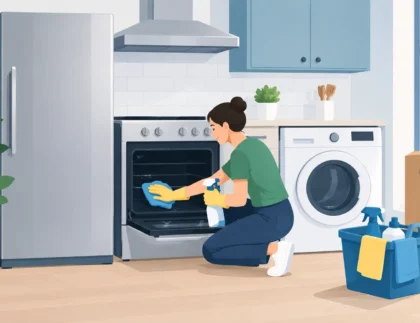
For domestic clients, convenience is the main win. Many London households are not empty during the day in a neat, predictable way. Some people commute, some work shifts, some are juggling school runs and some simply do not want the interruption. An evening slot can be easier to manage, especially for one-off cleans, move-in or move-out cleaning, and pre-tenancy preparation.
There is another practical benefit too: access. In some buildings, especially commercial premises, certain areas are only fully available once staff have left. Kitchens, washrooms, communal areas and reception spaces can be cleaned faster and more thoroughly when they are empty.
When after-hours cleaning is the better option
If your workplace has steady footfall from morning to evening, after-hours cleaning is usually the sensible choice. Offices, medical settings, restaurants, gyms, shops and shared workspaces all benefit from cleaning when clients, staff or patients are not moving through the property.
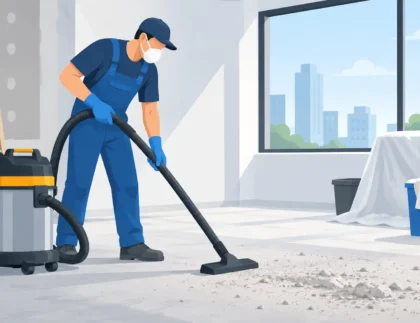
It is also useful for specialist work. Post-construction cleaning, spring cleaning and deep cleaning often need uninterrupted time. The team may need to move equipment, focus on high-detail tasks or spend longer in one area than a routine clean would allow. Doing that after hours can make the process more efficient.
For landlords and letting agents, timing often matters more than the clock itself. If a tenancy ends late in the afternoon and new occupants are arriving the next morning, an evening clean may be the only realistic way to turn the property around quickly.
What to consider before booking an evening cleaner
The first point is access. If no one will be on site, the cleaner needs a reliable way in and out. That could mean a key handover, alarm instructions, concierge access or a named contact. This is where a professional company makes a difference, because the process should be clear from the start rather than improvised on the day.
Security matters too. Businesses often need cleaners who can work around alarms, lock-up procedures, confidential areas and stock rooms. Homes may involve keyholding or entry to blocks with porter or code access. After-hours work is perfectly normal, but it has to be organised properly.
Then there is noise. Standard cleaning is usually manageable in the evening, but some services can create more disturbance than others. Vacuuming, machine carpet cleaning or post-build work may not suit late-night hours in every residential block. If you live in a flat or manage a mixed-use property, it is worth checking any restrictions before booking.
You should also think about the scope of the clean. A regular office clean after hours is straightforward. A full deep clean of a large site is more involved and may need a longer window, more staff or a split shift. The more detail there is in the brief, the easier it is to match the right team and time slot.
Can cleaners work after hours in residential buildings?
Yes, but domestic after-hours cleaning has a few more variables than commercial cleaning. In a house, evening access is usually simpler if the client is home. In flats, there may be entry systems, parking issues or building quiet hours to consider.
Routine house cleaning can often be done in the early evening without a problem, especially if the work is focused on kitchens, bathrooms, dusting and general tidying. Later-night appointments may be less practical depending on neighbours and the building layout. Deep cleans, end of tenancy cleaning and move-related cleans are often easier because the property may be empty or nearly empty.
If children, pets or shift workers are in the property, the best slot may not be the latest one. Sometimes after hours really means just after the working day, not late at night. The right timing is the one that gives the cleaner enough access while keeping the household comfortable.
Is after-hours cleaning more expensive?
Sometimes, yes. Sometimes, not by much. Pricing depends on the hour, the type of cleaning, the number of cleaners needed and whether the work is regular or one-off.
A routine contract in the evening may be priced competitively because it is scheduled and predictable. A last-minute late-night deep clean is different. That may require short notice staffing, specialist equipment or a longer booking window. If you need weekend, overnight or emergency work, expect that to affect cost.
The better way to look at it is value rather than just hourly rate. If after-hours cleaning means no lost trading time, no disruption to staff and a property that is ready to use first thing, the convenience can easily justify the spend.
How to make after-hours cleaning run smoothly
A good after-hours clean starts with a clear brief. The cleaner should know which rooms need attention, what standard is expected, whether consumables need topping up and if there are any priority areas. If there are alarm codes, lock-up steps or site rules, those should be agreed in advance.
It also helps to be realistic. If you want a full deep clean of a large office in a short evening window, the job may need a bigger team. If you want quiet cleaning in a residential block after 9 pm, some tasks may need to be limited. A reliable company will tell you what is workable instead of promising everything and rushing the result.
For London clients, flexibility matters. Travel, parking, access restrictions and building management rules all affect timing. That is why local experience counts. A company used to working across homes, offices and specialist commercial sites will usually spot the practical issues early and plan around them.
At The Ultimate Cleaners, this kind of flexibility is part of the job. Some clients need regular evening office cleaning, others need a one-off late slot before handover, and others simply want a clean arranged around a hectic week. The aim is the same every time – make cleaning easy, keep disruption low and leave the property ready for what comes next.
The bottom line on after-hours cleaning
So, can cleaners work after hours? Absolutely – and for many homes and businesses, it is the smartest way to get the job done. The key is matching the timing to the property, the cleaning task and the level of access available.
If you are weighing up daytime versus evening cleaning, think less about the clock and more about what will make the clean effective, practical and stress-free. The best cleaning slot is the one that fits your life or your operation without getting in the way of it.