You do not want to be scrubbing a greasy oven at 10 pm the night before key handover. That is usually how deposit stress starts. If you are wondering how to prepare for end of tenancy cleaning, the smartest move is to get organised early, know what your landlord or agent will check, and deal with the jobs that slow everything down.
End of tenancy cleaning is not the same as your usual weekly tidy-up. It is a top-to-bottom clean carried out with inspection in mind. That means limescale on taps, dust on skirting boards, marks on doors, crumbs behind appliances, and the kind of bathroom grime nobody notices until moving day. If you plan properly, the job feels manageable. If you leave it all until the final 24 hours, it can turn into a rush that costs time, energy, and sometimes part of your deposit.
How to prepare for end of tenancy cleaning without the panic
Start with your tenancy agreement and inventory report. These documents tell you what condition the property was in when you moved in and what standard it is expected to be returned in. If the inventory says the oven was professionally cleaned, or the carpets were spotless, assume those points will be checked closely.
This is also where expectations need a bit of realism. You are usually expected to return the property in clean condition, but not to reverse fair wear and tear. A faded carpet is different from a stained one. Small ageing to paintwork is different from heavy scuffs and marks. Knowing that distinction helps you focus on cleaning issues rather than worrying about every minor sign of use.
Once you know the standard you are aiming for, set your cleaning date properly. Ideally, end of tenancy cleaning should happen after your belongings are out and before the final inspection. An empty property is much easier to clean thoroughly, and it gives you a clear view of missed areas.
Clear the property before you clean
The first practical step is decluttering everything. Remove furniture if it is your own, empty cupboards, clear the fridge, and take all rubbish out of the property. Cleaning around packed boxes or half-empty wardrobes wastes time and leads to missed spots.
This is also the moment to deal with the things tenants often forget. Check loft spaces, balconies, under beds, bathroom cabinets, and kitchen drawers. Leaving behind food, toiletries, hangers, cables, or old cleaning products can make an otherwise clean property look unfinished.
If bins are full, arrange disposal before inspection day. A clean kitchen with overflowing rubbish just outside does not create the right impression.
Tackle repairs before the cleaning starts
A proper clean works best when the property is in good working order. If there are blown bulbs, loose handles, or obvious wall marks, sort those first. Cleaning around maintenance issues can make the whole place feel neglected.
That does not mean you need to redecorate the flat. It means fixing the small things that are clearly your responsibility. Replace missing light bulbs if they were working when you moved in. Remove nails or hooks if the agreement requires it. Wipe down scuffed internal doors where possible. If there are larger issues, speak to your landlord or letting agent rather than guessing.
It depends on the condition of the property, of course. In some homes the main challenge is built-up kitchen grease. In others it is hard water staining in the bathroom or pet hair in carpets. A quick walk-through room by room will tell you where to focus.
Gather the right products and equipment
End of tenancy cleaning usually takes longer because domestic products and basic cloths only go so far. Before you start, make sure you have what you need for the actual surfaces in the property.
For most homes, that means a decent vacuum, mop, microfibre cloths, a limescale remover, degreaser, glass cleaner, disinfectant, and something suitable for floors. Non-scratch pads help in kitchens and bathrooms, but they are not right for every surface. If you are cleaning delicate finishes, always check first. Scratched hob glass or damaged worktops will cost more than the cleaning itself.
Eco-friendly products can work very well, especially for regular upkeep, but heavily soiled ovens, grout, and hard water build-up sometimes need stronger targeted treatment. That is where many tenants underestimate the job. The aim is not just fresh-smelling rooms. The aim is visible results.
Focus on the rooms that get judged hardest
Kitchens and bathrooms matter most because they show dirt fastest and attract the closest inspection. If time is limited, give these areas extra attention.
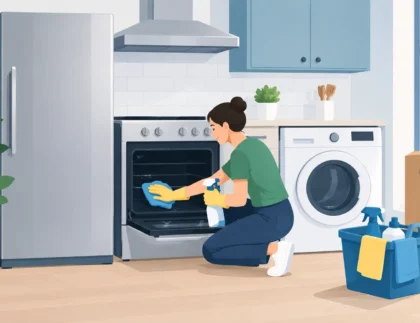
In the kitchen, start high and work down. Clean cupboard tops, extractor fans, splashbacks, cupboard fronts, worktops, sinks, taps, and appliances. The oven is often the biggest sticking point. If there is burnt-on grease, do not leave it until the end. Give it time to soak or book help if it is beyond a quick clean. Pull out freestanding appliances if possible and clean underneath and behind them. That is where dust, crumbs, and grease like to hide.
In the bathroom, limescale is the usual problem. Taps, shower screens, tiles, grout, and around the loo all need close attention. A bathroom can be technically cleaned and still fail to look clean if scale marks are left behind. Mirrors, chrome fittings, and the base of the toilet are easy to miss, so check them in good light.
Bedrooms and living spaces are more straightforward, but they still need detail work. Vacuum edges, wipe skirting boards, clean inside wardrobes, remove cobwebs, dust radiators, and check window ledges. Marks on light switches and around door handles are small but noticeable.
Don’t forget carpets, windows and appliances
One of the most common end of tenancy mistakes is assuming general cleaning covers specialist areas. Sometimes it does. Often, it does not.
Carpets are the main example. If there are stains, odours, heavy traffic marks, or pet-related issues, a normal vacuum will not be enough. Some tenancy agreements also ask for professional carpet cleaning, particularly if pets have been in the property. The same applies to upholstery if it is part of a furnished let.
Windows can also trip people up. Internal glass should be cleaned as standard, but external window cleaning depends on access and property type. Ground-floor external panes may be manageable. Upper-floor windows often need a specialist approach, so check what is actually required.
Appliances should be empty, switched off where appropriate, and cleaned inside and out. Fridge shelves, freezer drawers, washing machine detergent compartments, and dishwasher seals all collect grime. Leave appliance doors slightly open afterwards if they need airing.
Give yourself more time than you think
If you are doing the job yourself, build in more time than a standard clean. A studio can take several hours. A family house can take a full day or more, especially if cleaning has slipped during the tenancy or the property is still partly occupied.
The trade-off is simple. Doing it yourself may save money upfront, but it costs time and physical effort, and there is more room for missed details. Hiring a professional service costs more, but it can be the better option when you are juggling removals, work, school runs, and a fixed check-out date.
For busy London tenants, that convenience is often the deciding factor. When move-out deadlines are tight, having a team handle the deep clean can take a lot of pressure off.
Use a final inspection mindset
Before handing back the keys, walk through the property slowly as if you were the letting agent. Open cupboards. Check inside the oven. Look behind doors. Stand at the bathroom entrance and look for streaks, dust, hair, and limescale. Daylight helps, because artificial lighting hides a lot.
Take clear photos once everything is finished. They are useful if there is any disagreement later about condition or cleanliness. Keep any receipts too, especially if you have arranged carpet cleaning or specialist work.
If you have used a service, make sure the clean is booked for the right moment – after removal is complete and before the inventory check. There is no point paying for a spotless property and then dragging boxes through it an hour later.
When it makes sense to book professional help
Some move-outs are simple. Others are not. If the property is large, furnished, heavily used, or has not had a deep clean in a while, professional help can save you more than just elbow grease. It can save your deposit dispute, your weekend, and your patience.
A good cleaning team will know where inspections tend to focus and how to handle the awkward jobs, from ovens and bathrooms to carpets and high-touch areas. For tenants, landlords, and letting agents across London, that kind of support can make the handover smoother and much less stressful. The Ultimate Cleaners works with exactly those situations, helping get properties ready for inspection without the usual last-minute scramble.
The best approach is simple – start earlier than feels necessary, clean with the inventory in mind, and be honest about what you can realistically get done well. A calm move-out almost always starts with a proper plan.