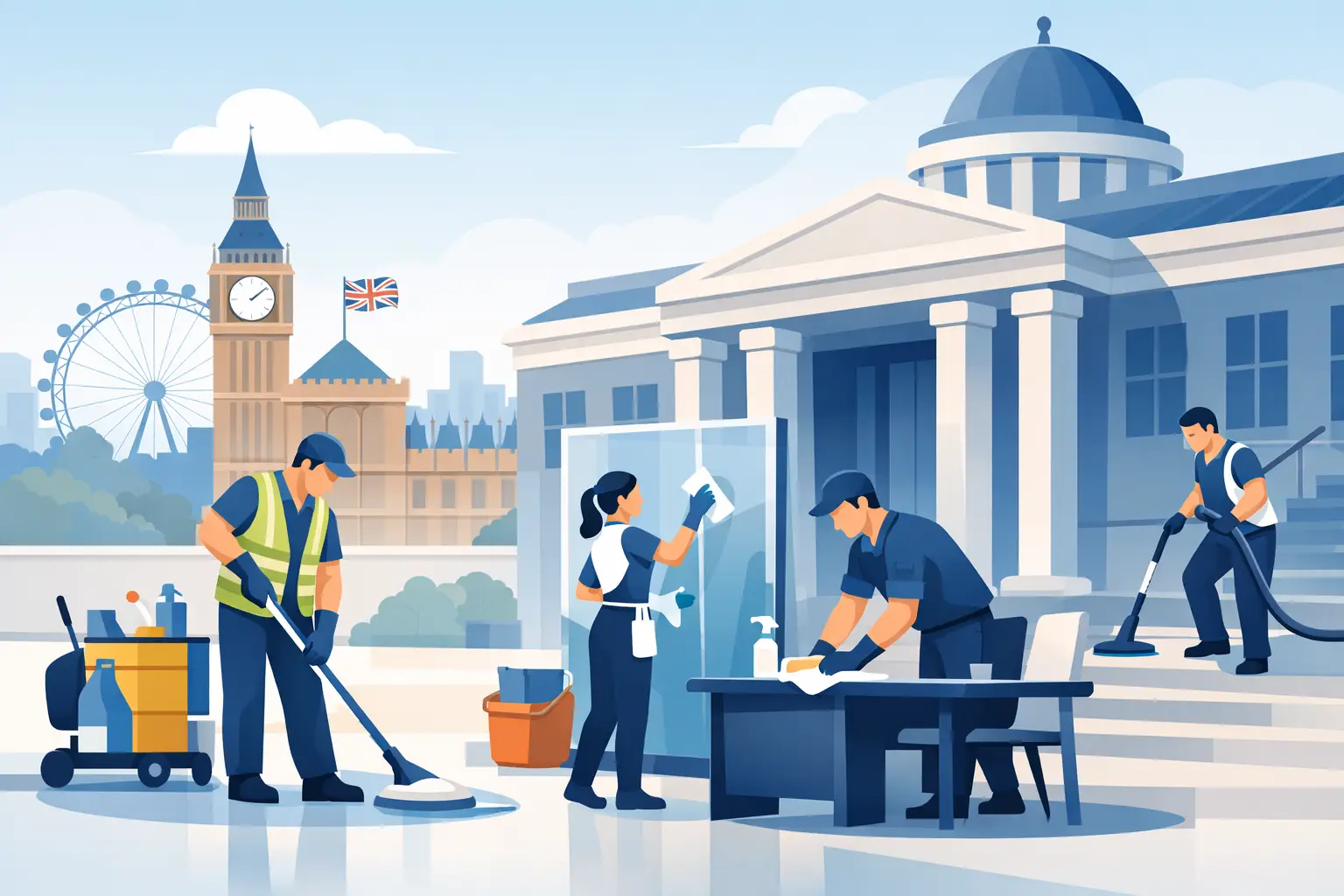
When a public building opens its doors each morning, people expect everything to work – reception areas presentable, washrooms hygienic, floors safe, meeting rooms ready, and shared spaces clean without fuss. That is exactly why government facility cleaning London services need a different standard from ordinary commercial cleaning. These are high-use, high-visibility environments where reliability matters just as much as appearance.
A council office, civic building, local authority workspace or public service site is not just another property on a cleaning rota. It is a place used by staff, visitors, contractors and members of the public throughout the day. Cleaning has to support that activity, not disrupt it. When standards slip, it is noticed quickly. When the work is done properly, everything feels easier – safer entrances, cleaner air, tidier facilities and fewer day-to-day issues for facilities teams to chase.
What government facility cleaning in London really involves
Government sites tend to have a wider mix of spaces than many private offices. You may have public-facing reception desks, interview rooms, waiting areas, secure offices, washrooms, stairwells, kitchens, archives, shared desks and corridors all within the same building. Each area has different traffic levels, different hygiene risks and different timing requirements.
That means cleaning needs to be planned around use, not just square footage. A front entrance in Westminster or a busy public-facing office in Camden will usually need more attention than a back-office admin area. Washrooms may need frequent checks during opening hours, while internal offices can often be cleaned earlier in the morning or later in the evening. One-size-fits-all contracts rarely work well in these settings.
There is also the question of presentation. Public buildings do not need to look flashy, but they do need to feel cared for. Dust on skirting boards, smudged glass, marked flooring or poorly stocked washrooms all affect how a service is perceived. People may not comment when a site is clean, but they certainly notice when it is not.
Why reliability matters more than promises
For facilities managers and operations teams, the real challenge is not finding somebody who says they can clean a government site. It is finding a team that turns up on time, follows the brief properly and adjusts when the building’s needs change.
That is especially important in London, where building access can be tight, schedules change quickly and sites may need out-of-hours attendance to avoid disruption. Some weeks are routine. Others involve meetings, public events, maintenance works or sudden pressure on high-traffic areas. A cleaning provider needs enough structure to stay consistent and enough flexibility to respond when the day does not go to plan.
This is where clear communication counts. If a washroom needs extra attention, if a floor finish is deteriorating, or if an area is being used differently than expected, the cleaner on site should not just carry on regardless. Problems should be flagged early. Practical solutions should follow. That saves time and avoids small issues becoming complaints.
Security, discretion and trust
Government facility cleaning London contracts often involve more than cleaning skill alone. Access arrangements, key holding, restricted rooms and timed entry all matter. Even in lower-security sites, cleaners are working around confidential paperwork, staff-only areas and public service operations that need discretion.
A dependable cleaning company understands that professionalism includes conduct as well as cleaning results. Teams should follow site rules, respect access restrictions and work carefully around equipment, records and occupied spaces. In many buildings, the best cleaning is almost invisible – the place simply feels looked after, with minimal interruption to the people using it.
There is a trade-off here. The cheapest quote may reduce costs on paper, but if it brings missed visits, inconsistent staffing or weak supervision, the real cost soon shows elsewhere. Facilities teams then spend more time checking standards, chasing attendance and handling avoidable issues. For busy public sector environments, that false economy can become expensive very quickly.
The standards people notice first
Some cleaning tasks are easy to overlook in procurement discussions because they sound basic. In practice, these are often the jobs that shape first impressions and daily user experience.
Washroom cleanliness is one of them. If soap dispensers are empty, bins are overflowing or fixtures are marked, confidence in the whole building drops. Entrance floors are another. In wet weather especially, they need regular attention to stay safe and presentable. Touchpoints also matter in busy public buildings – door handles, counters, lift buttons and shared surfaces can quickly pick up grime during the day.
Then there are the quieter details: odour control, dust on ledges, marks on internal glass, stains in staff kitchens and neglected corners in waiting areas. None of these problems sounds dramatic on its own. Together, they make a building feel poorly managed. Good cleaning prevents that drift.
Eco-friendly cleaning without cutting corners
For many public organisations, sustainability is no longer a nice extra. It is part of how buildings are run and how services are assessed. Eco-friendly products and responsible cleaning methods can support those goals, but only if they still deliver proper results.
That balance matters. Using greener products should not mean accepting weaker hygiene standards or poor finish quality. The right approach is to choose effective products, sensible dilution, appropriate equipment and methods that reduce waste while keeping spaces genuinely clean. In government settings, that practical middle ground is usually the best fit.
It also helps when cleaning plans are tailored to the building rather than overusing chemicals everywhere. Some areas need disinfection-focused routines. Others need careful surface care or low-moisture methods to protect flooring and furnishings. The best service is not the heaviest one. It is the one that suits the site.
Choosing a provider for government facility cleaning London
If you are reviewing providers, it helps to look beyond generic claims. Nearly every cleaning company says it is professional, thorough and reliable. The useful question is how that shows up in day-to-day service.
A good provider should be able to explain how they handle regular scheduling, cover staff absence, manage quality checks and adapt to changing building use. They should understand the difference between daily maintenance cleaning and periodic deep cleaning. They should also be realistic. Not every issue can be solved with the same frequency or the same budget, and a straightforward provider will say so.
It is also worth considering service range. Government buildings rarely need just one task forever. A site might require routine office cleaning most of the time, but also carpet cleaning, internal window cleaning, washroom deep cleans or post-maintenance cleaning at intervals. Using one company that can cover those needs often makes management simpler.
For London organisations with multiple sites or mixed-use public buildings, local responsiveness is especially valuable. Travel delays, access windows and site coordination all become easier when the team already works across the city and understands its practical demands.
When routine cleaning is not enough
There are times when standard daily or weekly cleaning needs extra support. After internal works, heavy seasonal footfall, staffing changes or periods of poor maintenance, a building may need a reset. That can involve deeper attention to flooring edges, skirting, washroom fixtures, high-touch surfaces, kitchen areas and neglected corners that routine visits cannot fully restore.
This is often where facilities teams see the difference between basic labour and a properly managed service. A stronger provider does not just add more hours and hope for the best. They identify what has slipped, prioritise the areas affecting hygiene and presentation most, and build a plan that gets the building back to standard.
The Ultimate Cleaners supports commercial and specialist sites across London with this kind of practical, flexible approach. For government environments, that means cleaning that fits around operations, keeps standards visible and takes pressure off the people managing the building.
A service that works with the building, not against it
The best government facility cleaning in London is not about flashy language or overcomplicated systems. It is about showing up, doing the work properly and keeping public spaces ready for the people who use them. That takes consistency, common sense and a team that understands the pressures of busy buildings.
If you manage a government site, the right cleaning service should make your day easier, not give you another problem to supervise. Clean entrances, hygienic washrooms, tidy shared spaces and dependable attendance are not extras. They are the baseline that helps the whole building run well.
A clean public building sends a simple message: this place is looked after, and the people using it matter.