
Monday morning starts badly when half the team notices sticky desks, fingerprints on the meeting room glass and an empty soap dispenser in the loo. That is usually the point when office hygiene stops being a background task and becomes a management problem. A proper guide to office sanitisation standards helps you avoid that scramble by setting clear expectations for what gets cleaned, how often, and to what level.
For office managers, facilities teams and business owners, sanitisation is not just about appearances. It affects staff confidence, visitor impressions, sickness disruption and the general sense that a workplace is under control. The tricky part is that there is no single magic checklist that suits every office. A ten-person studio in Camden will not need the same routine as a multi-floor office in Canary Wharf with heavy footfall, shared kitchens and booked-out meeting rooms.
What office sanitisation standards actually mean
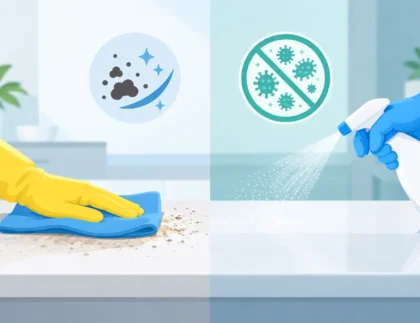
In simple terms, sanitisation standards are the agreed rules for keeping a workplace hygienic and reducing contamination on surfaces, shared areas and facilities. They sit alongside general cleaning, but they are not exactly the same thing. Cleaning removes visible dirt, dust and grime. Sanitisation focuses on lowering bacteria and viruses on surfaces that people touch every day.
That difference matters because an office can look tidy and still fall short hygienically. A polished reception desk means very little if the door push plates, lift buttons, kettle handle and shared keyboard are being missed. Good standards define the areas that need attention, the products that should be used, the frequency of cleaning and the checks needed to keep the routine consistent.
A practical guide to office sanitisation standards
The most reliable way to set standards is to work backwards from how your office is used. Start with people, movement and touchpoints rather than square footage alone. If a surface is shared often, it should usually be sanitised more often. If an area has low use, a lighter schedule may be enough.
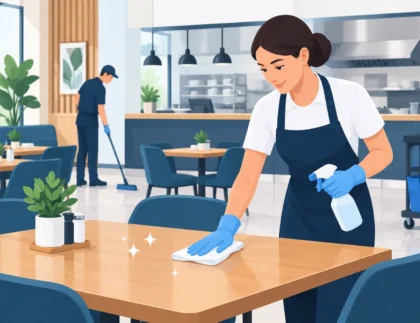
For most offices, the baseline should cover desks, door handles, light switches, phones, keyboards, kitchen counters, taps, toilet flushes, cubicle locks, handrails and shared equipment such as printers. Reception areas, breakout spaces and meeting rooms often need special attention because they are used by multiple people throughout the day.
Frequency depends on the environment. In a standard office with stable occupancy, daily sanitisation of washrooms, kitchens and high-touch points is usually sensible. In busier workplaces, especially client-facing sites or offices with hot-desking, some points may need sanitising several times a day. That includes entrance doors, communal tables, lift controls and shared appliances.
The standard also needs to be realistic. There is no point creating a document that says every surface will be sanitised every hour if no cleaner is on site to deliver it. A workable schedule, done properly and consistently, beats an ambitious plan that falls apart by Wednesday.
The areas that matter most
Not every office surface carries the same risk. Floors need cleaning, of course, but they are not usually the first source of hand-to-face transfer. High-touch points deserve top billing because they are touched repeatedly and often overlooked.
Washrooms are non-negotiable. Toilets, basins, taps, dispensers, mirrors and floors all need regular cleaning, while touchpoints such as flush buttons, door locks and bin lids need proper sanitisation. If washrooms slip, staff notice fast, and confidence in the rest of the building tends to go with them.
Kitchens and tea points come next. These areas combine food handling, shared appliances and frequent contact. Fridge handles, microwave buttons, cupboard pulls, kettle handles and worktops should all sit within your sanitisation plan. If your team eats lunch at their desks, desk-side hygiene matters too, especially where crumbs, spills and packaging pile up.
Meeting rooms often get underestimated. They may only be used for an hour at a time, but they bring together different people through the day. Table surfaces, chair backs, screens, remotes and speakerphones can all become repeat-contact points.
Products, methods and the eco-friendly question
A standard is only as good as the method behind it. Using the wrong product can leave surfaces looking clean but not properly sanitised. Using a strong product incorrectly can create residue, unpleasant smells or damage to finishes.
In most offices, you want a combination of general cleaning products for dirt removal and appropriate sanitising products for high-touch surfaces. Contact time matters. If a sanitiser needs a surface to stay wet for a set period, a quick spray-and-wipe may not do the job. That is where training and clear instructions make a big difference.
Eco-friendly products can absolutely be part of a strong office hygiene plan, but this is one of those it-depends areas. For some surfaces and routine maintenance, environmentally conscious products work very well and help reduce harsh chemical use in enclosed workspaces. In higher-risk environments or after illness outbreaks, you may need a more targeted disinfecting approach. The best standard balances effectiveness, safety for staff and visitors, and the practical reality of your workspace.
Staff habits matter as much as the cleaning rota
Even the best guide to office sanitisation standards will struggle if staff habits pull in the opposite direction. A cleaner can sanitise the kitchen at 8 am, but if there are overflowing mugs in the sink by 10 am and no one wipes spills, the space quickly slips back.
That does not mean pushing cleaning duties onto employees. It means setting sensible shared rules. Keep soap, hand towels and sanitiser stocked. Make bins easy to access. Encourage teams to clear desks enough for proper cleaning. In hot-desking environments, ask staff to leave workstations ready for the next person rather than treating the desk like a private island.
Simple communication helps. Most people do the right thing when expectations are clear and the supplies are there. Problems usually appear when everyone assumes somebody else is handling it.
How to measure whether your standard is working
If you cannot check it, you cannot really manage it. Office sanitisation standards should include a way to monitor performance without turning the workplace into a clipboard parade.
A clear cleaning schedule is the starting point. That should show what is cleaned, how often and by whom. For larger offices, area-based logs can help, particularly in washrooms and shared facilities. Spot checks by a facilities lead or office manager are useful too, because paperwork can say one thing while the actual condition of the office says another.
Feedback matters as well. Staff usually know first when standards are slipping. If complaints keep coming in about kitchen hygiene or empty dispensers, the issue may be timing, staffing levels or a poor match between cleaning frequency and office use.
A good provider will also adjust the plan when needed. Seasonal illness spikes, a growing headcount, building works or a move to hybrid working can all change the right routine. Standards should be steady, but they should not be rigid for the sake of it.
Common mistakes offices make
One of the biggest mistakes is focusing on visible areas only. Reception may shine while the backs of chairs, shared headsets and staff kitchen handles get ignored. Another is treating sanitisation as a one-off response to illness rather than an everyday operating standard.
There is also the problem of over-cleaning some areas and neglecting others. An office may have spotless floors and dusty vents, or polished desks but poorly maintained washrooms. The right balance depends on your layout, occupancy and working patterns.
Another common issue is buying products without a plan. A cupboard full of sprays is not a sanitisation system. If products are inconsistent, unlabelled or unsuitable for office surfaces, standards become hit and miss very quickly.
When it makes sense to bring in professional support
For small offices, an internal routine may cover the basics if someone is overseeing it properly. But once you have multiple washrooms, shared kitchens, client traffic or longer opening hours, professional support usually makes life easier. The point is not just labour. It is consistency, proper product use, trained cleaners and a schedule that fits how the building actually works.
That is especially true for London offices where footfall, travel patterns and tighter turnaround times can put more pressure on facilities. A professional team can tailor frequencies, focus on high-use zones and keep standards steady without office staff having to chase every missed refill or wipedown. Companies like The Ultimate Cleaners work with businesses that need that sort of dependable routine without making cleaning management a second job.
The right standard is the one your office can keep up every week, not just before a client visit. When sanitisation feels organised, staff notice less because there is less to notice – and that is usually the sign the job is being done properly.