The builders have gone, the work looks great, and then you notice the fine dust on the skirting boards, the fingerprints on the glass, and the grit under your shoes. That is the real moment when most people start asking how to clean after builders without turning it into a full weekend of frustration.
Post-build cleaning is not the same as a normal tidy-up. It is heavier, messier, and more detailed. Dust settles where you would not expect it, leftover materials can scratch delicate finishes, and rushing the job often means you end up spreading the mess around rather than removing it. The good news is that with the right order, it becomes far more manageable.
How to clean after builders without making more mess
The biggest mistake is starting too soon or starting in the wrong place. If there is still active work happening, wait until the dust has had a chance to settle and all trades have finished. Cleaning too early usually means doing the same job twice.
Before you begin, open windows if the area is safe to ventilate. Good airflow helps clear lingering dust and smells from plaster, paint, adhesives, or sealants. Then remove any obvious waste first. Offcuts, packaging, empty tubs, tape, and protective sheets should be cleared before you touch the finer cleaning.
It also helps to check what has actually been done. A newly fitted kitchen, fresh paintwork, new flooring, or a bathroom refurbishment all leave different kinds of residue. Some surfaces can handle stronger cleaning, while others need a gentler approach. That part matters because one wrong product can damage a brand-new finish.
Start dry, not wet
When people think about cleaning, they usually reach for a bucket straight away. After building work, that is rarely the best first move. Fine construction dust turns into a paste when mixed with water, and that makes it harder to lift from floors, sills, tiles, and woodwork.
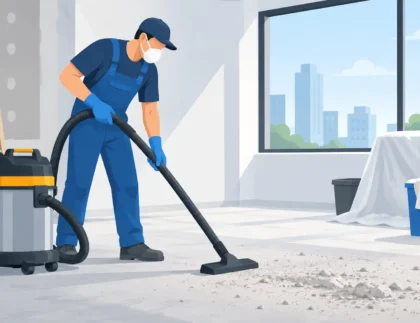
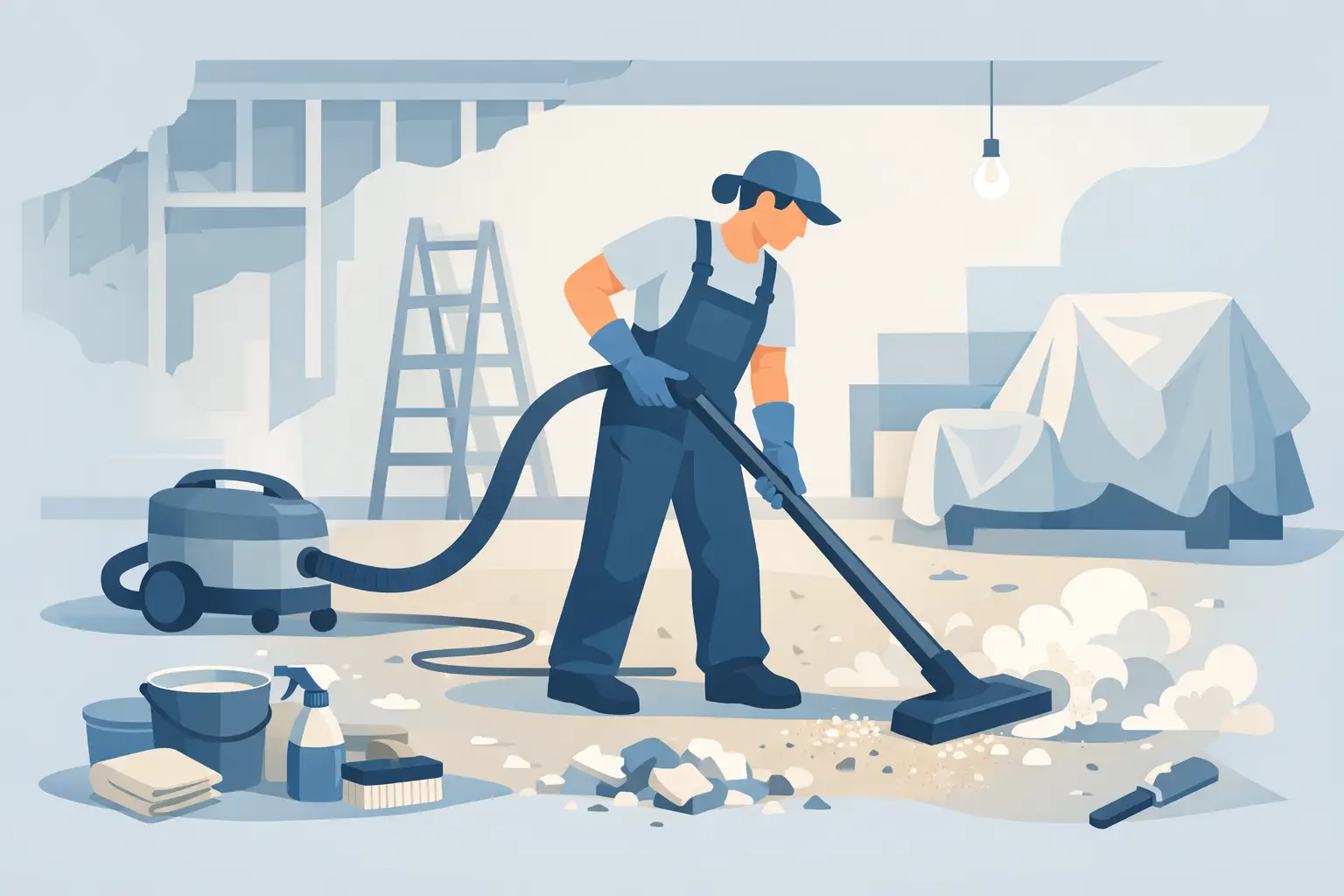
Start with dry removal. Use a vacuum with a suitable filter if possible, especially for fine dust. Work from top to bottom – ceilings, light fittings, upper shelves, window ledges, skirting boards, then floors. If you begin with the floor, dust from higher surfaces will simply fall back down and undo your effort.
A soft brush attachment is useful on delicate areas, while a microfibre cloth can pick up dust from painted surfaces without pushing it around too much. Shake cloths out away from the cleaned area or replace them as they become clogged. One overloaded cloth can leave a grey film on everything.
Focus on the hidden dust traps
Builder’s dust has a habit of travelling. It rarely stays neatly in the room where the work happened. If doors were open or people were walking through the property, you may find dust in hallways, on stairs, inside cupboards, and even in rooms untouched by the renovation.
Pay close attention to skirting boards, door frames, radiators, plug sockets, extractor fans, and the tops of cabinets. These are the places where dust settles and lingers. Light switches and handles often need extra attention too, especially if several trades were moving in and out.
Glass is another giveaway. Windows, mirrors, shower screens, and internal glazed doors tend to show smears, plaster dust, and adhesive marks clearly. Clean glass later in the process, once the airborne dust has been reduced, otherwise you will keep chasing streaks.
Tackle surfaces with care
Not every mark left after building work should be scrubbed hard. Some residues need loosening first, and some surfaces can be scratched very easily. Fresh paint, polished stone, stainless steel, varnished wood, and new flooring all need a bit of caution.
Use a pH-neutral cleaner where possible, especially on new or premium finishes. For stubborn spots such as dried splashes or adhesive residue, test any product on a small hidden area first. A plastic scraper can help lift marks from glass or tiles, but avoid metal tools unless you are absolutely sure the surface can take it.
It depends on the type of job. A loft conversion may leave heavy plaster dust, while a kitchen fit-out may create more grease, silicone marks, and packaging debris. A commercial refit can bring its own issues, especially if there are larger floor areas and high-touch surfaces that need to be ready for staff or customers quickly.
Floors need a careful final clean
Floors usually take the worst of it. Dust, screws, grit, bits of plaster, and boot marks all end up underfoot. This is where patience pays off, because dragging debris across a new floor can cause damage that no one wants after paying for renovation work.
Vacuum thoroughly first, including edges and corners. On hard floors, follow with a lightly damp microfibre mop rather than soaking the surface. Too much water can be a problem for laminate, engineered wood, or floors with fresh seals. You may need more than one pass, because the first mop often lifts only the top layer of fine dust.
For carpets, vacuum slowly and repeatedly in different directions. Builder’s dust can sit deep in the pile, so one quick pass will not always do much. If the carpet has taken a proper hit during works, a professional carpet clean may be the better option rather than trying to force household products to do a specialist job.
Kitchens and bathrooms need extra detail
These rooms often look nearly finished before they are actually clean. Cupboards may have installation dust inside them. Tiles can hold grout haze. Chrome fittings show fingerprints instantly. And any surface that comes into contact with food or hygiene routines needs more than a quick wipe.
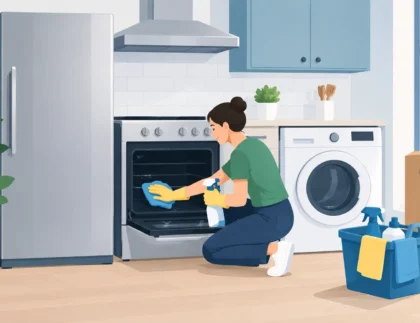
In kitchens, clean inside and outside cupboards, worktops, splashbacks, sinks, taps, and appliance exteriors. Check corners where dust gathers after fitting work. In bathrooms, look for residue around sealant lines, around toilet bases, behind taps, and on tile edges.
If grout haze or sealant smears are left behind, do not attack them aggressively. Some marks need the right product and timing, especially if materials are still curing. When in doubt, gentler is better than causing damage and adding repair costs to the project.
Don’t forget the air and soft furnishings
Even after surfaces look clean, the room can still feel dusty. That is often because soft furnishings and airflow points are holding onto fine particles. Curtains, upholstered furniture, and vents can all re-release dust after you think the job is done.
If furniture stayed in the property during the works, vacuum upholstery carefully and wipe down hard surfaces on tables, chairs, and shelving. Replace or clean accessible filters if appropriate, and pay attention to vents and extractor covers. A final round of ventilation makes a difference, particularly in enclosed spaces.
When a DIY clean is enough – and when it isn’t
If the work was small, such as a single-room refresh or minor repairs, many people can handle the clean themselves with the right equipment and enough time. The key is being realistic about the scale. A quick evening clean is usually not enough after major works.
For larger refurbishments, end-of-tenancy preparation, office fit-outs, or properties that need to be ready for handover, professional post-construction cleaning often makes more sense. It is faster, more thorough, and easier on newly finished surfaces when handled by people who do this regularly. That is especially helpful in busy London homes and workplaces where time is already tight.
At The Ultimate Cleaners, we see this often: the building work is complete, but the property still does not feel ready until the dust, residue, and detail cleaning have been dealt with properly. That final stage is what turns a building site back into a usable home, office, shop, or rental property.
A simple order that works
If you want the shortest version of how to clean after builders, follow this sequence: clear waste, dust high to low, vacuum thoroughly, wipe surfaces carefully, clean kitchens and bathrooms in detail, then finish the floors and glass last. That order cuts down on rework and gives you a cleaner result with less effort.
There is no glamour in post-build cleaning, but there is a right way to do it. Take your time, treat new surfaces carefully, and do not underestimate how far dust can travel. Once the mess is properly gone, you finally get to enjoy the work you paid for.