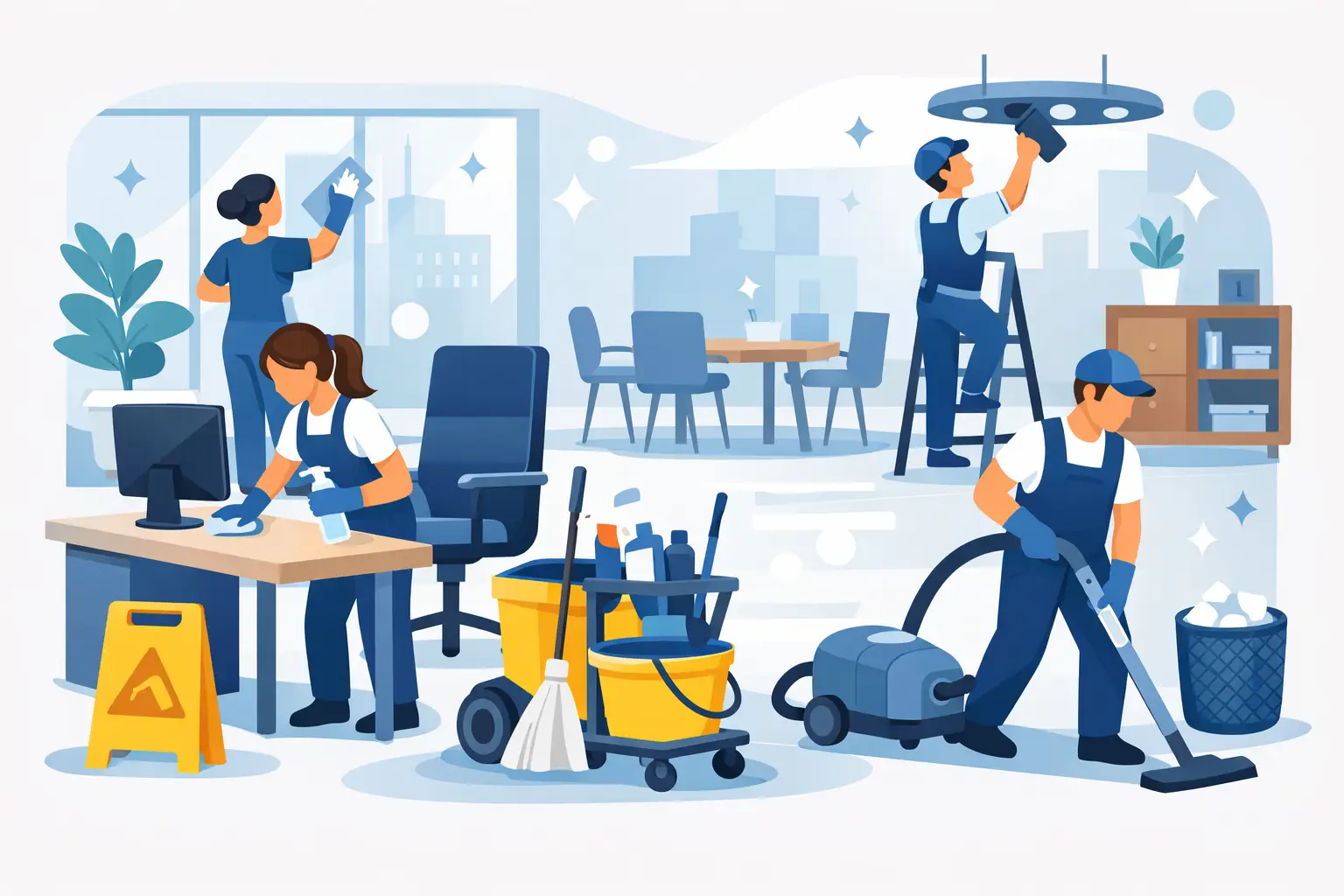
Walk into an office first thing on a Monday and you can tell, almost instantly, whether it’s been looked after properly. Desks feel ready for work, kitchens do not smell stale, washrooms are stocked, and shared spaces look presentable. That is usually what people mean when they ask, what does office cleaning include? The short answer is daily cleaning tasks, hygiene-focused work in high-use areas, and scheduled deeper cleans to keep the whole workplace safe, tidy, and professional.
The longer answer matters more, because not every office needs the same thing. A ten-person studio in Soho has different priorities from a busy open-plan office in Canary Wharf, and both need something different again from a medical admin site or customer-facing showroom. Good office cleaning is never just a quick vacuum and bin change. It should match how your space is actually used.
What does office cleaning include in most workplaces?
In most offices, cleaning starts with the basics that affect staff comfort and day-to-day presentation. Floors are vacuumed or mopped, bins are emptied and relined, desks and surfaces are dusted, and touchpoints such as door handles, light switches, and shared equipment are wiped down. Reception areas, meeting rooms, kitchens, toilets, and corridors are all part of the regular routine.
That routine sounds simple, but consistency is where the value sits. If bins are emptied only when they look full, smells build up. If washrooms are wiped but not checked properly, soap dispensers and toilet roll run out at the worst moment. If kitchen surfaces are cleaned but the sink and taps are ignored, the whole room still feels grim. Proper office cleaning is about covering the details that people notice without always saying so.
Most regular office cleaning also includes spot-cleaning marks from glass partitions, interior doors, and other visible surfaces. In offices with a lot of client traffic, this can make a bigger difference than people expect. Fingerprints on glass and smudges around entrances can make an otherwise smart office look neglected.
The areas that usually need the most attention
Some parts of an office create more cleaning work than others. Kitchens and break rooms top the list. They gather crumbs, spills, grease, coffee stains, and food waste quickly, especially in busy teams. A cleaner will usually wipe worktops, clean sinks and taps, sanitise tables, empty bins, and mop the floor. Depending on the agreement, microwave interiors, fridge exteriors, cupboard fronts, and splashbacks may also be cleaned.
Washrooms are another priority because appearance and hygiene matter equally. Regular office cleaning usually covers toilets, basins, mirrors, taps, floors, and sanitary bins, along with restocking essentials if that is part of the service. In a shared workplace, washroom standards affect how staff and visitors judge the whole building.
Reception spaces, boardrooms, and meeting areas also get special attention because they shape first impressions. These areas are often less dirty than kitchens, but they need to look polished. That means dust-free surfaces, tidy floors, clean glass, and chairs and tables that look ready for use at any time.
Daily, weekly, and periodic tasks are not the same thing
One reason office managers get frustrated with cleaning contracts is that expectations are not always separated clearly. There is a big difference between what should happen every visit and what should happen on a schedule.
Daily or regular tasks usually include emptying bins, vacuuming high-traffic floors, cleaning washrooms, wiping kitchen surfaces, and sanitising common touchpoints. These are the essentials that keep the office functioning.
Weekly tasks might include more detailed dusting, mopping all hard floors thoroughly, wiping skirting boards in visible areas, cleaning internal glass, and addressing build-up around corners or under furniture that is not moved every day.
Periodic tasks often sit outside the standard routine. These can include carpet cleaning, deep kitchen cleaning, upholstery cleaning, machine scrubbing hard floors, high-level dusting, and interior window cleaning. If your office has vents, blinds, partitioning, or large amounts of glass, these items often need a scheduled deep clean rather than a quick once-over during a standard visit.
That distinction matters because when people ask for office cleaning, they sometimes expect a deep clean included in a basic maintenance package. Sometimes it is, but often it is separate. A good provider will explain what is included as standard and what should be booked less frequently.
Desks, equipment, and personal spaces
This is one of the biggest grey areas in office cleaning. Some businesses expect every desk to be cleaned daily. Others prefer cleaners not to touch workstations at all because of paperwork, screens, or personal items.
In many offices, accessible desk surfaces are dusted or wiped, but only if they are reasonably clear. Keyboards, monitors, telephones, and other equipment may be sanitised in shared environments, but this should be agreed in advance. In workplaces handling sensitive documents, cleaners may be asked to avoid desks completely and focus on floors, bins, and communal areas.
There is no single rule here. It depends on your security requirements, your team’s working style, and whether you want staff to clear their desks at the end of the day. The cleaner cannot properly clean a surface covered in papers, cables, mugs, and lunch wrappers. If desk cleaning matters to you, it needs to be part of the office routine as well as the cleaning brief.
What is not always included
If you are comparing quotes, this is the section worth paying attention to. Office cleaning does not always include consumables, specialist stain removal, exterior window cleaning, pest control, waste collection beyond standard bins, or deep carpet cleaning. It may also exclude after-build cleaning, high-level work, and specialist sanitation for medical or industrial settings.
Even something that sounds obvious, such as washing up office mugs or cleaning inside fridges, is not universal. Some companies include it as part of kitchen cleaning. Others treat it as an extra because it adds time and can be unpredictable.
This is where a tailored service makes a real difference. A smaller office may want a straightforward evening clean three times a week. A larger business may need daily visits, washroom checks during working hours, and monthly deep cleans on top. Neither approach is wrong. The right one depends on footfall, layout, and how clean the space needs to feel by the end of each day.
Hygiene, presentation, and staff wellbeing
Office cleaning is often viewed as a background task until standards slip. Then everyone notices. Dirty touchpoints, overflowing bins, dusty vents, and neglected washrooms do more than look bad. They affect staff morale, visitor confidence, and the general sense of order in the workplace.
A clean office also supports practical hygiene. Shared kitchens, toilets, meeting rooms, and hot desks all create opportunities for germs to spread. Regular cleaning helps reduce that risk, especially in high-contact areas. It is not a replacement for sensible workplace habits, but it is a key part of maintaining a healthy environment.
Presentation matters too. Clients may never comment on a sparkling floor or a fresh-smelling washroom, but they will notice when standards are poor. Office cleaning is one of those services that works best when it is almost invisible – everything simply feels looked after.
How to tell if you need a standard clean or something more
If your office always looks tired soon after cleaning, the issue may not be the cleaner. It may be the scope. A standard clean suits offices with moderate traffic, tidy staff habits, and straightforward layouts. But if you have lots of shared facilities, frequent visitors, food waste, or visible glass and flooring that marks easily, you may need a more detailed schedule.
The same applies if your team raises repeated complaints about washrooms, kitchen hygiene, or dusty surfaces. These are often signs that the cleaning frequency, task list, or timing needs adjusting. An office cleaned after hours may still need a daytime refresh if the building is heavily used.
For London businesses especially, where offices can be compact, busy, and used intensively, flexibility matters. The best cleaning setup is not always the cheapest or the most frequent. It is the one that fits the space properly and keeps standards steady without creating extra hassle for your team.
Choosing a service that actually fits your office
When asking what does office cleaning include, the better question is often: what should it include for your office? Start with the non-negotiables. That usually means washrooms, kitchens, bins, floors, and shared surfaces. Then look at the details that affect your staff and visitors most, whether that is spotless meeting rooms, sanitised hot desks, or regular internal glass cleaning.
If you work with a professional cleaning company, ask for a clear breakdown rather than a vague promise of a full clean. A proper scope saves confusion later. It also makes it easier to increase or reduce tasks as your office changes.
At The Ultimate Cleaners, that practical approach matters because no two workplaces run in exactly the same way. A well-cleaned office should help your day move more smoothly, not give you another contract to chase. If the service is right, your team can get on with work while we handle the job you hate.
A good office clean is not about making everything look shiny for one evening. It is about keeping the space ready for people to do their best work tomorrow morning.