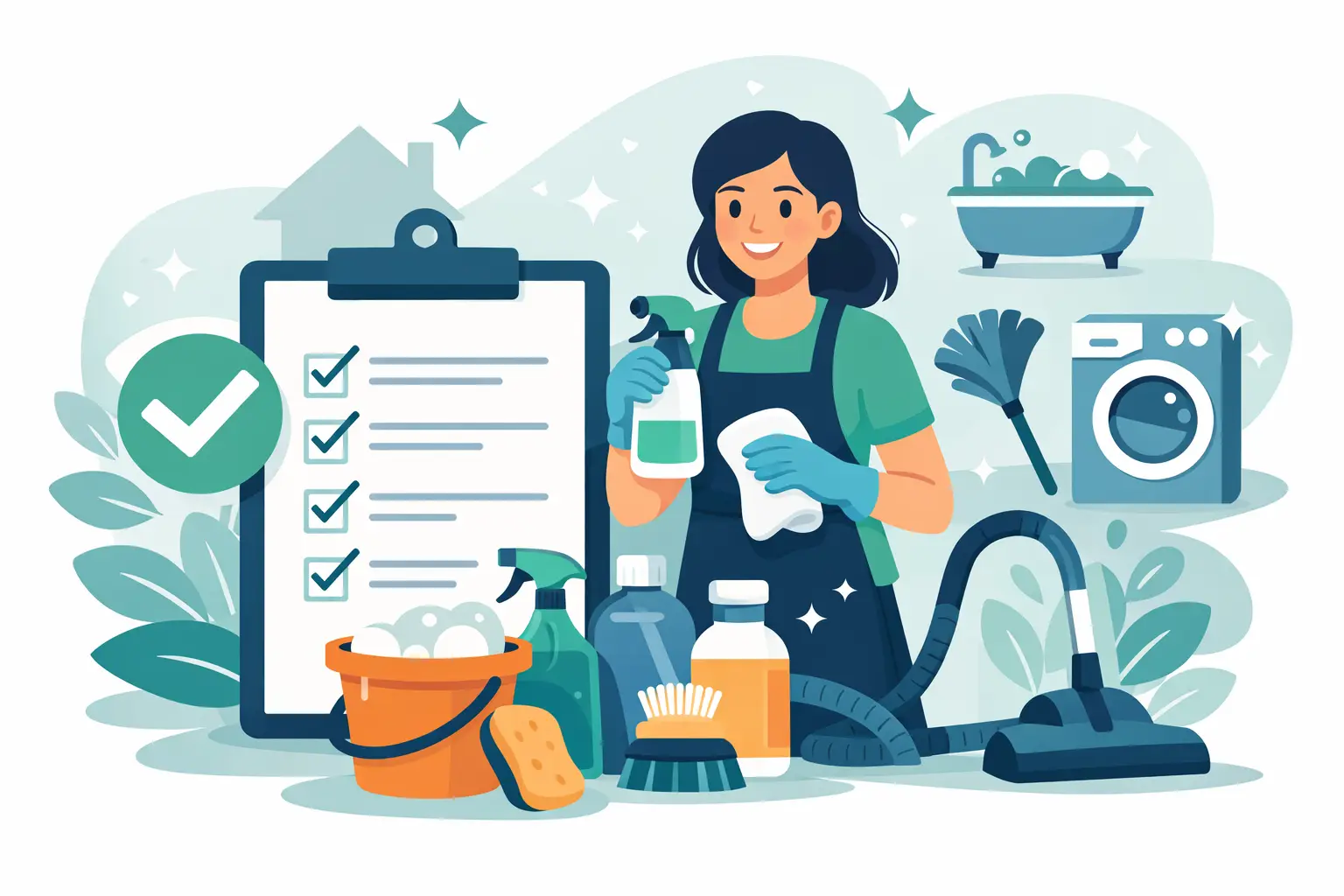
Monday morning often tells the truth about a home. There are mugs by the sofa, crumbs under the breakfast stools, a bathroom mirror already spotted, and a washing pile quietly growing in the corner. A solid weekly domestic cleaning checklist stops that build-up before it turns your evening or weekend into a catch-up shift.
The trick is not to clean everything, every day. That is where most people go wrong. A workable routine breaks the home into manageable zones, keeps hygiene standards up, and leaves room for real life. If you are juggling work, school runs, commuting across London, tenants moving in, or simply trying to keep on top of a busy household, a weekly plan is far more realistic than an all-day deep clean.
Why a weekly domestic cleaning checklist works
A checklist gives structure, but more importantly, it cuts decision fatigue. Instead of walking from room to room wondering what to tackle first, you already know what matters this week. That means less procrastination, fewer forgotten jobs, and a home that stays consistently cleaner.
It also helps you separate maintenance cleaning from occasional deep cleaning. Weekly jobs are about hygiene, presentation, and preventing dirt from settling in. Things like scrubbing grout, washing curtains, or moving every bit of furniture can wait for a monthly or seasonal clean. When people try to cram deep-cleaning tasks into every week, the routine falls apart within a fortnight.
There is another benefit that busy households appreciate straight away: cleaning little and often keeps each task shorter. Wiping a bathroom that was cleaned six days ago takes minutes. Leaving it for three weeks is a different story.
Start with the right standard
Before building your routine, decide what “clean enough” means for your home. A studio flat with one occupant needs a different standard from a family home with pets, children, or frequent guests. The same goes for landlords between tenancies or professionals who work from home and need spaces to stay presentable through the week.
For most homes, the weekly goal is simple: surfaces wiped, floors dealt with, bins emptied, bathrooms sanitised, kitchen grease controlled, and clutter reset. If you can maintain that, the property feels looked after without turning cleaning into a full-time job.
The weekly domestic cleaning checklist by area
The easiest way to stay consistent is to clean by room, then spread those tasks over the week if needed.
Kitchen
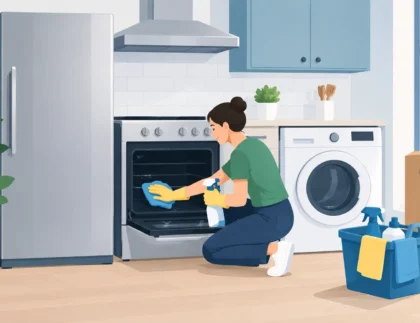
The kitchen needs the most frequent attention because mess builds fast and hygiene matters most here. Each week, wipe worktops, cupboard fronts, splashbacks, and appliance exteriors. Clean the hob properly rather than just skimming over spills. Empty crumbs from the toaster, sanitise the sink and tap, and check the microwave for splatters.
The fridge deserves a quick weekly once-over too. You do not need to empty every shelf each time, but remove out-of-date items, wipe obvious spills, and stop food from lingering longer than it should. Finish by mopping the floor, especially around bins, under the table, and near the cooker where grease and crumbs collect.
Bathroom
Bathrooms are manageable when you stay ahead of soap scum, water marks, and bacteria. Every week, clean the toilet fully, including the base, seat, flush handle, and surrounding floor. Wipe the basin, taps, mirror, and any shelves or ledges that gather dust and product residue.
The bath or shower should be scrubbed enough to remove grime before it hardens into stubborn limescale. In many London homes, hard water means this may need a bit more attention. Mop the floor, replace towels, and empty the bathroom bin. If you share the bathroom with several people, you may need a midweek touch-up as well.
Living room
This space can look untidy before it is actually dirty, so reset first and clean second. Fold throws, return items to their place, and clear coffee tables and sideboards. Dust visible surfaces, including skirting boards if they show it, then vacuum rugs, upholstery, and the floor.
If you have pets, this room may need more than one vacuum a week. Hair on sofas and under cushions builds quickly, and leaving it too long makes the whole space feel less fresh than it really is.
Bedrooms
Weekly bedroom cleaning should focus on air, dust, and bedding. Change bed linen, dust bedside tables and other surfaces, vacuum the floor, and clear out clothes that have landed on chairs, floors, or the end of the bed. If you suffer from allergies, pay closer attention to soft furnishings and under-bed dust.
Children’s bedrooms usually need a lighter but more frequent tidy. Adult bedrooms often need less daily attention but benefit from a proper weekly reset.
Hallways and stairs
These areas are easy to overlook because they are transitional spaces, but they set the tone for the whole home. Wipe marks from doors, dust banisters and ledges, and vacuum or mop the floor depending on the surface. In high-traffic homes, entrance floors may need extra care because they collect outside dirt fast.
A practical weekly schedule
If the full checklist feels too much in one go, split it across the week. For example, the kitchen and bins on Monday, bathrooms on Tuesday, bedrooms on Wednesday, living areas on Thursday, and floors and finishing touches on Friday. That way the weekend starts with the home already under control.
There is no perfect order. Some people prefer one focused cleaning session, while others do better with twenty-minute bursts. What matters is choosing a pattern you can keep. A routine that looks efficient on paper but never fits your real schedule is not a good system.
What to clean weekly, and what can wait
One reason routines become frustrating is that people mix weekly jobs with occasional ones. You do not need to wash windows, steam carpets, descale the kettle, wipe inside every cupboard, or clean behind large furniture every single week.
That said, some homes need a stricter schedule. If you have pets, young children, allergy concerns, or frequent cooking, your weekly checklist may need to include more floor care, more disinfecting, or more laundry-related cleaning. If you live alone and travel often, you may be able to keep the weekly list very lean.
It depends on use, not just size. A large guest room may need very little weekly attention, while a compact kitchen used three times a day will need plenty.
Supplies that keep the job quick
A good checklist is only useful if the kit is easy to reach. Keep microfibre cloths, a bathroom cleaner, a degreaser suitable for kitchen use, disinfectant, bin liners, a mop, a vacuum, and rubber gloves ready to hand. If you store supplies in one caddy, moving room to room takes less effort.
Eco-friendly products are a sensible choice for many households, especially where children, pets, or sensitivities are involved. They still need to be effective, though. Gentle does not have to mean weak. The aim is to clean thoroughly without filling the home with harsh smells or residues.
When a checklist is not enough
Sometimes the issue is not the routine. It is time. Busy professionals, landlords managing changeovers, and families already stretched thin often know exactly what needs doing but cannot keep up every week.
That is where professional support makes a real difference. A recurring cleaner can take the weekly domestic cleaning checklist off your hands and apply it consistently, while one-off visits help reset the property if things have slipped. For homes across London, that can mean less stress, better hygiene, and no lost weekends spent chasing dust and scrubbing bathrooms.
The best cleaning plans are realistic, not ambitious for the sake of it. If you can maintain your home with a clear weekly routine, brilliant. If you need help, there is no prize for doing it all yourself.
Keep the routine simple enough to repeat
The homes that stay cleanest are rarely the ones with the longest to-do lists. They are the ones with routines people can actually stick to. A practical checklist, done regularly, beats an occasional heroic effort every time.
If your current approach feels chaotic, strip it back. Focus on the rooms you use most, the surfaces that show dirt fastest, and the tasks that protect hygiene. Once that rhythm is in place, the whole home feels easier to manage – and that is the kind of clean that lasts.