The first time you open the door to a new place, you notice more than the layout. You notice the stale smell in the cupboards, the dust on the skirting boards, and the mystery marks inside the fridge. That is why a proper guide to move in cleaning matters. Even if a property looks tidy on first glance, it may still need a thorough clean before it feels ready to live in.
Move-in cleaning is not just about making a home look better. It is about starting fresh in a space that feels hygienic, comfortable and actually yours. For tenants, it helps remove the traces of the previous occupant. For homeowners, it makes unpacking less stressful. For landlords and letting agents, it sets the right standard from day one.
Why move-in cleaning matters more than people expect
Most new homes are not filthy. They are simply not cleaned to the standard you would want before putting your plates in the cupboards or your clothes in the wardrobe. A quick wipe-down by the last occupant, or even a basic end of tenancy clean, may leave behind grease, dust and bacteria in the places that matter most.
The kitchen and bathroom usually need the closest attention. These are high-contact areas, and they can hold hidden grime even when surfaces seem presentable. Inside cabinets, behind taps, around extractor fans, under sinks and around toilet fittings are all common problem spots.
There is also the practical side. It is much easier to clean an empty property than one filled with boxes, furniture and packing materials. Once everything is in place, reaching behind appliances or cleaning inside storage areas becomes far more awkward.
A guide to move in cleaning: what to do first
Before you start scrubbing, take a slow walk through the property. Open cupboards, check corners, inspect flooring and have a look at windows, switches and door handles. This helps you see what level of cleaning is actually needed.
If the property has been empty for a while, dust may be the main issue. If previous occupants left recently, you may be dealing with food residue, soap scum, limescale or pet hair. In some homes, especially after refurbishment, there may also be fine construction dust that settles on every surface.
This first check also helps you decide whether the job is manageable on your own or better handled professionally. A one-bedroom flat with light dust is one thing. A larger family house with built-up grease, marked carpets and dirty windows is another.
Start with the rooms that affect daily life
The kitchen should usually come first. You will want it ready before you unpack food, pans and crockery. Clean cupboards inside and out, especially shelves and handles. Wipe down worktops, splashbacks and tiles, then move on to the sink, taps and draining area.
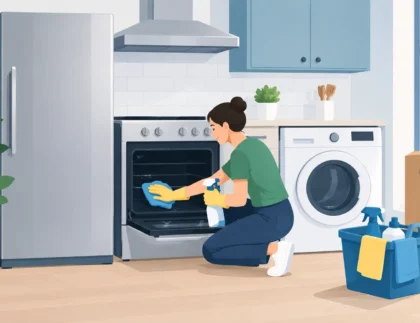
Appliances need more than a quick once-over. The fridge should be emptied, disinfected and dried before use. The oven, hob and extractor are worth checking closely, as grease often lingers here. Even if you do not plan to deep clean every appliance yourself, make sure the handles, buttons and shelves are properly sanitised.
The bathroom is next. Focus on toilets, basins, showers, baths and taps. Limescale around fixtures is common in London properties, and it takes proper treatment rather than a hurried wipe. Pay attention to sealant lines, grout, mirror edges and the floor around the toilet base.
Once those two rooms are sorted, the rest of the home becomes easier to tackle.
Work from top to bottom
A sensible move-in clean follows gravity. Start high, then finish low. Dust ceiling corners, light fittings, curtain rails and the tops of door frames before moving to shelves, switches and skirting boards. Leave floors until the end so you are not cleaning them twice.
This matters more than people think. If you vacuum first and then dust a wardrobe top, you have just put dirt back onto the floor. A good cleaning order saves time and gives a better result.
In bedrooms and living spaces, wardrobes, drawers and window ledges deserve extra attention. They may look clean when shut, but dust, crumbs and debris often collect inside. If you are moving children into the property, or storing linens straight away, these internal spaces matter just as much as visible surfaces.
The areas people miss in a move-in clean
Any useful guide to move in cleaning should point out the hidden areas, because these are the places that often make a property feel less fresh than it should.
Light switches, plug sockets, door handles and bannisters are touched often and cleaned less often. The same goes for radiator tops, extractor covers, skirting boards and the edges behind doors. Inside bins, around washing machine seals and beneath sinks are also easy to overlook.
Windows are another grey area. Some people clean just the glass they can see at eye level, but frames, sills and tracks often hold a surprising amount of dust and black build-up. If you want the property to feel genuinely ready, those details make a difference.
Should you do it yourself or book a professional clean?
It depends on the property, your schedule and your tolerance for cleaning before a move. If you have a small place, decent supplies and enough time before the removal van arrives, doing it yourself can be perfectly reasonable.
But there is a trade-off. Moving day is already full of admin, deliveries, keys, meter readings and endless boxes. Adding a full deep clean on top can quickly become unrealistic. Many people begin with good intentions and then run out of time, leaving the most awkward jobs unfinished.
Professional move-in cleaning is often the better option when the property is larger, has not been cleaned thoroughly, or needs specialist attention such as carpet cleaning, post-construction cleaning or hard-to-shift kitchen grease. It is also useful for landlords preparing a property between tenancies and for busy professionals who simply want to walk into a clean home without spending the first weekend scrubbing cupboards.
A reliable cleaning team should be clear about what is included, flexible with timing and able to work around access arrangements. That is especially helpful in London, where move-in schedules can be tight and handovers do not always run to plan.
What to have ready if you are cleaning yourself
You do not need a cupboard full of products, but you do need the basics. Microfibre cloths, a decent vacuum, a mop, gloves, a bathroom descaler, a kitchen degreaser and a general disinfectant will cover most of the work. If the property has delicate finishes such as natural stone or specialist flooring, check what products are safe before using anything harsh.
Eco-friendly products are a good choice if you want to avoid strong chemical smells in a newly occupied home. They can still be effective, especially for general surfaces and routine sanitising. That said, very heavy limescale or baked-on grease sometimes needs stronger targeted products. The right approach depends on the condition of the property, not just preference.
Timing makes a big difference
The best moment for move-in cleaning is after any repairs or decorating but before furniture arrives. That gives full access to floors, corners, storage spaces and appliances. If painters, handymen or flooring fitters are still coming in and out, cleaning too early can be a waste of effort.
If you are buying or renting in a busy part of London, build in more time than you think you need. Delayed key release, parking issues and delivery slots can all eat into the day. A planned clean before the main move avoids that last-minute rush.
The standard to aim for
A good move-in clean should leave the property feeling neutral, fresh and ready for use. Not perfumed to death. Not just visually tidy. Properly clean where it counts.
That means you should be able to unpack into cupboards without wiping them again. Use the fridge without wondering who touched it last. Step into the shower without noticing old soap residue in the corners. When the cleaning is done well, the home feels easier to settle into straight away.
For anyone moving into a house or flat in London, the goal is simple. Remove the stress, remove the grime and start with confidence. If the job is more than you want to handle alone, getting expert help can save hours and spare you the worst part of moving. We love the job you hate, and sometimes the smartest move is making sure your new place is clean before your first box hits the floor.
A new home always comes with enough to think about, so give yourself one less thing to worry about and make cleanliness part of the move, not an afterthought.