
The builders may be gone, but the job is not finished when there is plaster dust on the skirting boards, stickers on the windows and grit underfoot in every room. A proper post construction cleaning checklist helps you catch what gets missed, whether you are preparing a family home, a rental flat, an office fit-out or a newly refurbished shop.
Post-build cleaning is different from everyday cleaning. You are not just freshening up a space. You are dealing with fine dust that settles twice, paint splashes in awkward places, protective films left behind, and debris that can damage floors or make a property look unfinished. That is why a clear plan matters.
Why a post construction cleaning checklist matters
After renovation or building work, a property can look nearly done while still being far from ready to use. Fine dust often sits on ledges, inside cupboards, along door frames and around sockets. Windows can look clear from a distance but still be smeared with adhesive or marked by builder residue. Bathrooms and kitchens may be fitted, yet covered in dust from cutting, drilling and sanding.
For landlords and homeowners, that can delay move-in day. For commercial spaces, it can affect handover, staff comfort and first impressions. In busy parts of London, where turnaround times are tight, missed details usually mean someone has to come back again. That costs time and creates stress nobody wants.
Before you start the cleaning
A good post construction cleaning checklist starts with one simple question: is the building work actually finished? If trades are still walking through the property, dragging materials across the floor or sanding walls, cleaning too early is a waste of time.
Make sure all major works are complete, rubbish has been removed and utilities are working. You also want proper ventilation and enough light to spot dust, smears and scratches. If there is any doubt about paint curing, sealants drying or specialist surfaces needing a gentle approach, check before using strong products.
It also helps to clean in the right order. Start high and work down. Clean dry debris before wet cleaning. Leave floors until last. That sounds basic, but it is where many rushed post-build cleans go wrong.
Room-by-room post construction cleaning checklist
Ceilings, walls and high surfaces
Start by removing dust from ceilings, coving, light fittings, vents and the tops of doors. On freshly decorated walls, the method matters. Aggressive wiping can mark paint, so this is one of those it depends jobs. Some walls need a soft dry microfibre pass first, while others can handle a careful damp wipe once the finish is fully cured.
Check corners for cobwebs, dust build-up and bits of packaging left behind by installers. Pay attention to extractor covers and smoke alarms, where fine dust loves to settle.
Windows, frames and glass
Windows often tell you how complete a clean really is. Remove stickers, tape residue and protective film from glass and frames. Clean internal glass thoroughly and inspect it from different angles, because construction dust and smearing show up differently in daylight.
Do not forget sills, tracks, handles and frame edges. If there are paint specks or plaster marks, they need careful treatment. Rushing this part can scratch glass or damage finishes, so the right tools matter.
Doors, frames and switches
Wipe all doors on both sides, including the tops, edges and handles. Clean frames, architraves and thresholds where dust collects fast. Then move on to light switches, sockets and thermostats. These small touchpoints are often overlooked, but they make a room feel truly finished when clean.
Kitchens
A post-build kitchen clean needs more than a quick wipe-down. Clean cupboard fronts, handles, internal shelves, worktops, splashbacks and plinths. Open every cupboard and drawer, because dust from fitting work often settles inside.
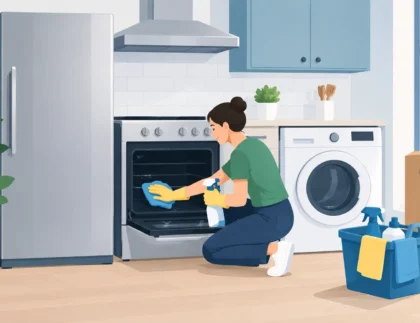
Appliances should be cleaned externally and, where relevant, internally too. Ovens, hobs, extractor hoods, fridges and dishwashers may have packaging residue, labels or fine dust from installation. Sinks and taps need polishing, but check for silicone sealant first so you do not disturb fresh work.
Bathrooms and washrooms
Bathrooms need close attention because dust mixes badly with moisture and can leave a chalky film. Clean tiles, grout lines, mirrors, basins, baths, showers, toilets and chrome fittings. Remove any protective coverings and make sure no labels, tape or sealant smears remain.
Check around extractor fans, behind pedestal basins and around toilet bases. These are common hiding spots for post-construction dust and debris.
Bedrooms, living areas and workspaces
In bedrooms, lounges and office areas, focus on wardrobes, shelving, radiators, skirting boards and internal glazing. Built-in storage often looks complete from the outside while still dusty inside. Window ledges, curtain poles and cable trunking also need checking.
If the property has fitted furniture, wipe every surface, not just the visible ones. A room can smell clean and still throw up dust the moment someone unpacks or starts work.
Floors
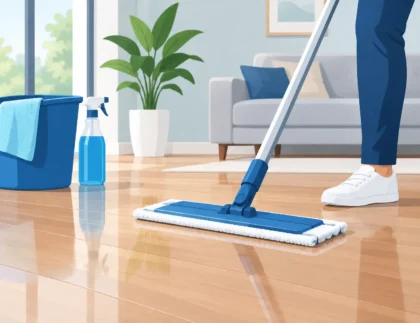
Floors come last for good reason. Vacuum hard floors and carpets thoroughly before any mopping. Fine building dust can turn muddy if you go in too early with water, and debris can scratch timber, vinyl or stone under pressure.
For hard flooring, use the right method for the material. For carpets, one vacuum pass may not be enough after building work. Sometimes repeated vacuuming does the job, and sometimes a deeper carpet clean is the better option, especially if dust has settled deep into the fibres.
The details people miss most often
A strong post construction cleaning checklist is really about details. The obvious mess gets handled first. The hidden mess is what causes complaints later.
The most commonly missed areas are skirting board tops, inside drawers, behind doors, radiator fins, plug sockets, window tracks, extractor covers, internal cupboard shelves and the tops of tall units. Builders’ dust also settles on blinds, curtain rails and the edges of mirrors. If the property has been empty during the works, even the front entrance, hallway and stairwell may need more attention than expected.
For commercial properties, add reception desks, meeting room tables, display shelving and staff kitchen areas to the list. A client may not inspect behind a radiator, but they will notice dusty glass doors and fingerprints on every surface.
Safety and product choices
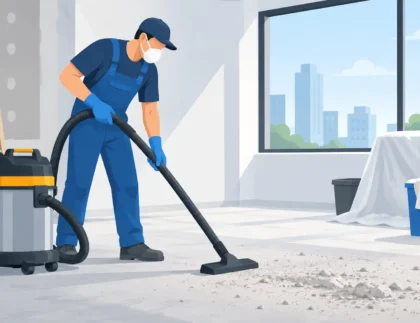
Not every post-build mess should be tackled the same way. Fine dust from plaster or concrete needs good vacuum filtration and proper cloths, not just a quick sweep that sends particles back into the air. Paint, silicone, grout haze and adhesive residue each need the right treatment.
This is where trade-offs come in. Stronger products may remove residue faster, but they are not always suitable for fresh surfaces, sealed stone, specialist flooring or newly installed fittings. Eco-friendly cleaning products can work very well, especially when paired with the right process, but the method matters more than the label. Good cleaning is about choosing the safe option that still gets the result.
When to handle it yourself and when to call professionals
If you have had a small decorating job done in one room, you may be able to manage the clean yourself with enough time and patience. For larger refurbishments, full property renovations, commercial fit-outs or end-of-tenancy handovers, professional help is usually the quicker and more reliable route.
That is especially true when deadlines are tight or the standard needs to be presentation-ready. A post-build clean is labour-heavy, detail-focused and easy to underestimate. What looks like a half-day job can turn into a full weekend once you start dealing with dust in every corner.
For homeowners, the value is convenience and peace of mind. For landlords, it is getting the property ready to market or hand over without delay. For businesses, it is opening on time with a clean, safe space for staff and customers. That is exactly why many London property owners bring in a specialist team such as The Ultimate Cleaners to take care of the final push.
A practical final check before sign-off
Once cleaning is complete, walk the property slowly with all lights on and, if possible, some natural daylight coming in. Look across surfaces rather than just down at them. That is the easiest way to spot dust lines, smears and missed residue.
Open cupboards. Run a finger along skirting boards. Check corners, frames and handles. Step back and view the room the way an incoming tenant, client or customer would. If the space feels finished, fresh and ready to use, your checklist has done its job.
A good clean after construction is not about making a place look passable. It is about making it feel complete, so the only thing left to notice is the work itself.