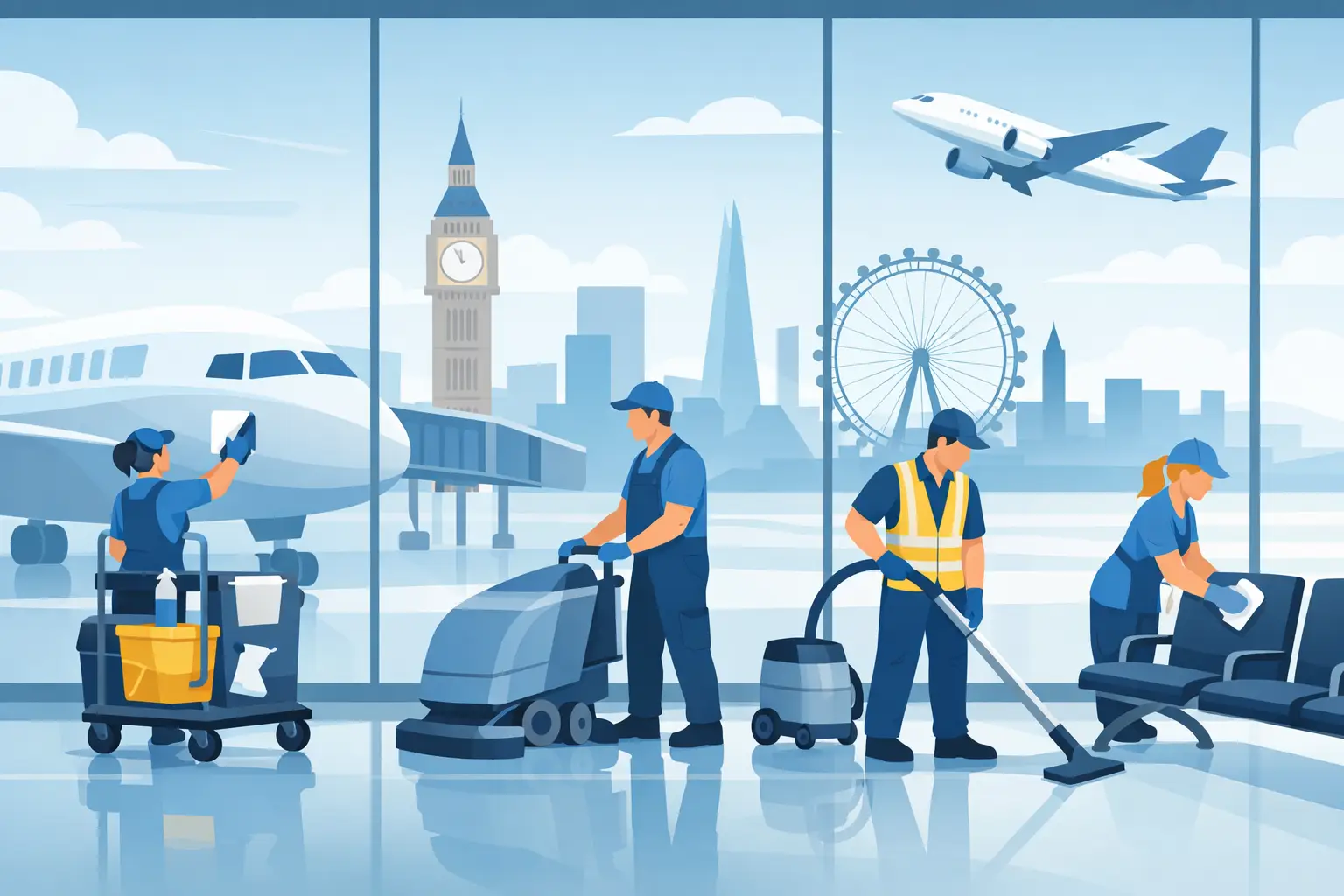
The terminal never really stops. Even when passenger numbers dip, toilets still need attention, floors still collect grime, seating areas still need wiping down, and staff spaces still have to stay clean, safe and presentable. That is why airport cleaning services London operators choose need to be built around constant movement, strict standards and fast response times.
Airports are not like offices, shops or even other transport hubs. The pressure is different. Footfall changes by the hour, security rules shape access, and public expectations are high. If a washroom runs short on supplies or a spill is left too long in a busy walkway, the problem is visible straight away. Cleanliness affects more than appearances – it supports safety, passenger confidence and day-to-day operations.
What makes airport cleaning different?
An airport is really several environments running at once. There are public concourses, check-in areas, gates, washrooms, lifts, escalators, security zones, baggage areas, staff rooms, back-of-house corridors and food service spaces. Each area has different cleaning demands, and they cannot all be treated the same way.
A standard evening clean is rarely enough in this setting. Many parts of an airport need continuous attention throughout the day and night, with planned deep cleaning fitted around flight schedules, access restrictions and quieter periods. Timing matters almost as much as the cleaning itself.
There is also the issue of presentation. In a high-footfall environment, floors can look tired quickly even when they are technically clean. Finger marks build up on glass, bins fill fast, and toilets need regular checks to stay in good order. For airport teams, the right cleaning partner is not just there to mop up mess. They help keep the site running smoothly.
Why airport cleaning services London sites need a flexible plan
London airports and airport-linked facilities operate at a pace that leaves little room for delay. That means cleaning plans have to be practical, not theoretical. A good service should adapt to busy travel windows, overnight work, unexpected incidents and the way passenger traffic shifts across the day.
This is where flexibility makes a real difference. Some sites need round-the-clock cleaning teams. Others need a mix of routine daytime support, targeted washroom servicing, floor care, touchpoint disinfection and scheduled deep cleans. It depends on the building, the traffic and the operational pressures.
The right approach usually combines regular visible cleaning with behind-the-scenes work. Visible cleaning reassures passengers and staff. Less visible tasks – from back-of-house sanitation to machine floor cleaning – keep standards consistent over time.
The areas that matter most
In airport settings, not every space carries the same risk or the same public impact. Toilets are an obvious priority because they are used constantly and judged quickly. If they are not checked often enough, standards can drop within minutes. Restocking, odour control, sanitising and prompt attention to spills all matter here.
Flooring is another major issue. Large entrances, corridors and waiting zones take a beating from rolling luggage, outdoor dirt and wet weather. Slip risk rises when cleaning is reactive rather than planned. Different surfaces also need different treatment. Hard floors may require regular machine cleaning, while carpeted sections need spot cleaning and deeper maintenance to keep them looking fresh.
Touchpoints deserve close attention too. Handrails, lift buttons, door plates, check-in counters, seating arms and shared surfaces all collect constant contact. In a busy public environment, these areas need frequent cleaning, especially during peak operating hours.
Then there are staff-only zones. These are easy to overlook, but they matter. Clean break rooms, offices, lockers and welfare areas help support the people who keep the airport moving. Standards should not drop just because passengers do not see those spaces.
Hygiene, safety and reputation are tied together
For airport operators and facilities teams, cleaning is not just a housekeeping task. It touches compliance, health and brand perception all at once. A clean terminal feels managed. A neglected one feels chaotic, even when everything else is functioning.
That is why strong airport cleaning services London contracts usually focus on prevention, not just response. It is better to maintain standards steadily than to wait for complaints, incidents or poor inspection results. Routine checks, clear reporting and a team that knows the site all help avoid those problems.
There is a balance to strike, though. Cleaning has to be thorough without getting in the way. During busy periods, teams need to work around passengers and staff without creating bottlenecks. During quieter periods, they need to make the most of access windows to complete more intensive tasks. Experience counts here.
What to look for in an airport cleaning provider
If you manage an airport site, or a contractor operating within one, you need more than a basic cleaning checklist. You need a team that understands how commercial cleaning works under pressure.
Reliability comes first. Missed visits and slow responses are a nuisance in a small office. In an airport environment, they can become an operational issue. You want a provider that can stick to agreed schedules, adjust when needed and respond quickly when something urgent comes up.
Training matters just as much. Airport cleaning teams may need to work around restricted zones, public safety controls and strict site procedures. They need to know how to clean efficiently in live environments, use products correctly and keep disruption low.
It also helps to choose a company with broad commercial experience. Airport environments overlap with retail, hospitality, office and industrial cleaning all at once. A team used to varied commercial settings will generally be better prepared for that mix.
Eco-friendly products are worth considering too, especially where cleanliness needs to be maintained across public areas all day. Safer, well-chosen products can support environmental goals while keeping spaces hygienic and pleasant for passengers and staff. The best option depends on the site, the surfaces and the operational requirements, but it should be a genuine consideration rather than a box-ticking exercise.
Specialist cleaning works best when it is planned properly
There is no single cleaning schedule that suits every airport building. A small aviation facility, cargo-linked site or airport office block will need something different from a major passenger terminal. The same goes for connected spaces such as lounges, transport links, service corridors and administrative areas.
That is why site assessments are so useful. Before any schedule is set, the cleaning provider should understand traffic patterns, risk points, shift times, flooring types and access constraints. Without that groundwork, even a well-meaning plan can miss the mark.
For some clients, daytime presence is the priority because standards must stay visible throughout operating hours. For others, overnight cleaning carries more weight because that is when deeper work can happen with less disruption. Most busy sites need both. It depends on how the property is used and what standard has to be maintained from hour to hour.
A London cleaning partner should make things easier
Managing a busy site already involves enough moving parts. Cleaning should not add friction. A good commercial cleaning company should make the process straightforward, with clear communication, dependable scheduling and realistic service plans based on the site rather than a generic package.
That matters even more in London, where travel sites and support facilities often run under tight timelines and high expectations. Whether the requirement is routine cleaning, washroom servicing, floor care or a more specialist programme, the goal is the same – keep the environment clean, safe and ready for use without creating extra work for the client.
At The Ultimate Cleaners, that is the attitude we bring to commercial sites across London. We love the job you hate, and in demanding environments that means turning a complicated cleaning brief into practical support that actually works.
If you are comparing airport cleaning services London providers, look beyond price alone. The cheapest quote can end up costing more if standards slip, complaints rise or reactive call-outs become the norm. The better choice is usually the company that understands the pressures of the site, communicates clearly and can deliver consistent results day after day.
Clean airports do not happen by accident. They stay clean because the right people are paying attention, at the right times, in the right places. Choose a service built for that reality, and everything feels easier from there.
If your site needs dependable support, the best next step is a practical conversation about what the building actually needs – not what looks good on paper.