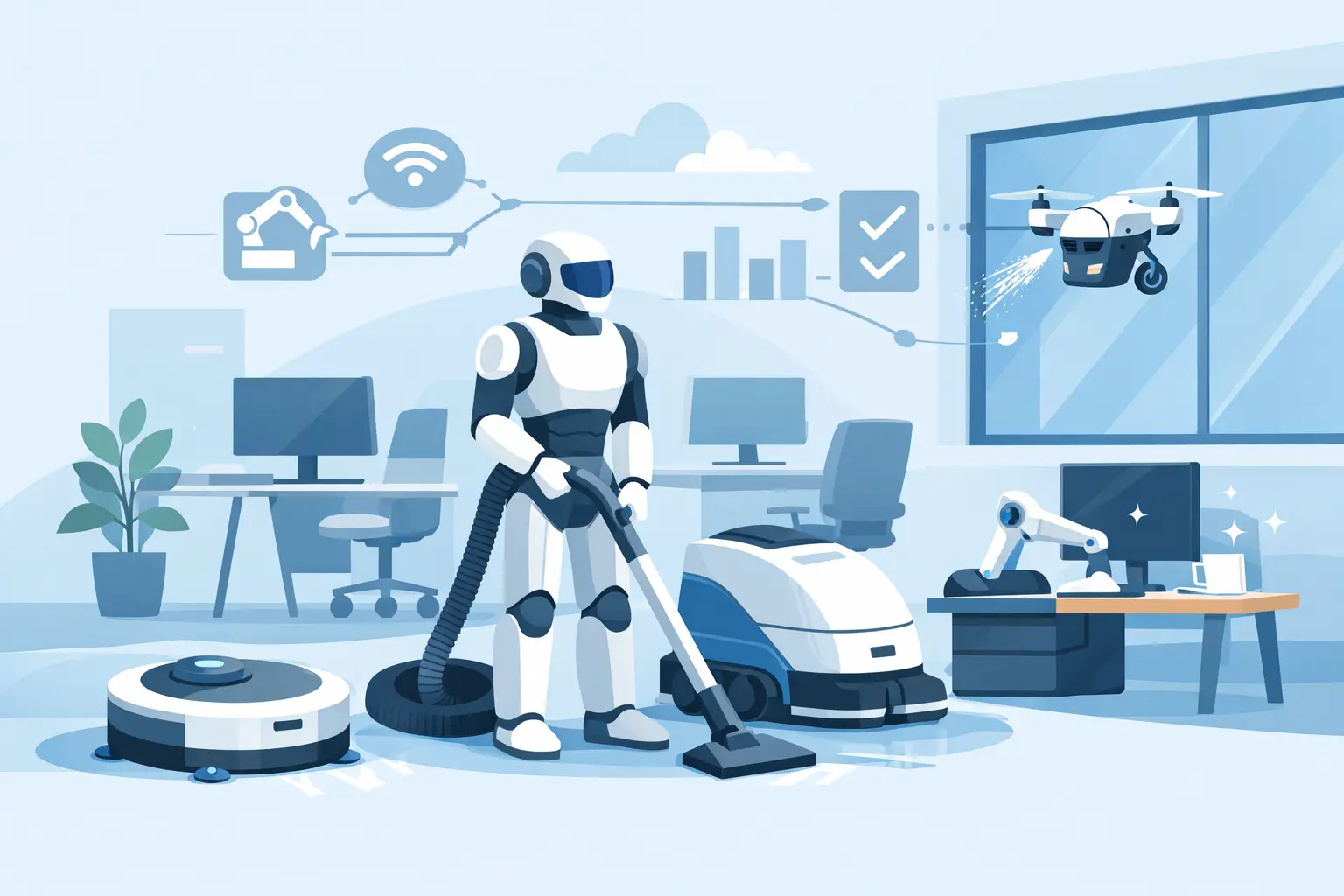
A robot moving quietly across an empty floor after 6pm can look like the future of office cleaning. But for most London workplaces, the real value of cleaning automation trends for offices is less dramatic: fewer missed areas, clearer reporting and more time for trained cleaners to focus on the jobs machines cannot do well.
Automation is becoming more practical for offices of all sizes, from busy shared workspaces in Shoreditch to multi-floor corporate sites in Canary Wharf. It is not a replacement for a reliable cleaning team. It is a way to make routine work more consistent when it is planned around the building, its people and the hours it is actually used.
1. Autonomous floor cleaners are becoming more useful
Robotic scrubbers and vacuum cleaners are the most visible development in office cleaning. These machines can follow mapped routes, avoid many obstacles and clean large areas such as reception spaces, corridors and open-plan floors with a consistent pattern.
They make the most sense where there is plenty of clear floor space and repeated work. A large office with hard flooring, for example, may use an autonomous scrubber overnight or during quieter periods. The machine can cover the routine pass while cleaners handle desks, washrooms, kitchen areas, touchpoints and detailed edging.
There is a trade-off. Offices are rarely static. Chairs get moved, deliveries arrive, cables appear and meeting rooms fill up. A robot still needs someone to prepare the space, check its work, refill it and respond if it stops. For a small or heavily furnished office, professional manual cleaning may remain the more efficient option.
2. Cleaning automation trends for offices are led by data
The useful part of automation is often the information it produces. Modern equipment can record when an area was cleaned, how long it took and whether a route was completed. For facilities managers, this creates a clearer record than a simple tick sheet left in a cupboard.
That information can help identify patterns. Perhaps entrance floors need more attention on wet winter mornings, while a meeting suite needs a fast reset after lunchtime. Rather than adding the same cleaning time everywhere, managers can adjust tasks to the way their office is genuinely used.
Data should support sensible decisions, not turn cleaning into a box-ticking exercise. A completed route does not automatically mean a space looks clean or feels hygienic. Quality checks by an experienced supervisor still matter, particularly in customer-facing areas and shared facilities.
3. Smart washrooms can trigger cleaning at the right time
Washrooms are one of the strongest cases for responsive cleaning. Sensors can monitor footfall, soap levels, paper stock and bin capacity, helping teams plan visits based on use rather than a fixed timetable alone.
For a busy office, this can prevent the familiar problem of a washroom looking fine at 9am but needing attention by midday. A cleaner can be directed to refill supplies, remove waste and clean high-contact surfaces before complaints start.
That said, sensors measure activity, not cleanliness. A quiet washroom may still need cleaning after an accident or spill, while a high-use washroom may require a full service regardless of what a dashboard says. Technology is most effective when it gives cleaners a prompt, not when it removes their judgement.
4. High-touch cleaning is becoming more targeted
Offices have changed their expectations around hygiene. Staff and visitors notice lift buttons, door handles, shared kitchen equipment, desk-booking screens and meeting-room controls. These points do not always need a full deep clean every hour, but they do need a clear, proportionate routine.
Automation can help by organising schedules, recording completed tasks and flagging areas with heavier use. In larger buildings, this allows cleaning teams to prioritise the places that receive the most contact during the day.
The best approach is practical rather than excessive. Over-cleaning every surface with harsh products can waste time and damage finishes. Using appropriate eco-friendly products, correct dilution and trained cleaning methods protects the office environment while still giving staff confidence that shared spaces are looked after.
5. Automation is improving the day-cleaning experience
Many offices are moving away from cleaning only after everyone has gone home. Day cleaning gives businesses visible support when it is needed: a spill can be dealt with quickly, a meeting room can be reset, and bins do not have to overflow before the evening shift.
Digital task systems make this easier to manage. A receptionist, office manager or facilities lead can report an issue, and the cleaning team can receive a clear instruction with the location and priority. This is particularly helpful across larger sites where the person raising the issue may not know who is on duty.
The human element is central here. A friendly cleaner who understands the building can respond with discretion, work around meetings and spot small problems before they grow. Software can route a task. It cannot provide the judgement, care and reassurance that a well-trained person brings to an occupied office.
What offices should check before investing in automation
Before buying equipment or changing a cleaning contract, start with the real problem you are trying to solve. Is the issue inconsistent floor care, delayed washroom servicing, lack of visibility, high footfall or a shortage of cleaning time? The right answer may be a robot, but it could just as easily be a better schedule, clearer supervision or more frequent attention at peak times.
It is also worth checking the practical details. Consider floor type, door widths, lifts, charging space, storage, Wi-Fi coverage, building access and who will maintain the machine. A device that performs well in a showroom demonstration may be awkward in an office with narrow routes, steps and crowded desk banks.
Cost should be viewed over time. Automation can reduce repetitive labour on suitable tasks, but it brings purchase, leasing, maintenance, training and repair costs. It may also require changes to the way furniture is arranged or when rooms can be accessed. For many businesses, a mixed approach delivers better value than trying to automate everything at once.
Start with one clearly defined area
A sensible trial might focus on a large reception floor, a long corridor or a regularly used communal area. Set a clear benchmark for appearance, cleaning time, disruption and staff feedback. If the result is genuinely better, expand gradually.
This also gives your cleaning provider time to create a workable routine around the equipment. The aim is not to introduce technology for its own sake. The aim is a cleaner, better-run workplace with fewer interruptions for your team.
The office cleaning model is becoming blended
The direction of travel is clear: offices will use more connected equipment, better task tracking and more responsive scheduling. Yet the best results will come from blending those tools with capable people, detailed checks and a cleaning plan that reflects the building’s needs.
For office managers, the most reassuring question is not, “Can this be automated?” It is, “Will this make the workplace cleaner, easier to manage and more pleasant for the people using it?” If the answer is yes, a carefully managed trial is worth considering. If not, there is no substitute for a dependable professional cleaning team that takes pride in the job.