A good warehouse cleaning example is not a cleaner walking around with a mop after everyone has gone home. It is a planned shift that protects people, keeps stock areas orderly and prevents small messes becoming costly operational problems. In a busy London warehouse, dust, pallet debris, tyre marks and overflowing bins can build up quickly – especially around loading bays, packing stations and staff facilities.
Below is a realistic example of how a professional warehouse clean can be organised. It shows what gets done, when it should happen and why the details matter.
Warehouse Cleaning Example for a Working Site
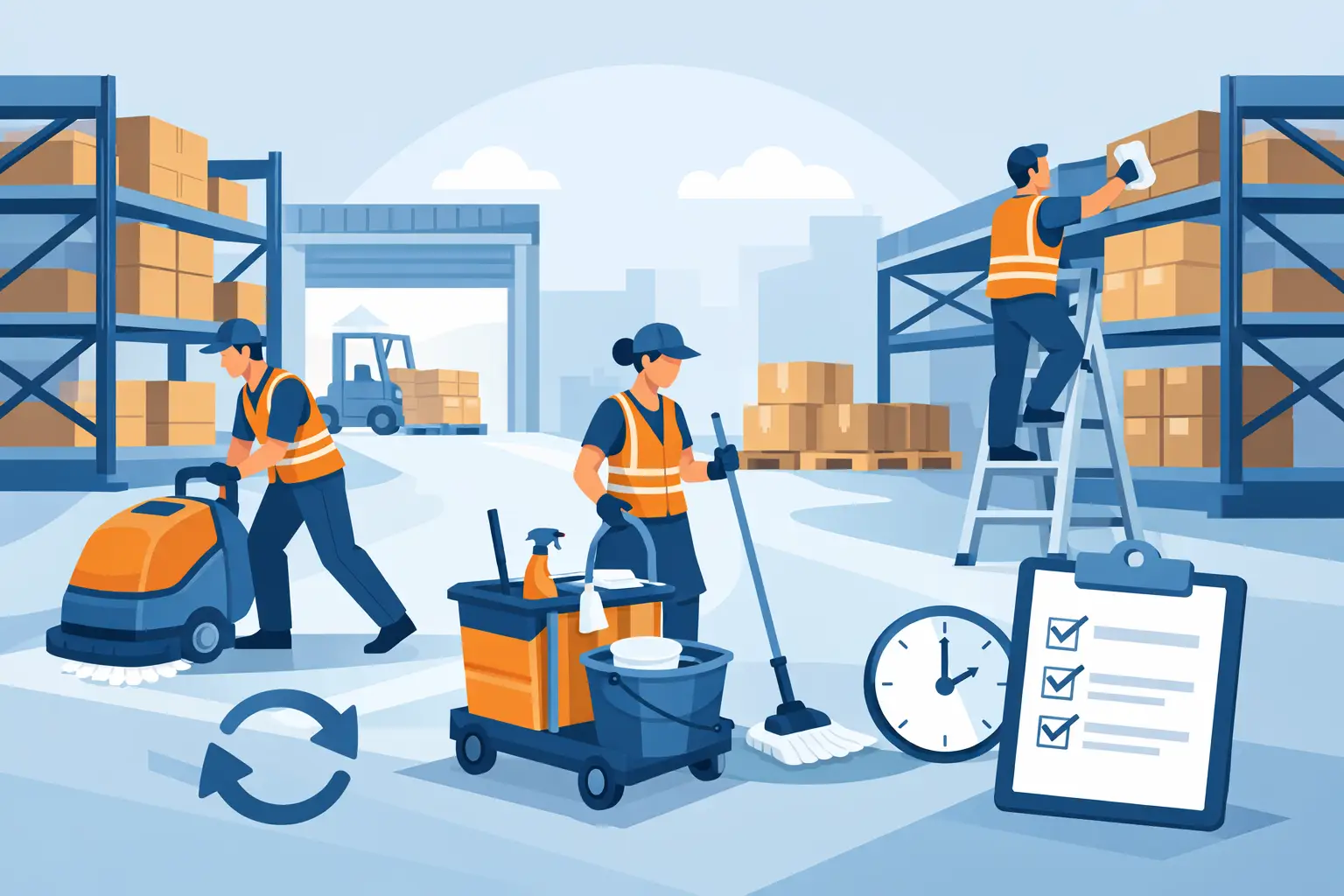
Imagine a medium-sized distribution warehouse operating five days a week. Forklifts move between racking, delivery lorries arrive throughout the day, and a team packs orders at several workstations. The building has a loading bay, storage aisles, packing area, office, toilets, break room and external entrance.
The site manager needs cleaning that does not interfere with dispatch deadlines or create hazards while the team is working. The most practical arrangement is often a combination of daily cleaning for high-use areas and scheduled deep cleaning for the wider warehouse floor, high-level surfaces and hard-to-reach zones.
Before the shift starts, the cleaning supervisor checks the agreed scope, the warehouse traffic plan and any areas that must remain accessible. This matters because cleaning around moving vehicles, stacked pallets or active conveyor equipment requires coordination. A clean floor is useful. A cleaner blocking a fire exit or forklift route is not.
Start with a safety and access check
The team begins by walking the site with the facilities contact or shift lead. They look for spills, broken pallets, loose shrink wrap, damaged bins and obstructions near emergency exits. Any immediate slip or trip risk is dealt with first and clearly signposted while the area dries.
Cleaning staff should not move stock, operate warehouse equipment or access restricted machinery unless that work has been specifically agreed and safely managed. Clear boundaries keep everyone safer and avoid confusion over responsibility.
Clean the warehouse floor in the right order
Floor care is usually the largest part of the job. Rather than washing the whole site at once, the team works by zone. They start in quieter aisles or areas temporarily closed to traffic, then move to loading and packing zones when operations allow.
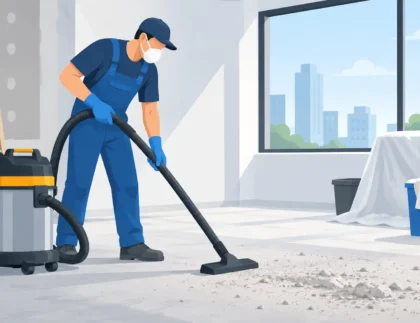
Dry debris comes first. Dust, cardboard fragments, labels, timber splinters and packaging waste are swept or removed with suitable industrial vacuum equipment. This is more than a cosmetic task. Debris caught under pallet wheels can spread across the building, while loose film wrap can become a serious trip hazard.
Once the area is clear, a mechanical scrubber dryer or suitable floor-cleaning method removes ingrained dirt, tyre marks and tracked-in grime. The right process depends on the flooring. Sealed concrete, resin, vinyl safety flooring and painted surfaces all respond differently to chemicals and machine pressure. Using too much water may be a poor choice where forklifts return quickly or where drainage is limited.
A professional cleaner will use appropriate products and measured dilution, including eco-conscious options where suitable. Environmentally considerate cleaning should still deliver a proper result. The goal is clean, dry, safe flooring – not simply a pleasant scent.
Cleaning the Areas That Affect Daily Operations
A warehouse can look tidy from the main aisle while the places employees use most are falling behind. These areas deserve consistent attention because they affect hygiene, morale and the impression made on drivers, visitors and clients.
Packing benches are wiped down to remove dust, tape residue and general handling dirt. Rubbish and recycling bins are emptied, relined and checked for overflow. Touchpoints such as door handles, keypad panels, light switches and shared equipment controls are cleaned using suitable disinfecting products.
In the staff break room, cleaning includes tables, worktops, sinks, appliance exteriors and floors. Toilets need a more detailed routine: sanitary ware, taps, flush points, dispensers, mirrors, cubicle doors and floors should all be cleaned and replenished. Hand soap, paper products and bin liners should be checked before the team leaves, not discovered missing halfway through the next shift.
Office areas may only take a small part of the warehouse footprint, but they often receive clients, drivers and senior visitors. Desks, floors, waste bins and glass partitions can be included in the same service plan, allowing one cleaning team to cover the building properly.
Loading bays and entrances need special attention
Loading bays collect the toughest dirt. Rainwater, mud, tyre marks, diesel residue, cardboard and windblown rubbish can make this area look neglected quickly. Cleaning may involve sweeping, litter removal, spot treatment for stains and clearing debris away from drains where it is safe and appropriate to do so.
Entrances should be kept presentable without becoming slippery. Floor mats may need vacuuming or washing, and entrance glass benefits from regular cleaning to remove fingerprints and road grime. These details make a difference when a customer, supplier or prospective employee walks in.
A Simple Schedule That Keeps Standards Consistent
Not every warehouse needs the same frequency. A small storage unit with low footfall may only need a regular weekly clean, while a high-volume fulfilment centre could require daily attendance and several floor-cleaning sessions each week. The best plan is based on traffic, industry requirements, staff numbers, floor type and operating hours.
A typical schedule could look like this:
- Daily: remove rubbish, clean washrooms and break areas, disinfect touchpoints, deal with spills, sweep high-traffic routes and tidy packing stations.
- Weekly: machine-clean key floor zones, clean offices, wipe accessible racking surfaces, clean entrance areas and remove cobwebs from lower-level corners.
- Monthly or quarterly: deep-clean the full warehouse floor, address high-level dust, clean interior glazing, detail loading areas and review hard-to-reach spaces.
- As needed: post-delivery cleans, spill response, after-hours cleaning, post-construction cleaning or an intensive clean before an inspection.
The schedule should stay flexible. A warehouse may need extra cleaning after a peak trading period, a stock reorganisation or wet weather that brings more dirt through loading entrances. Regular communication between the site contact and cleaning provider makes those adjustments easier.
What a Quality Check Should Include
A cleaning job is only useful if the result holds up once the warehouse is operating again. Before sign-off, the supervisor checks that waste has been removed, washrooms are stocked, floors are dry and routes are clear. They also make sure cleaning equipment, warning signs and supplies have been taken away from operational areas.
Quality checks should look beyond what is obvious. Are corners collecting dust? Is the bin area clean rather than simply emptied? Are hand-contact surfaces free from visible marks? Have packing stations been left ready for the next team? These are the details that turn routine cleaning into reliable site support.
Photographic reporting or a simple completed checklist can be useful for larger sites, particularly where facilities managers need visibility across multiple shifts. It creates a clear record of what was completed and helps identify recurring issues, such as a leaking bin area or a section of flooring that needs specialist treatment.
When to Call in a Specialist Warehouse Cleaning Team
In-house teams can often manage day-to-day tidying, but specialist support is worthwhile when dirt is embedded, the floor area is large, work takes place outside standard hours or hygiene expectations are high. Warehouses handling food-adjacent products, healthcare supplies or sensitive stock may need more structured procedures than a general storage space.
It is also sensible to arrange a deep clean before reopening a dormant unit, after building works, before a site audit or when taking over a new lease. These jobs require time, equipment and a methodical approach that is difficult to squeeze into an already busy shift.
For warehouses across London, Ultimate Cleaners can tailor a service around your operating hours, access needs and cleaning priorities. Whether you need a one-off deep clean or a recurring plan, the right service should make the site easier to run, not give your team another job to manage.
A warehouse stays cleaner when the cleaning plan reflects how the building actually works. Start with the busy routes, protect the people using them, and build a routine that keeps standards high long after the first clean is complete.