A stained carpet outside the meeting room can make an otherwise well-run office feel neglected. It also holds on to dust, grit and odours long after the visible mark has disappeared. Knowing how to maintain clean office carpets helps protect your workplace appearance, supports a fresher environment for staff and visitors, and can extend the life of an expensive flooring investment.
The good news is that office carpet care does not need to become another full-time job for your facilities team. A sensible routine combines daily attention in busy areas, fast action when spills happen and periodic professional cleaning. Get those three parts right and your carpets will look better between deep cleans.
How to Maintain Clean Office Carpets Every Day
Most carpet damage starts with dry soil. Sand, dust and small pieces of grit are carried in on shoes, then worked into the fibres as people walk across them. In a busy London office, particularly near entrances, kitchens, lifts and reception desks, that wear can build up quickly.
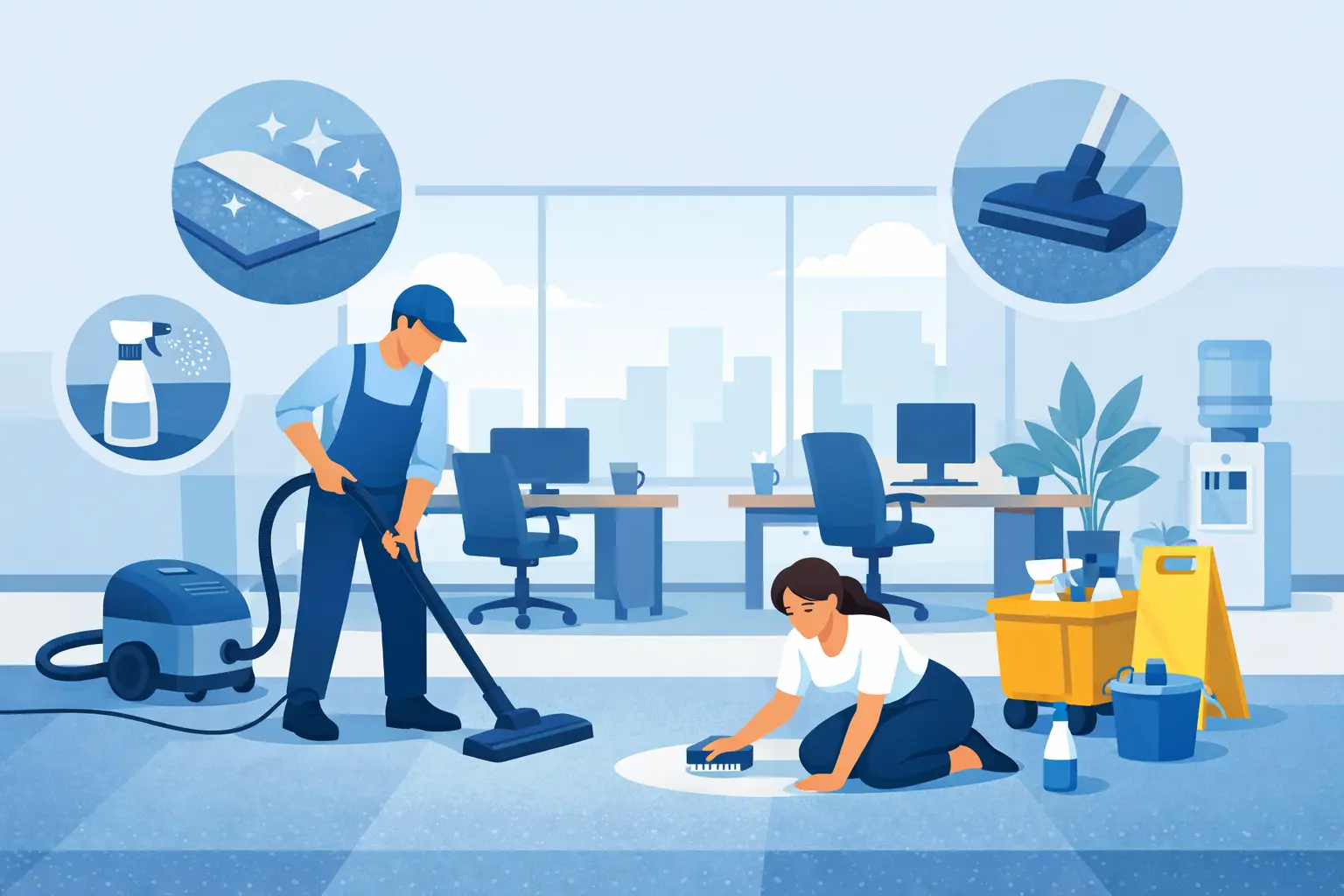
Vacuuming is the simplest defence, but it needs to be done properly. High-traffic routes should be vacuumed daily, while quieter workspaces may only need attention two or three times a week. Use a commercial vacuum with strong suction and a brush setting suited to the carpet type. A rushed pass over the middle of the floor will not remove the dirt gathering along skirting boards, under desks or around chair bases.
Entry matting matters just as much. Place durable mats both outside and inside each main entrance so they can catch moisture and debris before it reaches the carpet. Clean the mats regularly, too. A saturated or dirty mat stops doing its job and can simply transfer grime further indoors.
Encourage small habits that make a real difference. Provide a clear place for umbrellas on wet days, ask staff to report spills straight away, and avoid placing bins where they are likely to leak onto carpeted areas. These are minor operational details, but they prevent many of the stains that become permanent.
Create a Spill Response Routine
Coffee, tea, printer toner and lunch spills are ordinary office incidents. The difference between a quick clean-up and a lasting stain is usually the first few minutes. Every office should keep a basic spill kit in an easy-to-reach cupboard, not hidden in a locked store room that only one person can access.
The kit should include clean white cloths or paper towels, a suitable carpet spot cleaner, disposable gloves and a small brush. White cloths are preferable because coloured materials can transfer dye onto damp carpet. Make sure staff know which product is approved for your particular carpet, as a harsh chemical can bleach fibres or leave a sticky residue that attracts more dirt.
When a spill occurs, blot it immediately from the outside towards the centre. Do not scrub. Scrubbing spreads the spill, pushes it deeper into the pile and can roughen the carpet fibres. Apply a small amount of cleaning solution according to its instructions, blot again, then allow the area to dry fully.
For anything oily, strongly coloured or unknown, avoid experimenting with several products. That can make professional stain removal more difficult later. Record the spill, protect the area from foot traffic where possible and arrange specialist help if a mark remains.
Do not overwet the carpet
Overwetting is one of the most common cleaning mistakes. Too much water can soak through to the backing, slow drying times and create conditions for unpleasant smells or mould. It may also cause rippling, particularly where carpet tiles or adhesive are involved.
Use only enough solution to treat the affected area. If the carpet feels soaked after spot cleaning, absorb excess moisture with dry towels and improve ventilation. In a busy office, schedule any larger clean for a time when the space can dry without people walking over it.
Manage the Areas That Take the Most Wear
Not every part of the office needs the same cleaning frequency. Reception, corridors, breakout spaces and routes to the kitchen typically take far more punishment than boardrooms or enclosed offices. Treating the whole floor exactly the same can waste time in low-use zones while leaving the busiest areas looking tired.
Walk the office once a month and look for dull paths, darkened carpet near entrances, frayed edges and recurring stains. These are early warning signs that the cleaning plan needs adjusting. You may need more frequent vacuuming around desks used for hot-desking, extra matting during rainy periods or a professional clean focused on selected traffic lanes.
Furniture layout can help as well. Chair mats beneath castor chairs reduce abrasion, while rearranging movable furniture occasionally prevents the same narrow routes from being walked on every day. This will not eliminate wear, but it spreads the load more evenly.
Keep Food and Drinks Under Control
A strict no-drink rule is rarely realistic in a modern workplace, especially where staff spend long hours at their desks. A more workable approach is to set clear boundaries. Encourage lidded cups away from kitchen areas, provide suitable dining spaces and make it easy to dispose of food waste before it reaches the carpet.
Pay particular attention to coffee stations and meeting rooms. These are the places where drips and crumbs often go unnoticed until the next day. A quick check after meetings, plus routine cleaning of the area around refreshment points, keeps small messes from becoming embedded stains or odours.
If your office has clients, protect the carpet in public-facing areas without making the space feel clinical. Quality entrance mats and regular attention at reception make a better impression than trying to conceal stains after the fact.
Schedule Professional Carpet Cleaning Before It Looks Urgent
Vacuuming and spot cleaning handle day-to-day soil, but they cannot remove everything trapped deep in the fibres. Professional carpet cleaning lifts compacted dirt, refreshes the pile and addresses the grime that makes carpet colours look flat. It is preventative maintenance, not a last resort once the carpet is visibly dirty.
The ideal frequency depends on footfall, the type of business and the carpet itself. A small, low-traffic office might need a professional clean once or twice a year. A shared workspace, busy retail office or customer-facing site may benefit from quarterly cleaning, especially around entrances and communal areas.
There is a trade-off between cleaning method, drying time and the level of soil. Hot water extraction can provide a thorough clean for heavily used carpets, but it requires adequate drying time. Low-moisture methods can be useful where the office needs to reopen quickly. A professional cleaner should assess the fibres, backing, stains and access before recommending the approach, rather than using the same method for every site.
At The Ultimate Cleaners, we work with London offices that need carpet cleaning planned around operational hours, not the other way round. A tailored schedule can cover regular maintenance and one-off deep cleans without causing unnecessary disruption to staff or visitors.
Protect Carpet During Office Changes and Building Work
Office moves, repairs and refurbishments create more carpet risk than many teams expect. Dust from drilling, muddy footwear, paint splashes and furniture dragging can leave lasting damage in a matter of hours. If work is taking place, use protective coverings on main walkways and make contractors aware of which areas are carpeted.
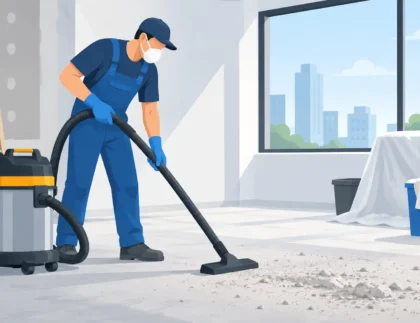
After construction or decorating, do not rely on a standard vacuum alone. Fine dust can settle deeply into carpet fibres, and residues may need specialist treatment. A post-work clean can restore the space before staff return and prevent debris being spread throughout the building.
The same principle applies when moving desks or equipment. Lift furniture where possible instead of dragging it, and check for castor marks or small tears before they worsen. Replacing a few damaged carpet tiles is usually easier and more cost-effective than waiting until the problem affects a larger section.
Give Staff a Simple Way to Report Problems
Carpet maintenance works best when everyone knows what to do, but the process should be easy. A complicated reporting system means spills get ignored. Ask staff to tell a designated office manager, facilities contact or cleaning team as soon as they notice a stain, leak or loose carpet edge.
Keep a simple record of recurring issues. If the same stain keeps appearing near one desk, the solution may be better cable management, a relocated plant or a change to where drinks are prepared. Patterns often reveal a practical fix that cleaning alone cannot provide.
Clean office carpets are not about chasing perfection every hour of the day. They are about putting a reliable routine in place, dealing with mishaps quickly and bringing in professional support before wear becomes difficult to reverse. That leaves your team with a workplace that feels cared for, ready for work and welcoming from the moment someone walks through the door.