A spotless shop does more than look good at opening time. It tells customers that your business is organised, safe and worth their trust. This guide to retail cleaning standards explains what a practical cleaning programme should cover, how often key areas need attention, and when it makes sense to bring in professional help.
For London retailers, the challenge is rarely a lack of effort. It is the pace of the day. Wet weather, packed pavements, deliveries, fitting-room traffic and busy staff areas can make a clean store look tired within hours. The answer is not simply more cleaning. It is a clear standard, the right frequency and a routine your team can keep up with.
What retail cleaning standards should achieve
Retail cleaning standards are the agreed level of cleanliness, hygiene and presentation expected throughout your premises. They should be specific enough for staff or cleaners to follow, but practical enough to work during a busy trading day.
A good standard protects people as well as appearances. Floors should be free from slip hazards, touchpoints should be hygienic, washrooms should be properly stocked, and waste should be contained and removed. In food, beauty, health and child-focused retail settings, the cleaning plan will usually need tighter controls because the consequences of poor hygiene are higher.
There is no single schedule that suits every shop. A small boutique with low footfall needs a different approach from a supermarket, showroom or high-street convenience store. Start with the risks and traffic in each area, then set a cleaning frequency that reflects real use rather than an idealised checklist.
Start with the customer journey
Walk through your premises as a customer would, from the pavement outside to the till point. The areas that shape first impressions are often the ones that become dirty fastest: entrance glass, door handles, mats, floors, baskets, counters and mirrors.
Your entrance deserves particular attention. Rain and grit are regularly carried into London shops, especially during autumn and winter. Mats should trap dirt rather than become saturated, and hard floors should be checked throughout the day for marks, litter and wet patches. A floor can be technically clean at 9am and still need a quick response by lunchtime.
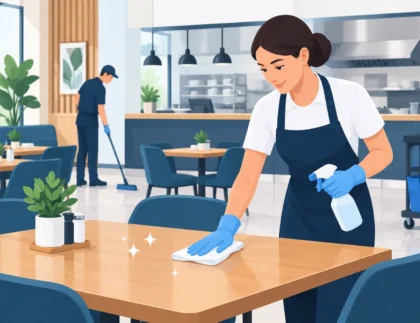
At the checkout, customers notice fingerprints, clutter and dusty display edges immediately. Clean counter surfaces, card terminals and hand-contact points regularly, using products suitable for the surface and following the required contact time for disinfectants. Staff should never spray chemicals directly over food, packaging or electrical equipment.
Build a cleaning routine around frequency
The simplest way to maintain standards is to split tasks into opening, daytime, closing and periodic work. This removes guesswork and helps managers see quickly whether anything has been missed.
Opening checks
Before customers arrive, the shop should look prepared rather than merely empty. Floors should be vacuumed or mopped as appropriate, glass cleaned, waste removed, shelves dusted where needed and washrooms checked. Make sure changing rooms, seating areas and staff spaces are presentable too. Customers may not see every back-of-house area, but poor conditions there can affect staff wellbeing and hygiene across the business.
Daytime touch-ups
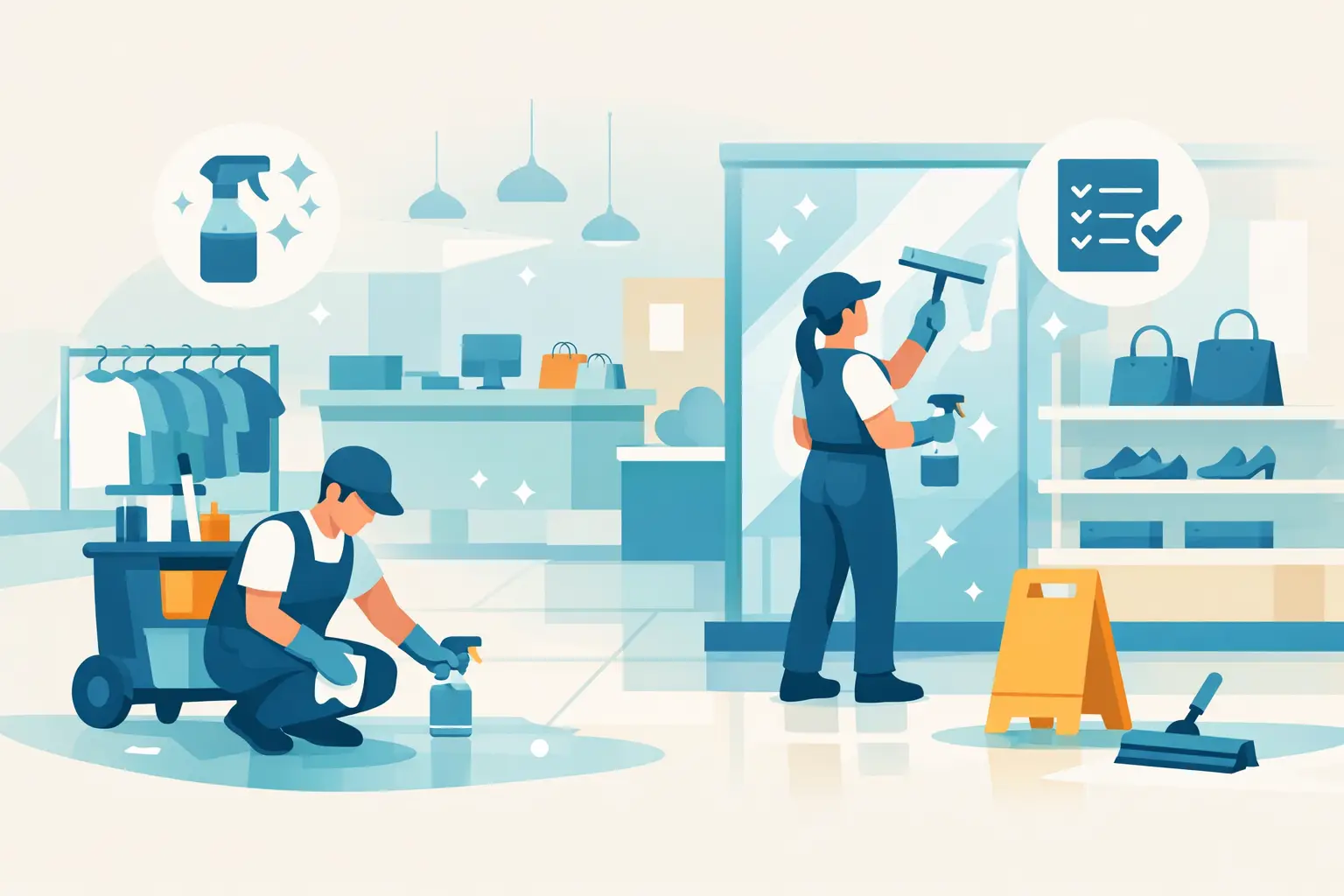
During trading hours, focus on issues that affect safety and customer confidence. Deal with spills straight away, remove litter, clean fingerprints from glass and high-touch points, restock toilet supplies and tidy fitting rooms. In a high-footfall store, these checks may be needed every hour. In a quieter specialist retailer, a few scheduled walk-rounds may be enough.
Closing cleaning
Closing time is the opportunity for a more complete reset. Clean floors thoroughly, sanitise touchpoints, empty bins, clean washrooms, wipe staff kitchen areas and remove debris from behind counters and displays. Do not overlook door frames, skirting, corners and under movable furniture. Dirt builds in the places customers may not consciously see, but it still affects odour, pests and the overall condition of the premises.
Weekly and periodic work
Some work cannot be done well in a quick daily clean. Plan regular deep cleaning for carpets, upholstery, windows, stockroom floors, high-level dust, vents and hard-to-reach fittings. The right interval depends on your premises. A fashion shop may need frequent fitting-room and mirror care, while a warehouse-style retailer may need greater focus on dust control, loading areas and safety walkways.
Focus on hygiene, not just visible dirt
A polished surface is not automatically hygienic. Retail teams need to understand the difference between cleaning, which removes dirt, and disinfecting, which reduces germs on suitable surfaces. Both have their place.
High-touch areas such as handles, baskets, trolleys, till points, lift buttons and shared staff equipment should be part of a regular hygiene routine. Washrooms need particular care: toilets, taps, flush handles, hand dryers, bins and door handles all require thorough cleaning and disinfection, alongside reliable soap, toilet roll and hand-drying supplies.
If your shop handles or sells open food, your procedures should be stricter. Separate equipment by area where possible, use colour-coded cloths to reduce cross-contamination, and make sure food preparation surfaces are cleaned with suitable products. Cleaning chemicals should be stored securely, labelled clearly and kept away from food and customer areas.
Keep floors safe and presentable
Floors carry much of the burden in retail premises. They collect street dirt, liquid spills, packaging scraps and marks from trolleys, shoes and stock movement. They also create one of the most common safety risks.
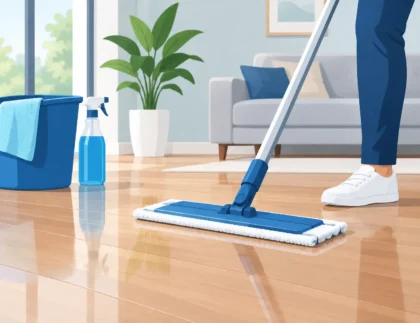
Choose cleaning methods that suit the flooring material. Too much water can damage wood, laminate and some vinyl finishes, while incorrect products can leave a slippery residue or dull the surface. Put clear warning signs out while floors are wet and remove them only when the area is dry and safe to use.
Carpeted spaces need more than occasional vacuuming. Entrance carpets and fitted areas hold fine dust and moisture, which can lead to odours and a worn appearance. Periodic professional carpet cleaning can refresh the fibres and help extend the life of a costly floor covering. It is usually best arranged outside trading hours to avoid disrupting customers.
Make accountability simple
A cleaning standard only works if someone owns it. Assign clear responsibilities for daily checks, supply levels and incident reporting, whether that is a store manager, facilities lead, in-house team or contract cleaner. A simple signed checklist can help, but it should support real checks rather than become paperwork completed from behind the counter.
Record cleaning issues that need follow-up, such as damaged flooring, persistent leaks, broken dispensers, pest signs or recurring odours. Cleaning can reveal maintenance problems early, saving your business from a larger repair bill or a poor customer experience later on.
For staff using cleaning chemicals, provide basic training on dilution, storage, personal protective equipment and what to do in the event of a spill. Products should be used according to their instructions, not mixed together or transferred into unlabelled containers. This is especially relevant under COSHH requirements, where employers must assess and control risks from hazardous substances.
When professional retail cleaning is the better option
In-house cleaning can work for light daily tasks in a small store, particularly where staff have time and a clearly defined routine. The trade-off is consistency. When queues build, deliveries arrive or colleagues are off sick, cleaning is often the first task to slip.
A professional cleaning team can provide dependable scheduled visits, deeper periodic work and flexible support before launches, seasonal promotions, inspections or handovers. For shops in busy areas of London, out-of-hours cleaning is often the most practical option, allowing work to be completed without customers walking around equipment or wet floors.
The Ultimate Cleaners supports retail and commercial sites with routine cleaning, washroom care, carpet cleaning, window cleaning and one-off deep cleans. Eco-friendly product options can also be a sensible choice where your brand wants to reduce unnecessary chemical use, provided the products remain suitable for the hygiene task at hand.
Review the standard as your shop changes
Your cleaning plan should not stay fixed forever. Review it after a refit, a change in opening hours, a rise in footfall or repeated customer complaints. Ask your team which areas become difficult to maintain and inspect the shop at different times of day, not only just after cleaning has finished.
The best retail cleaning standard is one customers rarely think about because everything feels fresh, safe and ready for them. Set clear expectations, respond quickly to the mess that happens during real trading hours, and get reliable support when your team needs more than a quick tidy-up.