The kitchen looked clean at a glance. The pass was wiped down, floors had been mopped after the previous service, and the restaurant was ready to open. But a closer inspection told a different story: grease was building up behind cooking equipment, food debris had collected beneath shelving, and the extraction area needed attention. This commercial kitchen cleaning case study shows why a visible wipe-down is not the same as a properly maintained food preparation environment.
For busy London restaurants, cafés and catering sites, cleaning is not something that can wait until there is a problem. A commercial kitchen has to cope with heat, steam, oil, spills, deliveries, staff movement and constant use. When standards slip in hard-to-reach areas, the effect can be felt in hygiene, safety, staff morale and the overall pace of service.
The challenge: a kitchen under constant pressure
This representative case study is based on a busy neighbourhood restaurant with a compact kitchen, six-day trading and a high-volume evening service. The team completed routine cleaning at the end of each shift, but the site manager recognised that daily tasks were no longer enough to keep on top of grease and residue.
The main concern was not the customer-facing dining area. It was the places staff and customers rarely see: behind the range, around the fryer, under refrigerated units, along wall edges, on high-level surfaces and around storage racks. Those areas are easy to miss when the priority is getting the kitchen reset for the next day.
There were also practical limits. The restaurant could not close for several days, and the cleaning work had to fit around food deliveries and trading hours. The manager needed a cleaning team that could work methodically, minimise disruption and leave the kitchen ready for service.
Commercial kitchen cleaning case study: the plan
Before work began, the cleaning team assessed the kitchen layout and identified the areas requiring the most attention. A clear plan matters because a kitchen deep clean is not simply about using stronger products. Different surfaces, appliances and levels of grease need different methods, and food preparation spaces must be treated with care.
The work was scheduled outside the restaurant’s busiest period. Equipment was moved where it was safe and practical to do so, allowing access to the grease traps, wall surfaces and floor areas that had been inaccessible during daily cleaning. The team then worked through the kitchen in sections so that progress could be checked as the job continued.
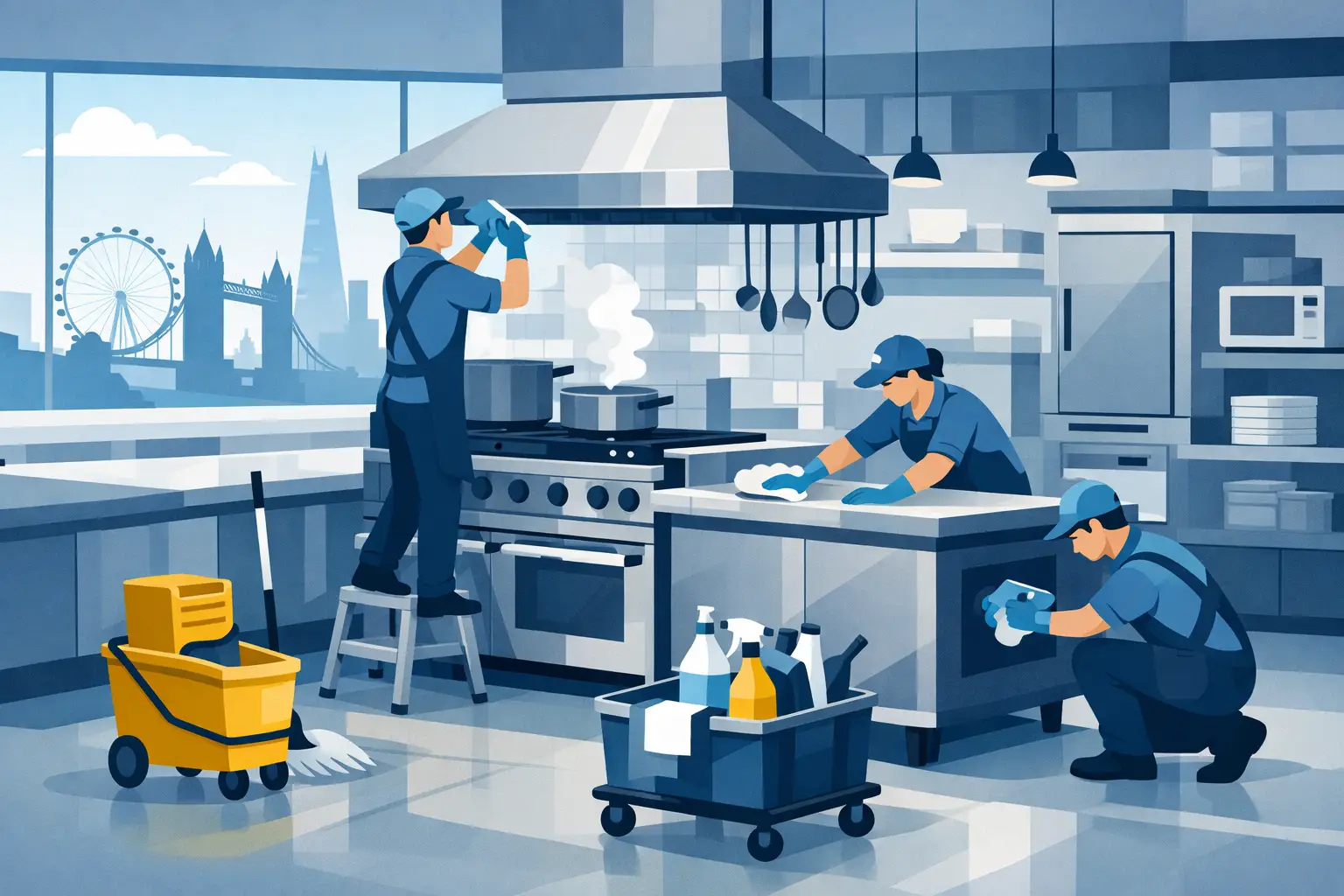
The focus included the cooking line, fryer surrounds, splashbacks, floors, skirting, shelving, refrigerated unit exteriors, storage areas and high-touch points. Degreasing products were selected for the surface and level of build-up, while eco-conscious cleaning methods were used wherever suitable. The aim was to remove accumulated grime without creating unnecessary mess, harsh odours or downtime for the restaurant team.
Why the hidden areas mattered most
Grease behind a cooker does more than make a kitchen look neglected. It can contribute to unpleasant smells, create a slip risk when it reaches the floor and make future cleaning much harder. Food particles beneath shelving can attract pests, while dusty high-level surfaces can undermine an otherwise well-run hygiene routine.
These are not always failures of effort. In many kitchens, staff are working quickly at the end of a long shift. They need an achievable daily checklist, backed by periodic professional cleaning for the areas that require more time, access and specialist attention.
What changed after the deep clean
Once the deep clean was completed, the immediate difference was clear. Cooking and storage areas looked brighter, grease residue was removed from difficult areas, and the floor edges and spaces beneath equipment were brought back under control. More importantly, the kitchen felt easier for staff to maintain.
That point is often overlooked. A deep clean should not be treated as a one-off rescue job that solves every future issue. Its real value is that it gives the team a clean baseline. When surfaces, equipment surrounds and floor edges are properly cleaned, daily wipe-downs and mopping become more effective.
The restaurant manager also had a clearer view of where routine cleaning needed to improve. Rather than asking staff to clean everything more often, the revised approach separated quick daily tasks from weekly checks and scheduled deep-cleaning requirements. That made responsibilities more realistic during busy service periods.
A practical maintenance routine
For this type of kitchen, a sensible routine combines daily hygiene work with regular professional support. Food contact surfaces, preparation areas, handles and floors need attention every day. Grease-heavy equipment surrounds, inaccessible floor areas and high-level surfaces need planned cleaning at intervals based on how heavily the kitchen is used.
A small café with light cooking may need a different schedule from a high-output restaurant operating a fryer and grill six days a week. There is no single frequency that suits every site. The right plan depends on the menu, kitchen size, equipment, ventilation, footfall and whether the business has enough time between shifts for staff to complete basic cleaning properly.
The business case for planned kitchen cleaning
A commercial kitchen deep clean is an operational decision, not just a cosmetic one. When cleaning is left until grease is visible, odours develop or an inspection is approaching, the work is usually more disruptive and more expensive. There may also be more pressure on staff at exactly the time they need to focus on service.
Planned cleaning helps managers keep control of the site. It can support safer walking areas, reduce the build-up of grease and make it easier to maintain a professional standard from one shift to the next. It also gives business owners confidence that the areas outside their team’s daily reach are not being ignored.
There are trade-offs, of course. A thorough deep clean requires access, time and a degree of coordination with the kitchen team. In a compact London site, moving equipment and working around limited space can take longer than expected. But arranging the work at a quieter time is far less disruptive than dealing with a kitchen that has reached the point where normal cleaning no longer works.
When should a restaurant arrange a deep clean?
The clearest sign is often the one staff have learned to work around: greasy equipment edges, sticky floors that return soon after mopping, residue behind appliances or odours that persist despite routine cleaning. A change in trading volume is another reason to review the schedule. A kitchen that has expanded its menu, added a fryer or increased delivery orders may outgrow its previous routine quickly.
Managers should also consider a professional clean before reopening after refurbishment, before taking over a new premises, after a long closure or when preparing for an important inspection. These moments are an opportunity to start with a clean, manageable baseline rather than inherit someone else’s build-up.
For restaurants, cafés and food businesses across London, The Ultimate Cleaners can arrange commercial kitchen cleaning around the practical realities of your site. We are the Dust Busters – thorough where it counts, responsive when timing matters, and focused on making the job easier for your team.
A clean kitchen is not created by one big push alone. It is maintained by a realistic routine, the right support at the right time and a team that does not leave the difficult areas for later.