A scuffed entrance, sticky patch by the till or dusty aisle can change a customer’s view of your shop before they have looked at a single product. This guide to retail floor cleaning explains how to keep busy sales areas clean, safe and presentable without disrupting trading or damaging the floor beneath your feet.
For London retailers, floors work hard. Rain, pavement grit, spilled drinks, stock deliveries and constant footfall all leave their mark. A good routine is not about making floors shine for one morning. It is about protecting the surface, reducing slip risks and giving customers a store they feel comfortable spending time in.
Start with the floor, not the cleaning product
The fastest way to create an expensive problem is to use one cleaner, one mop and one method across every surface. Retail flooring varies widely, even within one premises. Your front entrance may have tile, the sales floor may be vinyl, changing rooms may have laminate, and the stockroom may be sealed concrete.
Vinyl and LVT are popular because they are practical, but harsh chemicals, dirty mop water and excessive scrubbing can dull their protective finish. Ceramic tiles tolerate more moisture, yet grout lines hold dirt and need regular attention. Natural stone requires a pH-neutral cleaner, while laminate and wood need very little water to avoid swelling, lifting or warping.
Before changing your routine, check the manufacturer’s care guidance and test any unfamiliar product in an inconspicuous area. If you lease the property, this also helps protect you against disputes over surface damage at the end of the tenancy.
Match the method to the material
For hard floors, dry soil removal should come first. Grit acts like sandpaper under shoes and trolley wheels, slowly scratching the finish. Vacuuming or sweeping before mopping prevents that grit from becoming dirty slurry.
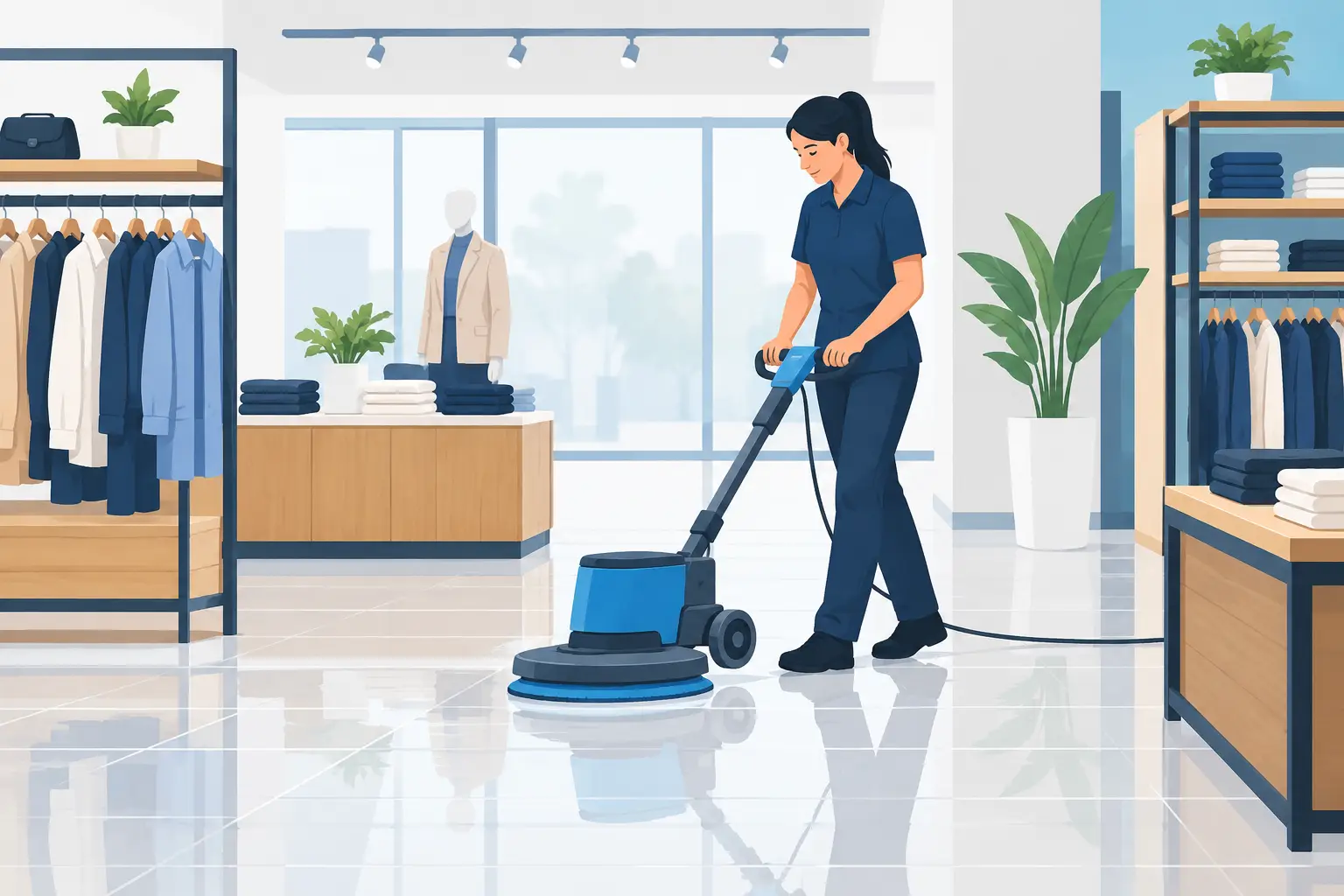
Then use the least aggressive effective method. A microfibre flat mop and correctly diluted neutral detergent suit many daily retail cleans. Machine scrubbing may be the right choice for a larger shop or heavily soiled tile floor, but it needs trained operators, the correct pad and enough time for the floor to dry safely.
Carpeted retail areas need regular vacuuming, prompt spot treatment and periodic deep cleaning. Do not wait until the carpet looks visibly dirty. By that stage, soil has often been worked deep into the pile, making restoration more time-consuming and costly.
Build a retail floor cleaning schedule around footfall
Cleaning frequency depends on what comes through the door. A quiet boutique and a convenience store beside a busy station should not follow the same schedule. The key is to divide work into quick checks, daily cleaning and planned deeper maintenance.
During trading hours
Staff should carry out short, practical floor checks throughout the day. The entrance, tills, fitting rooms, food or drink areas and any display where customers handle products deserve the closest attention. Deal with a spill immediately, place a wet-floor sign before cleaning and remove it only when the surface is fully dry.
Keep entrance matting clean and flat. Good matting captures a significant amount of moisture and grit before it reaches the sales floor, but a saturated or curled mat becomes a trip hazard instead. In wet weather, increase inspections rather than simply mopping more often.
Spot-cleaning is particularly valuable in high-footfall shops. It keeps the store looking cared for while avoiding the disruption of closing off a large area. Use a small amount of solution, clean cloths and fresh water where needed. A mop bucket full of grey water redistributes dirt rather than removing it.
At closing time
The end-of-day clean is the foundation of your routine. Remove loose debris, vacuum corners and edges, clean under movable displays where possible, then mop or machine-clean according to the floor type. Pay attention to thresholds, skirting edges and the space around shelving, where dust and packaging fragments gather.
Do not rush drying time. A floor can look clean but still be unsafe if it is damp when staff leave, deliveries arrive or early customers enter. Improve ventilation where practical and use equipment that leaves as little moisture behind as possible.
Weekly and periodic care
A weekly detail clean prevents the gradual build-up that daily work can miss. This may include grout, corners, door tracks, beneath gondolas, kick plates and back-of-house routes. Plan deeper cleaning around the busiest parts of your trading calendar, not after the floor has already become difficult to restore.
The right interval might be monthly, quarterly or twice yearly. It depends on footfall, weather exposure, food and drink use, surface type and whether cleaning happens in-house or through a commercial contract. A showroom with light traffic may need occasional machine cleaning, while a busy shop entrance may need it far more often.
Control the risks that customers notice most
Retail floor cleaning is as much about safety as appearance. Slips and trips can lead to injuries, complaints and disruption for your team. They are also often avoidable with a clear process.
Use warning signs whenever a section of floor is wet, but do not treat signage as the whole solution. Clean small sections at a time, keep routes open where possible and dry the surface properly. Never leave mop handles, leads, buckets or cleaning supplies where customers could catch a foot on them.
Spills need a simple response procedure that every staff member understands: protect the area, clear the spill, clean the residue, dry the floor and report recurring causes. If the same area keeps becoming sticky or wet, the issue may be a leaking fridge, a poorly positioned bin, a damaged entrance mat or an unsuitable cleaning method.
Cleaning products must also be stored safely, labelled clearly and diluted as directed. Stronger is not always better. Overdosing detergent can leave a tacky film that attracts more dirt and makes the floor look worse within hours.
Get the equipment and chemistry right
The basics make a real difference. Use colour-coded cloths and mop heads to avoid transferring dirt from toilets or staff areas to customer-facing floors. Wash reusable mop heads properly between shifts and replace them when they no longer clean effectively.
For many smaller retail spaces, a commercial vacuum, microfibre mops, a neutral floor cleaner, spot-cleaning kit, wet-floor signs and quality entrance mats cover the essentials. Larger premises may benefit from a scrubber dryer because it applies solution, agitates soil and recovers dirty water in one pass. It can save time, but only if the machine is suitable for the floor and operators are trained.
Eco-friendly products can be a sensible choice for shops that want to reduce harsh chemical use, particularly in customer-facing areas. However, eco-conscious should still mean effective. Choose products appropriate for the material and level of soiling, and avoid fragranced solutions that merely mask odours while leaving residue behind.
Know when professional cleaning is the sensible option
Your team can handle daily upkeep, but there are times when specialist support saves money and hassle. Ground-in dirt, widespread staining, dull finishes, greasy food-service areas, post-refit dust and neglected grout usually need more than a quick mop.
A professional commercial cleaning team can assess the surface, select suitable equipment and work outside opening hours where required. This is useful before a store launch, seasonal promotion, inspection, handover or important customer event. It also gives busy managers a dependable standard without taking staff away from customers and stock.
At The Ultimate Cleaners, we help London shops keep customer areas, staff spaces and entrances in order with flexible commercial cleaning that works around trading hours. A planned service can combine routine maintenance with periodic deep cleans, so the work stays manageable rather than becoming an urgent repair job.
Keep records and adjust the routine
A simple cleaning log is useful for any retail business, whether you run one shop or several sites. Record when floors are cleaned, which areas received a deep clean, what products were used and any slips, spills or surface concerns. It gives managers visibility, supports staff training and helps identify patterns.
Review the routine after changes in weather, trading hours, layout or customer traffic. A new coffee station, winter rain or a busier weekend can quickly make an old schedule inadequate. The cleanest retail floors are not maintained by one heroic deep clean. They stay that way because the routine responds to how the shop is actually used.
A well-kept floor quietly tells customers that the rest of your operation receives the same care. Keep the daily process simple, act quickly on spills and bring in specialist help before wear becomes damage.