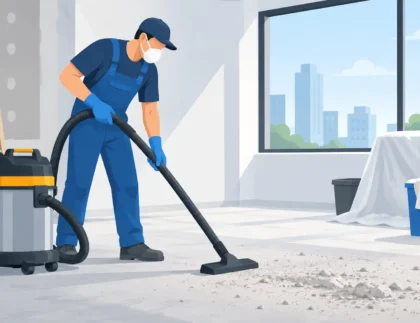

Picture the final morning in your flat: the boxes are stacked by the door, the removal van is due, and you notice grease on the hob, limescale around the taps and dust sitting behind the sofa. This house cleaning before moving example shows what a realistic, thorough clean looks like, where people lose time, and how to leave a property ready for handover.
Moving day already comes with enough pressure. A clear cleaning plan helps tenants protect their deposit, helps homeowners present the property properly, and gives landlords a clean start for incoming occupants. The key is to clean after the property is empty, not while you are still packing around piles of belongings.
A house cleaning before moving example: a two-bedroom London flat
Imagine a tenant moving out of a two-bedroom flat in Islington after three years. The property has one bathroom, a combined kitchen and living room, a small hallway and two carpeted bedrooms. The tenant has kept the flat reasonably tidy, but everyday build-up is visible in the kitchen and bathroom. There are also picture hooks to remove, crumbs in cupboards and marks where furniture has stood.
The tenancy agreement asks for the property to be returned in the same standard of cleanliness as at the start of the tenancy, allowing for fair wear and tear. That does not mean it needs to look brand new. It does mean the next tenant should not inherit grease, dust, rubbish, food residue or neglected corners.
In this example, the move-out clean is planned for the afternoon after the removals team has collected the final box. The cleaner can then reach skirting boards, flooring, cupboards and appliances without working around furniture. If the tenancy ends on Friday, booking the clean for Thursday evening or early Friday gives some breathing room for a final inspection.
Start with the tasks that affect handover
Before cleaning begins, take everything out. Check drawers, wardrobes, high shelves, the storage cupboard, the balcony and the letterbox. A forgotten bag of rubbish or a few items left in a freezer can create a poor impression, even if the rest of the flat is clean.
Photograph the empty rooms before you start. This is useful evidence of the property’s condition, particularly when you are discussing a deposit with a landlord or letting agent. Keep notes of existing damage too. A small chip in a worktop, worn carpet traffic marks or faded paint are not cleaning issues, and trying to scrub them away will not change that.
Then work from high to low and from the cleanest areas towards the messiest. Dust falls, so ceiling corners, light fittings and shelves should be dealt with before vacuuming and mopping. Bathrooms and kitchens take the most time because they need both degreasing and descaling, so leave enough time for products to work safely.
Room-by-room cleaning plan
Kitchen: the area most likely to be checked closely
In our example flat, the kitchen is where the tenant needs to focus. Remove all food, including items tucked into cupboard corners. Wipe the inside and outside of every cupboard and drawer, paying attention to handles, hinges and the shelf beneath the cutlery tray. Clean the worktops, backsplash, sink and taps, then dry them so streaks do not remain.
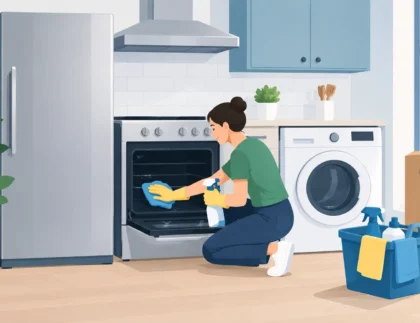
The oven often decides whether a move-out clean feels complete. Take out removable racks and trays, remove baked-on grease with a suitable oven cleaner and wipe the door glass, seals and control knobs. Do not scrape aggressively at coated surfaces or use products that are not intended for the appliance. A very heavily used oven may need a specialist clean rather than a rushed attempt on moving day.
Pull the fridge away from the wall if it is safe to do so. Empty it fully, defrost it where needed, wash the shelves and leave the door slightly open once it is switched off. Clean behind and underneath freestanding appliances, where dust and crumbs collect unnoticed. Finish by vacuuming and mopping the floor, including under the kickboards and around bin areas.
Bathroom: remove limescale, soap marks and hair
London’s hard water makes limescale a regular challenge. Apply a bathroom-safe descaler to taps, the shower screen and the shower head, following the product instructions. Wipe the tiles, clean the bath or shower tray, scrub the toilet inside and out, and disinfect high-touch areas such as the flush button, door handle and light switch.
Do not overlook the extractor cover, vanity unit, mirror and floor edges. Hair in the plughole and dust around the toilet base can quickly undermine an otherwise good clean. If there is mould caused by poor ventilation, deal with it carefully using an appropriate product and good ventilation. Persistent mould, damaged sealant or leaks should be reported, not disguised.
Bedrooms and living areas: reveal the surfaces beneath furniture
Once furniture is gone, these rooms can look surprisingly different. Dust curtain rails, blinds, window sills, radiators, skirting boards, sockets and door frames. Wipe wardrobes inside and out, including the top surface. Remove blu tack, nails and hooks only if your agreement requires it, and fill small holes neatly where appropriate.
Vacuum carpets slowly, making extra passes around doorways, under where the bed stood and along the edges. Spot-clean a small stain only when you know the carpet material and cleaner are compatible. Over-wetting a carpet shortly before a check-out can leave an odour or damp patch, so professional carpet cleaning may be the better call for significant stains, pet hair or a tenancy requirement.
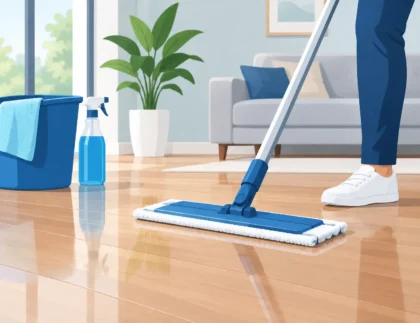
For hard flooring, vacuum first and mop with a product suitable for the surface. Avoid leaving excess water on wood or laminate. Clean windows internally where accessible, then polish mirrors and glass doors with a lint-free cloth for a clear finish.
Hallway, entrance and outdoor spaces
The hallway creates the first impression at an inspection. Wipe the front door, handles, switches, skirting boards and any built-in storage. Vacuum or mop right up to the threshold. Take all rubbish to the correct collection point rather than leaving bags in communal areas.
If the flat has a balcony, terrace or garden, remove personal items, sweep leaves and dispose of rubbish. Outdoor maintenance expectations vary by tenancy, so check your agreement before cutting back plants or making changes to shared spaces.
What not to treat as cleaning
A move-out clean is thorough, but it has sensible limits. Fair wear and tear, such as faded paint, an ageing seal around a bath or a worn carpet path, is different from dirt. Structural repairs, pest problems, broken appliances and extensive mould also need attention from the responsible party, not just a bottle of cleaner.
The same applies to damage. A professional clean can remove grime from a hob, but it cannot repair a cracked induction surface. Being clear about this distinction prevents wasted effort and makes conversations with a landlord or agent more straightforward.
When a professional move-out clean makes sense
Doing it yourself can work well for a small property that has been regularly cleaned and has no difficult appliance, carpet or limescale issues. The trade-off is time. A detailed clean of an empty two-bedroom flat can take much longer than expected, especially after a full day of packing and arranging removals.
A professional move-in or move-out cleaning service is particularly useful when the check-out deadline is tight, the property has been occupied for several years, or you need oven, carpet or window cleaning as part of the job. Ask for a clear scope before booking so you know whether appliances, internal cupboards, carpet treatment and accessible windows are included. The Ultimate Cleaners can arrange a tailored estimate for London properties, using eco-friendly products where suitable and working around your moving schedule.
Final check before you hand back the keys
Walk through the flat slowly with the lights on and your phone torch in hand. Open every cupboard, check the oven and fridge, look behind doors and inspect the floor edges. Make sure all personal belongings, cleaning cloths and rubbish have gone. Take final photographs once the property is empty and clean, then keep your keys, meter readings and check-out paperwork together.
A good move-out clean is not about chasing perfection at any cost. It is about leaving the property genuinely clean, showing respect for the next occupant and giving yourself one less thing to worry about when the keys change hands.