A missed washroom check at 3pm, overflowing bins after lunch, or a sticky reception floor can change how customers and staff see your business within minutes. This guide to commercial cleaning schedules helps London managers turn cleaning from a last-minute scramble into a dependable routine that keeps premises presentable, hygienic and ready for business.
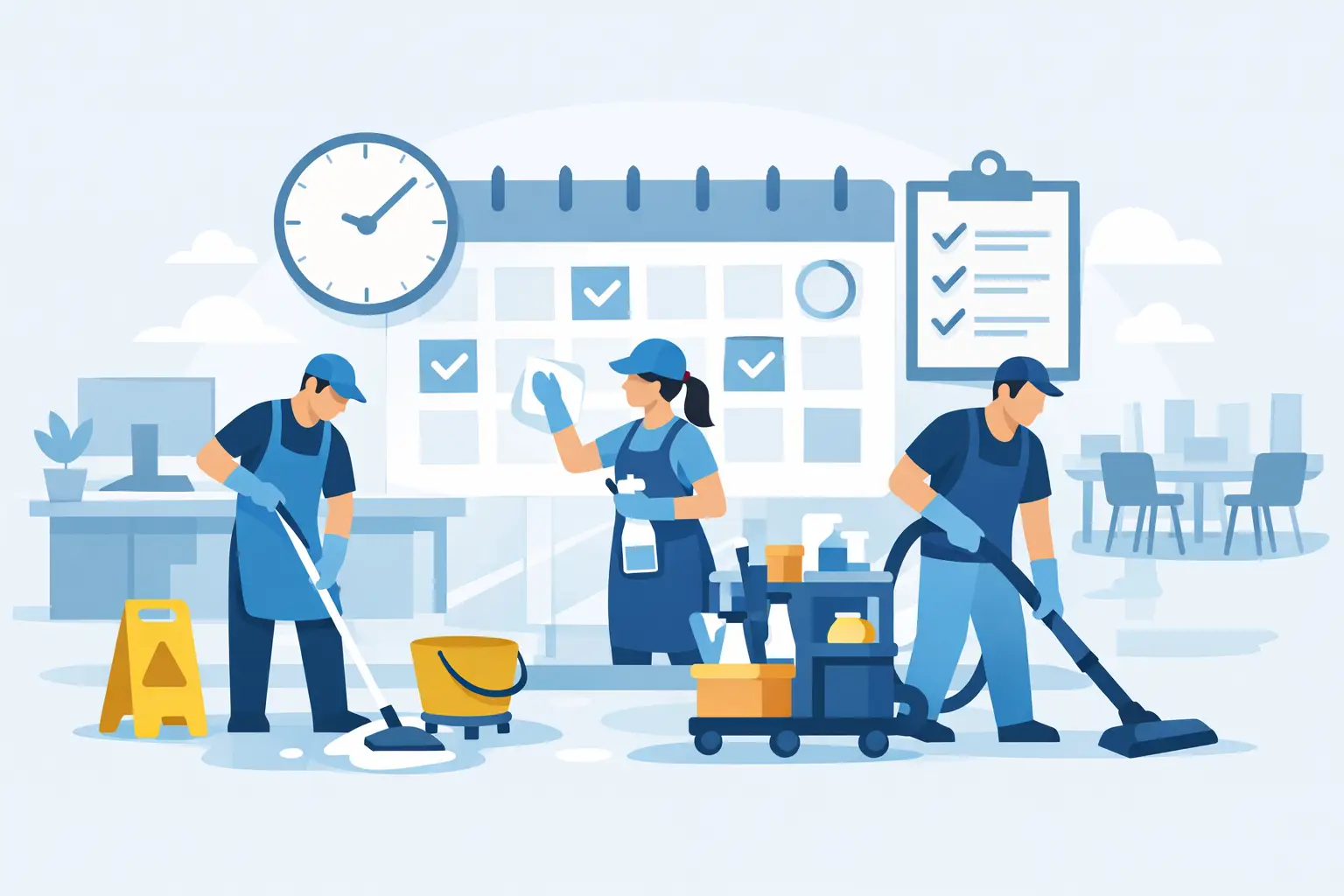
The right schedule is not simply a list of jobs. It reflects how your building is used, when footfall peaks, which areas carry the greatest hygiene risk and when cleaning can be completed without disrupting the working day. A small office in Finchley needs a different plan from a busy restaurant in Soho or a warehouse in Enfield.
Start with the way your premises actually operate
Before deciding whether cleaning should happen daily, weekly or monthly, walk through the site at its busiest time. Look beyond what appears dirty. Note where people queue, eat, touch shared surfaces, receive deliveries and use toilets. These are the areas that determine your cleaning frequency.
A practical commercial cleaning schedule should account for opening hours, shift changes and public access. Cleaning a reception area once each evening may be enough for a low-traffic professional office. In a showroom, clinic or shop, the same area may need attention several times during the day.
It also pays to separate visible presentation from hygiene-critical work. Glass doors, entrance floors and communal kitchens affect first impressions. Washrooms, food-preparation spaces and high-touch points affect health, comfort and compliance. Both matter, but they may need different timings and cleaning methods.
Build daily cleaning around high-use areas
Daily cleaning forms the backbone of most commercial contracts. It deals with the mess created by normal trading and prevents small issues becoming unpleasant, time-consuming jobs later in the week.
For a typical office, daily tasks usually cover emptying bins, vacuuming or mopping floors, wiping desks where agreed, cleaning kitchens and sanitising washrooms. Door handles, lift buttons, shared printers, handrails and other touchpoints should be included according to the number of people using them.
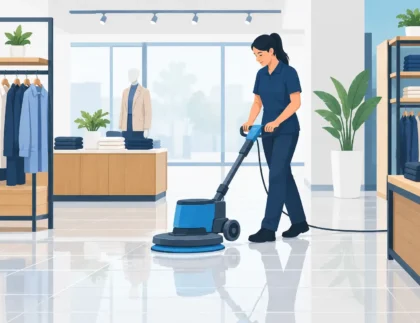
In customer-facing sites, build in daytime checks as well as an end-of-day clean. A cleaner may need to refresh washrooms, remove litter, spot-clean a floor or polish a glass entrance during trading hours. This approach is especially useful for restaurants, retail units, medical facilities and high-footfall communal spaces.
Daily work should have clear standards rather than vague instructions such as “clean the kitchen”. Specify the result you expect: worktops free from crumbs and spills, sinks rinsed and disinfected, bins relined, and floors clean around appliances and tables. Clear expectations make inspections faster and reduce misunderstandings.
Match the timing to the disruption
Out-of-hours cleaning is often the best choice for offices and premises with sensitive or concentrated work. It gives cleaners proper access to floors, desks and shared areas without people moving through the space.
However, daytime cleaning has value where appearance can change quickly. The best answer is often a combination: a thorough clean before opening or after closing, followed by short daytime checks for washrooms, entrances and spills. The trade-off is cost versus presentation and hygiene. There is little value in paying for daytime cover in an empty office, but it can protect a busy venue’s reputation.
Use weekly tasks to reach what daily cleaning cannot
Daily cleaning keeps a site under control. Weekly cleaning gives attention to areas that need more time, equipment or access. This is where your schedule starts to protect the condition of the property as well as its day-to-day appearance.
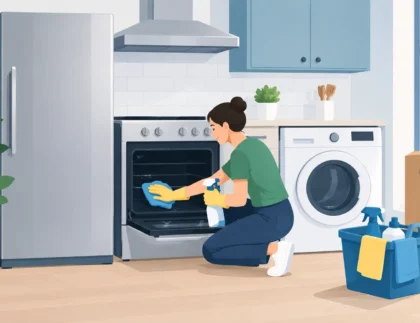
Weekly tasks may include detailed dusting of skirting boards and ledges, cleaning internal glass, wiping chair bases, removing marks from doors and spot-cleaning upholstery. Kitchens benefit from a more detailed clean of cupboard fronts, microwaves, fridges and the space around small appliances.
For washrooms, a weekly plan can include descaling taps, cleaning wall tiles, polishing dispensers and tackling build-up around toilet bases. In warehouses or industrial settings, it may mean cleaning lower-level racking, staff welfare areas and frequently used equipment exteriors, following the site’s safety rules.
A weekly checklist is useful, but only if it is realistic. Do not allocate a detailed kitchen clean to a short evening visit already filled with essential daily work. Either allow enough time or schedule the task on a quieter day. Rushed cleaning is rarely thorough cleaning.
Plan periodic work before dirt becomes damage
Some jobs do not belong on a daily or weekly rota, yet leaving them too long can make a workplace look neglected. A periodic schedule covers deeper work at monthly, quarterly, biannual or annual intervals, depending on the building and its use.
Carpets may need regular professional cleaning in busy entrances, meeting rooms and corridors, while lower-traffic offices can often wait longer. Hard floors may require machine scrubbing, polishing or protective treatment. Windows, high-level dusting, ventilation grilles and upholstery should also be reviewed on a planned basis rather than only when a complaint is made.
Post-construction cleaning, end-of-tenancy work and seasonal deep cleans are separate jobs that may sit outside the normal contract. Build room in the budget for them. A one-off deep clean can reset a neglected site, but it will not replace a sensible routine afterwards.
Consider sector-specific requirements
A generic schedule is a starting point, not a finished plan. Restaurants need frequent cleaning around food service and strict attention to kitchens, washrooms and customer areas. Medical settings require careful hygiene procedures and appropriate products. Factories and warehouses may need specialist methods for dust, grease, machinery areas or loading zones.
Offices often need flexibility around hybrid working. If occupancy is highest from Tuesday to Thursday, shift more hours towards those days rather than paying for the same level of service on a quiet Friday. Retailers may need extra cover during sales periods, weekends or school holidays.
The cleaning method matters as much as the frequency. Eco-friendly products can be a sensible choice for workplaces that want to reduce harsh chemical use, but the products and process must still suit the surface and cleaning task. A professional cleaner should assess this rather than applying one approach to every area.
Assign responsibility and make checks simple
Even the best schedule fails if no one knows who is responsible for it. Your cleaning provider should know the agreed tasks, frequency, access arrangements and site priorities. Your internal contact should know how to report issues, approve changes and flag events such as a large meeting, delivery or refurbishment.
Keep quality checks straightforward. A facilities manager does not need to inspect every square metre every day, but a short weekly walk-through can identify patterns: bins being missed, washroom stock running low, recurring marks on a floor, or cleaning times that no longer suit the business.
When an issue appears, deal with the cause as well as the symptom. If an entrance is repeatedly dirty by midday, the answer may be an additional mat, more frequent spot-cleaning or a changed cleaning time. If kitchen bins overflow, collection frequency or bin capacity may need adjusting.
Review your commercial cleaning schedule regularly
Your premises will not stay static. Headcount changes, new opening hours, seasonal weather and customer traffic all affect the workload. Review the schedule after the first few weeks of a new contract, then at regular intervals or whenever the way the site operates changes.
Ask whether standards are being met at the times that matter most, not only immediately after cleaning. If the answer is no, refine the schedule. You may need more attention in one area and less in another. That is not a failure of the plan – it is how a useful plan stays efficient.
For businesses across London, Ultimate Cleaners can help shape recurring office and commercial cleaning around your premises, trading hours and sector needs. A clear schedule gives your team fewer things to chase and gives everyone who walks through the door a cleaner, more reassuring place to work, visit or shop.