If you’ve ever walked into the office on a Monday, seen spotless desks, empty bins and polished floors, and still wondered whether the space is actually hygienic, you’re asking the right question. Office sanitising vs cleaning is not a matter of wording. It affects staff wellbeing, presentation, and how confidently you can run a busy workplace.
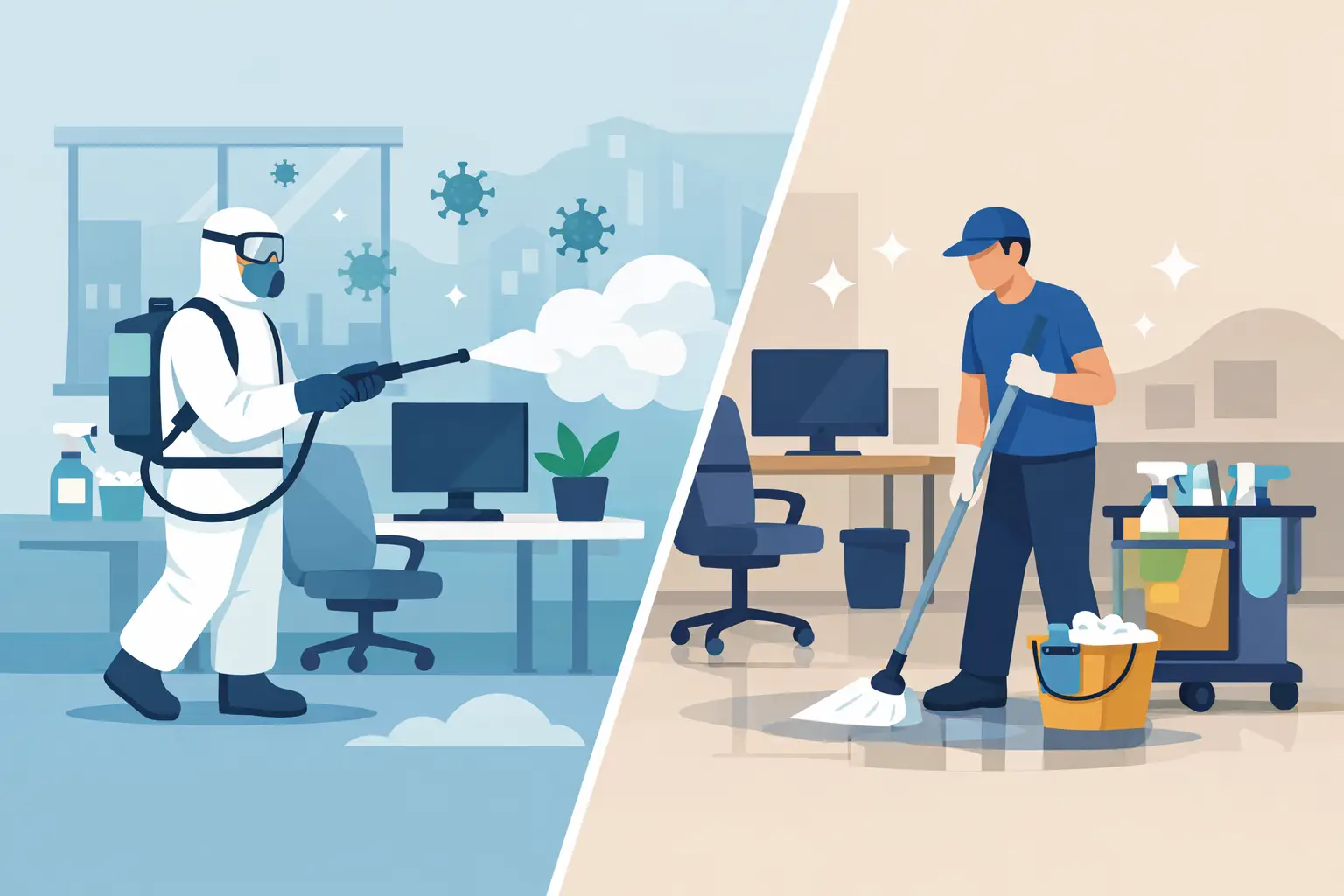
A lot of businesses use the terms interchangeably. That is where confusion starts. Cleaning makes a space look and feel tidy. Sanitising is about reducing bacteria and other harmful germs on surfaces to safer levels. In most offices, you need both – but not always in the same way, not at the same frequency, and not with the same products.
What is the difference between office sanitising vs cleaning?
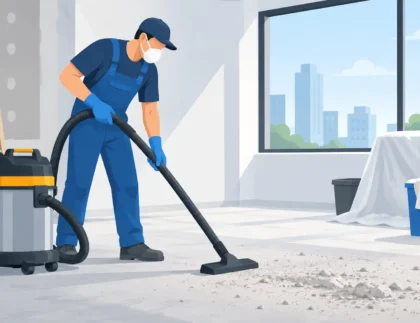
Cleaning is the removal of visible dirt, dust, debris and marks. Think vacuuming carpets, wiping desks, mopping hard floors, cleaning kitchen worktops and emptying bins. It improves appearance, helps maintain materials, and creates a more pleasant working environment.
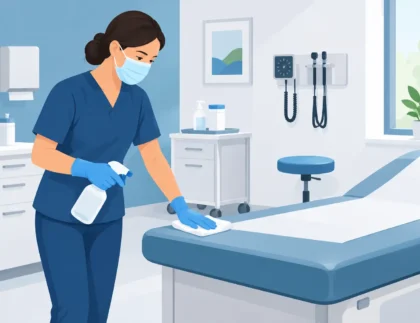
Sanitising goes a step further. It focuses on reducing germs on high-touch and high-use surfaces. That usually means door handles, shared desks, keyboards, telephones, lift buttons, taps, toilet flushes, kitchen appliances and meeting room tables. The aim is not simply to make those areas look clean, but to make them more hygienic.
That distinction matters because an office can look tidy while still carrying a lot of contamination on the surfaces people touch all day. Equally, trying to sanitise a dirty surface without cleaning it first is often ineffective. Grime, grease and dust can get in the way of the sanitising product doing its job properly.
Why offices usually need both
In a working office, appearance and hygiene are tied together, but they are not identical. Staff notice when carpets are marked, bins are overflowing or washrooms are neglected. Clients notice it too. That is the cleaning side of the equation.
But office life is built around shared contact points. People use the same kettle, the same fridge handle, the same loo doors, the same meeting tables and often the same equipment. During busy weeks, especially in open-plan spaces or hybrid offices with rotating teams, those touchpoints can build up germs quickly.
That is why office sanitising vs cleaning should be treated as a practical service decision, not just a cleaning label. A standard daily clean may be enough for a small, low-footfall office with mostly fixed desks. A larger office with hot-desking, visitors, shared breakout areas and regular meetings may need routine cleaning plus targeted sanitising throughout the week.
Cleaning handles the visible problems
Routine office cleaning covers the things that make a workspace feel under control. Floors are vacuumed or mopped, bins are emptied, kitchens are wiped down, toilets are cleaned, and dust is removed from accessible surfaces. This is the foundation of a well-kept office.
It also protects your premises over time. Dirt trapped in carpets wears fibres down. Dust builds up on skirting boards, vents and fittings. Spillages left unattended can stain surfaces or create slip risks. Cleaning is not just cosmetic. It helps preserve the condition of the space and supports a more professional day-to-day standard.
For many office managers, this is the service they book first because it is immediately visible. When it is done well, the office feels fresher, more organised and easier to work in.
Sanitising targets the surfaces people share
Sanitising becomes especially important where hands are constantly moving through the building. Washrooms, kitchens, reception areas, meeting rooms and communal desks are the obvious examples. These areas may already be cleaned regularly, but they also need focused hygiene attention.
A sanitising service uses suitable products and methods to reduce the microbial load on surfaces. The exact approach depends on the material, the environment and how the space is used. There is no point treating every area of an office as if it were a clinical setting. On the other hand, there is also no sense in treating a heavily used office kitchen the same way as a private back room that hardly anyone enters.
This is where a professional approach helps. The right level of sanitising is based on risk, contact frequency and practical use, not guesswork.
When cleaning alone may be enough
Not every office needs intensive sanitising every day. If your team is small, staff have assigned desks, visitors are limited and the office is used only during standard weekday hours, a thorough regular clean with attention to key touchpoints may cover what you need.
That is particularly true if employees keep individual workstations tidy and there are sensible hygiene habits in place. Handwashing, stocked soap dispensers, regular wiping of shared equipment and prompt attention to spills all reduce pressure on the cleaning schedule.
The trade-off is that this only works when routines are actually followed. In many offices, people are too busy to maintain that level of consistency on their own.
When sanitising should be a bigger priority
Some workplaces need more than a standard clean. If you run a busy office with hot-desking, shared devices, regular deliveries, front-of-house traffic or high staff turnover through the space, sanitising deserves more focus.
The same applies during cold and flu season, after an illness in the office, or when you manage a workplace where attendance is critical and disruption is expensive. A team can work around dusty blinds for a while. It is harder to work around repeated sickness absence linked to poor workplace hygiene.
For London offices in high-footfall areas, this can be even more relevant. Buildings with shared entrances, lifts, washrooms or communal facilities often need a more deliberate sanitising plan because your internal cleaning standards are only one part of the picture.
Common areas where businesses get it wrong
One mistake is assuming that a nice smell means a hygienic office. Fragrance is not proof of proper cleaning, and it is definitely not proof of sanitising. Another is focusing too much on floors and not enough on touchpoints. Floors matter, but most office germs do not spread because someone admired the carpet.
A third issue is overdoing one side and neglecting the other. Some businesses book basic cleaning and assume that covers everything. Others become so focused on sanitising sprays and wipes that they overlook the build-up of dust, grime and clutter that makes the office harder to maintain properly.
The best results come from treating cleaning as the base service and sanitising as a targeted hygiene layer on top.
How to decide what your office needs
Start with how the office is actually used, not how it looks at 9 am on a quiet day. Ask how many people come through the space, which surfaces are shared, whether staff hot-desk, how often clients visit, and where mess or hygiene issues usually show up first.
Then think about timing. Some offices need daily cleaning and periodic sanitising. Others need daily cleaning plus daily sanitising of kitchens, loos and shared contact points. In some settings, a deeper hygiene-focused service after events, refurbishments or sickness outbreaks makes more sense than increasing every routine visit.
If you are unsure, keep it simple. Prioritise floors, washrooms, kitchens, bins, desks, and all high-touch surfaces. That gives you a sensible starting point without paying for services you do not need.
Why the right service saves time, not just mess
A cleaner office is easier to manage. A more hygienic office is easier to work in. When both are handled properly, staff spend less time dealing with small distractions like sticky kitchen counters, poorly stocked washrooms or grubby meeting rooms that need wiping before a client arrives.
That convenience matters. Business owners and facilities teams do not want to chase cleaning issues, train staff to do ad hoc wipe-downs, or wonder whether shared spaces are being maintained properly. They want the job done thoroughly and without fuss.
That is why many businesses choose a service that combines routine office cleaning with sensible, targeted sanitising. It is practical, easier to manage, and far more reliable than waiting until standards slip.
At The Ultimate Cleaners, we see this with offices across London all the time. The businesses that stay on top of things are not necessarily the ones paying for the most intensive service. They are the ones using the right mix of cleaning and sanitising for the way their workplace actually runs.
If your office looks clean but still does not feel quite right, that gap is usually where the answer sits. Get the basics done properly, sanitise the surfaces that matter most, and your workplace becomes easier for everyone to use with confidence.