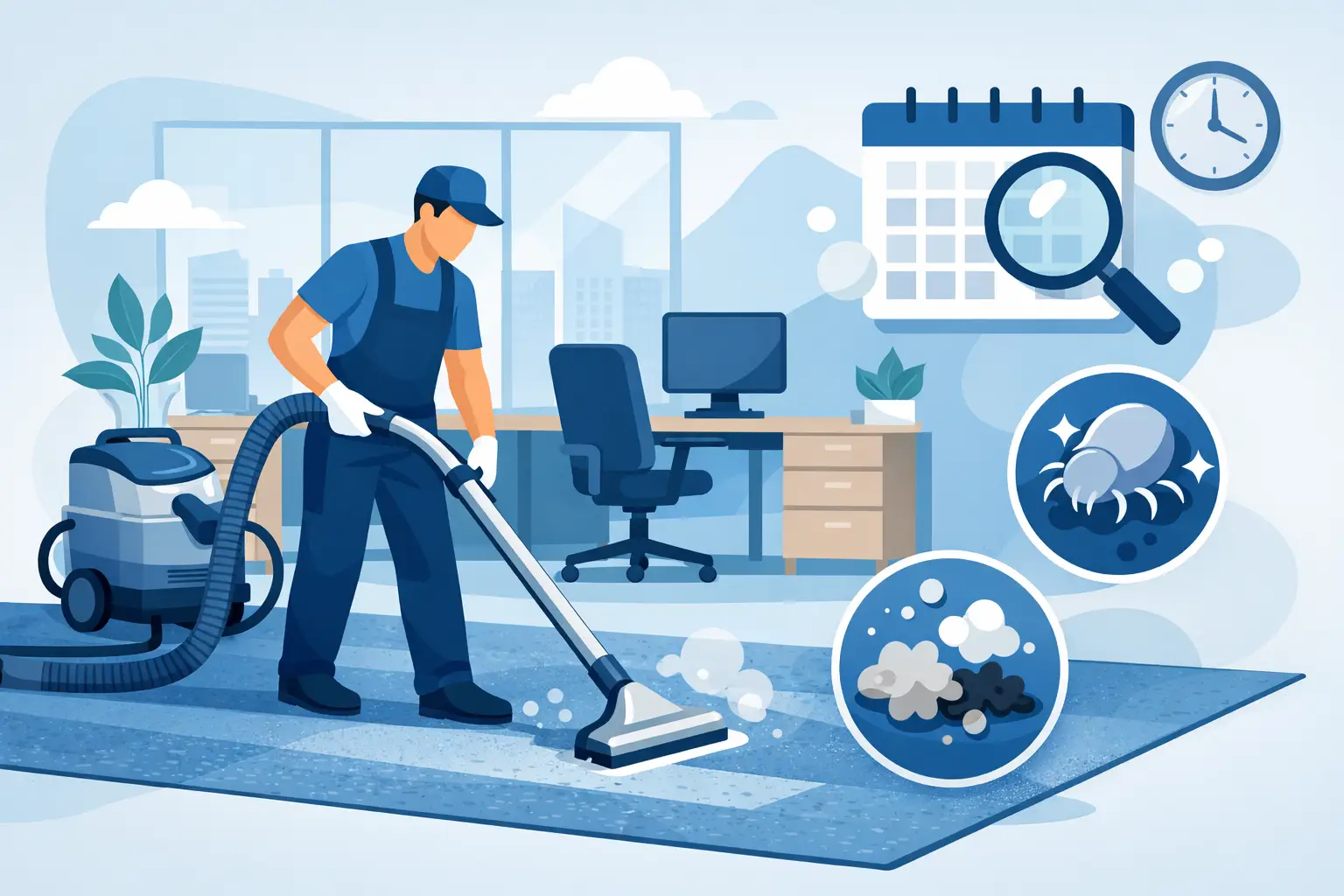
A carpet can look acceptable from a distance while holding weeks of grit, moisture, food debris and dust in its fibres. So, how often should office carpets be cleaned? For most offices, vacuuming should happen several times a week, while professional deep cleaning is needed every six to 12 months. Busy workplaces often need it more frequently.
The right schedule is not just about appearances. Clean carpets help your office feel cared for when staff, clients and visitors walk through the door. They also help protect the flooring investment, reduce lingering odours and prevent entrances, corridors and workstations from becoming visibly dull before their time.
How Often Should Office Carpets Be Cleaned?
A standard London office with moderate footfall should arrange a professional carpet clean at least once every 12 months. If the workplace has regular visitors, a large team, shared kitchens or meeting rooms that are in constant use, every six months is usually the better choice.
High-traffic zones need attention sooner than the rest of the floor. Reception areas, entrance mats, corridors, stairwells, break-out spaces and routes to the kitchen collect soil quickly, especially during wet weather. Rather than waiting for the entire office carpet to look tired, these areas can be spot-cleaned or professionally maintained between full cleans.
As a practical guide, use the following schedule:
- Low-footfall offices with a small team and no regular visitors: professional cleaning every 12 months.
- Typical offices with daily staff traffic, meetings and shared spaces: professional cleaning every six to nine months.
- Busy offices with client visits, hot-desking or a central location: professional cleaning every three to six months.
- High-footfall commercial spaces such as showrooms, clinics, retail sites and public-facing premises: professional cleaning every one to three months, with a tailored maintenance plan.
There is no benefit in treating every workplace exactly the same. A quiet office in a managed building may stay presentable for longer than a ground-floor studio near a busy road. The key is to match the cleaning frequency to how the space is actually used.
Daily Vacuuming and Deep Cleaning Do Different Jobs
Routine vacuuming is essential, but it cannot replace a professional carpet clean. A good vacuum removes dry surface debris before it gets ground deeper into the pile. In a busy office, entrances and walkways may need vacuuming daily, while quieter desk areas may only need it two or three times a week.
Professional carpet cleaning reaches the embedded soil that ordinary vacuuming leaves behind. Over time, fine grit acts like sandpaper against carpet fibres. This is why walkways can become flat, grey or rough-looking even when the office is vacuumed regularly.
Deep cleaning also deals with accidental spills, stains and odours that develop around desks, kitchens and meeting areas. It gives the carpet a proper reset, rather than simply improving the surface for a few days.
What Makes an Office Need More Frequent Carpet Cleaning?
Footfall is the biggest factor, but it is not the only one. An office with 20 employees may need more frequent care than a larger workplace if people come and go throughout the day, eat at their desks or bring in wet shoes from outside.
Weather matters in London too. Autumn and winter bring rain, mud and road grime into entrances and corridors. In spring and summer, dust, pollen and allergens can become more noticeable. A carpet maintenance plan that works well in July may not be enough during a long wet spell in January.
The nature of the business also affects the schedule. A client-facing office needs to look polished at all times, particularly around reception and meeting rooms. Medical facilities, schools, hospitality venues and retail spaces have different hygiene expectations and much heavier public use. These environments generally benefit from a more regular professional programme.
Food and drink policies are another consideration. If staff regularly have lunch at their desks, coffee stains and crumbs are almost inevitable. It is better to deal with these quickly than allow repeated small spills to become permanent marks.
Signs Your Office Carpet Is Due for Cleaning
Do not rely on the calendar alone. Carpets often show clear signs that they need professional attention before the next planned clean.
Look for darkened traffic lanes near entrances and along corridors, especially if the carpet appears cleaner beneath furniture than in open areas. A persistent stale smell, even after general office cleaning, can also point to trapped dirt or moisture in the carpet.
Other warning signs include recurring spots after basic stain treatment, flattened fibres, visible dust around skirting boards and complaints from staff about the office looking worn or untidy. If visitors are likely to notice the carpet before they notice your reception desk, it is time to book a clean.
Acting early is usually more cost-effective than waiting. Old stains take more work to treat, while heavily soiled carpets may need more intensive cleaning and longer drying time. Regular maintenance keeps the work manageable and helps carpets last longer.
Choosing the Right Professional Cleaning Method
The best method depends on the carpet type, the level of soiling and how quickly the office needs to be back in use. Hot water extraction is a popular choice for a thorough deep clean because it lifts embedded dirt from the fibres. It is particularly useful for periodic restorative cleaning in busy spaces.
Low-moisture cleaning can be a practical option where downtime must be kept to a minimum. It uses less water, so carpets can often dry faster. This may suit offices that cannot leave rooms unused for long, though heavily soiled carpet may still need a deeper treatment.
A professional cleaner should assess the material, test suitable products where needed and explain drying expectations before work starts. Using the wrong technique or too much moisture can create problems, particularly with delicate carpet, loose edges or poorly ventilated rooms.
Eco-friendly products are worth considering for occupied workplaces. They can help reduce harsh chemical smells and make it easier to schedule cleaning around normal working hours. However, eco-conscious cleaning should still be effective enough for the level of soil in the building – gentle does not have to mean superficial.
Make Carpet Care Part of Your Office Cleaning Plan
The easiest approach is to build carpet maintenance into the wider office cleaning routine. Daily or regular vacuuming, prompt spill treatment and entrance mat cleaning all reduce the amount of dirt that reaches the carpet in the first place.
Ask your cleaning provider to pay particular attention to entrances, kitchen routes and communal areas. A clean matting system is one of the simplest ways to reduce tracked-in moisture and grit. Encourage staff to report spills quickly as well. Fresh coffee or ink is far easier to remove than a stain that has been rubbed in over several days.
For many businesses, booking professional carpet cleaning outside office hours is the least disruptive option. Evening, weekend or quieter-period appointments allow adequate drying time and help staff return to a fresh, presentable workspace. The Ultimate Cleaners can tailor commercial carpet cleaning around your building’s use, from a one-off deep clean to planned ongoing maintenance.
A Clean Carpet Supports a Better Workplace
Office carpets work hard every day, often without anyone noticing until they start to look worn. Cleaning them on a sensible schedule protects their appearance, supports a cleaner working environment and avoids the pressure of arranging an emergency clean before an important visit.
If you are unsure where your office sits, start with the six-month mark and assess the busiest areas honestly. A carpet that stays fresh, dries properly and receives regular care will make a far better impression than one cleaned only when it becomes impossible to ignore.