That chalky white ring around the tap, the cloudy shower screen and the crusty build-up on the kettle are not signs that you have failed at cleaning. They are a familiar result of hard water – and a particularly stubborn problem in busy London homes and workplaces. So, can professional cleaners remove limescale? In most cases, yes. A skilled deep clean can make a dramatic difference, but the result depends on how long the scale has been there and what surface it has settled on.
Limescale needs more than a quick wipe with an all-purpose spray. It calls for the right product, enough contact time and careful technique. The aim is to dissolve mineral deposits without damaging chrome, glass, grout, stone or delicate finishes underneath.
Can professional cleaners remove limescale safely?
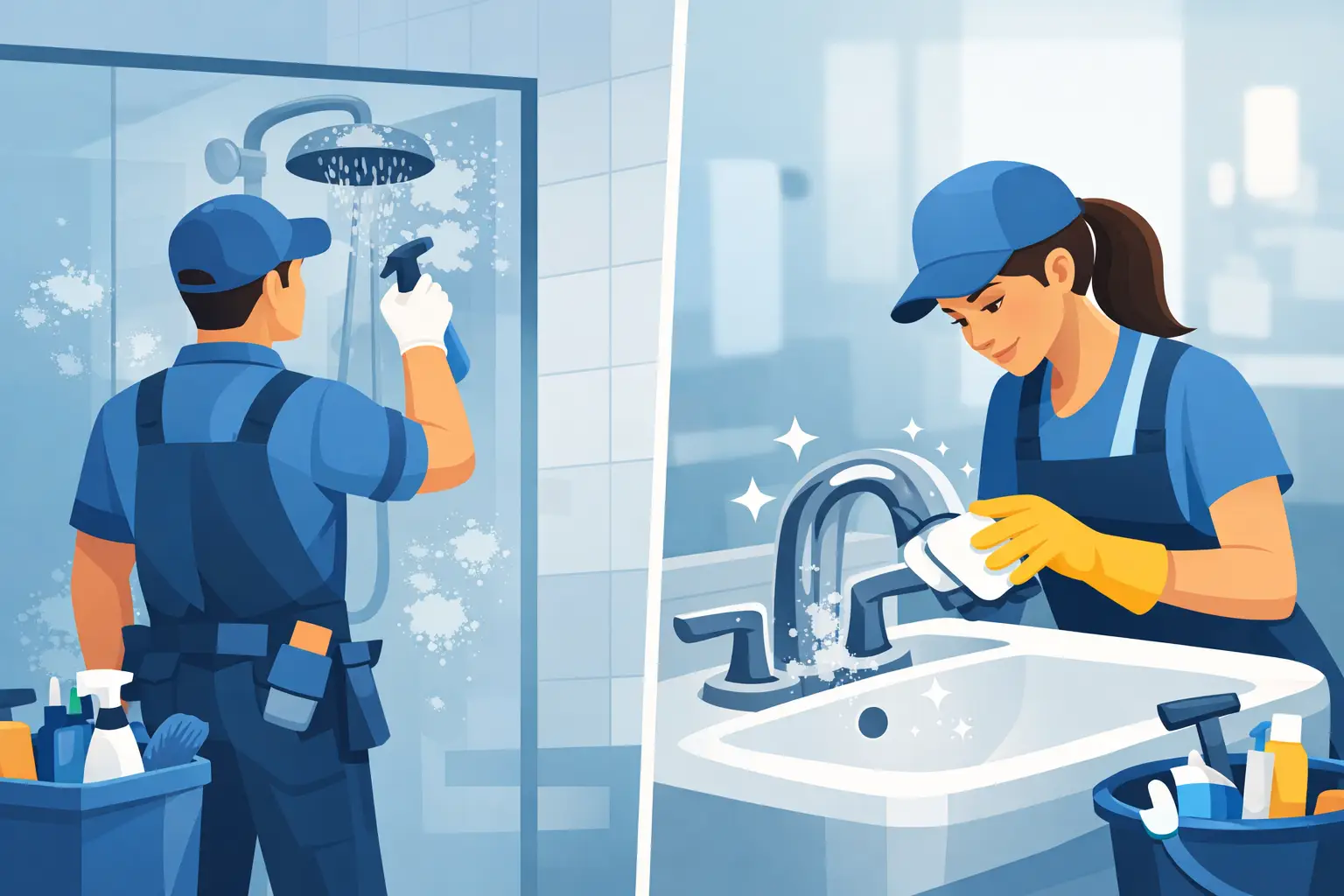
Professional cleaners can usually remove limescale from taps, shower heads, sinks, tiles, toilets, glass screens and kitchen appliances where it is accessible and the surface is still in good condition. During a spring clean, end-of-tenancy clean or intensive bathroom clean, these areas are often treated as part of the detailed work that brings a room back to a fresher standard.
The key difference is method. Limescale is largely made up of minerals left behind when hard water dries, so it needs a suitable descaling solution rather than forceful scrubbing alone. A trained cleaner will assess the material first, apply an appropriate product, allow it to work, then lift the residue with non-abrasive tools and rinse thoroughly. Stubborn deposits may need repeated treatment rather than one aggressive attempt.
This approach matters. Scraping at a tap with a blade or attacking a shower screen with a rough scourer can leave scratches that collect more dirt and scale later. Strong acidic products can also dull natural stone, damage some plated finishes and discolour grout if used carelessly. Professional cleaning is not simply about using stronger chemicals. It is about using the right amount, in the right place, for the right length of time.
What professional limescale removal can improve
A proper descaling clean can restore shine and improve hygiene in places that receive constant water use. Chrome taps often look brighter once the white crust around the base and aerator has been removed. Shower heads may run more evenly after mineral deposits are cleared from the nozzles. Toilet bowls can lose the hard water line that regular cleaning has not shifted.
Glass shower screens are another common concern. If the cloudiness is mineral build-up sitting on the surface, professional treatment can noticeably improve clarity. Tiles and grout around showers can also look cleaner once deposits, soap residue and trapped grime are dealt with together.
In commercial settings, the payoff is practical as well as visual. Limescale around washroom taps, staff kitchen sinks and customer toilets can make an otherwise clean premises look neglected. Regular professional cleaning helps offices, restaurants, shops and shared buildings maintain the standard visitors and staff expect.
The difference between limescale and permanent damage
Not every white mark will disappear completely. This is the honest part that matters before booking any cleaning service.
Old limescale can etch glass, particularly where water has been left to dry repeatedly for months or years. Once the surface itself has been damaged, cleaning can remove the deposits but cannot fully reverse the dull or rough appearance. The same applies to pitted chrome, worn enamel and stained grout. A cleaner can improve the condition significantly, but replacement, repair or specialist restoration may be the only route to a like-new finish.
There can also be a fine line between scale and silicone staining. Black marks around a shower tray are often mould rather than limescale, while yellow or brown marks may be mineral staining, rust or ageing sealant. These problems need different treatment. An experienced cleaner will not promise miracles where the material has deteriorated, but will explain what can realistically be improved.
Where limescale removal needs extra care
Bathrooms may be the obvious hotspot, but limescale can appear wherever hard water is heated, splashed or allowed to evaporate. Kitchens, utility rooms and staff kitchenettes often need attention too. Kettles, coffee machines and dishwasher areas can develop scale quickly, although appliance descaling should follow the manufacturer’s instructions.
Certain surfaces should never be treated as though they are ordinary ceramic tile. Marble, limestone, travertine and other natural stone can react badly to acidic descalers, including popular household vinegar solutions. Some painted, lacquered or black-plated taps are also sensitive. The wrong product may remove the scale but leave a patchy finish behind.
For this reason, a professional cleaner may test a small discreet area first or use a gentler product and additional time. It can feel slower, but it is the sensible trade-off when protecting an expensive basin, worktop or shower enclosure.
Why regular cleaning does not always shift it
Most regular cleaning routines focus on visible dirt, dust and everyday bathroom grime. Limescale is different because it builds in thin layers. By the time it becomes obvious, it may have hardened around tap bases, inside shower fittings or along the bottom edge of glass.
Quick cleaning can keep fresh deposits under control, but it may not be enough for a property that has been empty, a tenancy that is ending, or a workplace washroom that sees heavy daily use. This is where a one-off deep clean is useful. It gives neglected detail work the time it needs instead of trying to squeeze it into a short routine visit.
A professional service is especially helpful before moving into a new home, handing a property back to a landlord, preparing a rental for new occupants or reopening a commercial space after refurbishment. Limescale is one of those small details people notice immediately, even when they cannot quite identify why a bathroom or kitchen does not look clean.
How to keep limescale from coming back
No cleaning method can stop hard water altogether, but a few habits can slow the build-up between professional visits. Drying taps and shower glass after use prevents mineral-rich droplets from evaporating on the surface. A quick wipe with a soft microfibre cloth is often enough and takes less time than tackling a thick crust later.
Use products suited to the surface, especially in bathrooms with stone tiles or premium fixtures. Avoid mixing cleaning chemicals, and never combine bleach with acidic descalers. If your shower head is slowing down, deal with it early rather than waiting for the deposits to block the nozzles.
For landlords, facilities managers and business owners, planned cleaning is often the simplest solution. Regular attention to washrooms and kitchen areas keeps the task manageable and avoids the disruption of an intensive recovery clean later.
When it is worth booking professional help
Book a professional clean when limescale is widespread, hardened, affecting several rooms or paired with soap scum, mould staining and general grime. It is also a sensible option when you are short on time, unsure which products are safe for your fixtures, or preparing a property for an inspection, move or handover.
At The Ultimate Cleaners, our team handles the cleaning jobs that keep getting pushed down the list. We can assess the condition of bathrooms, kitchens and high-use areas, use eco-conscious products where suitable, and work carefully around the surfaces that matter. Request a free estimate and tell us where the build-up is worst – a shower screen, taps, toilet bowl or staff kitchen – so the clean can be planned around your property.
A clean tap should look clean, not just less chalky than it did before. Acting before deposits harden gives you the best chance of restoring the finish and keeping the room pleasant to use.