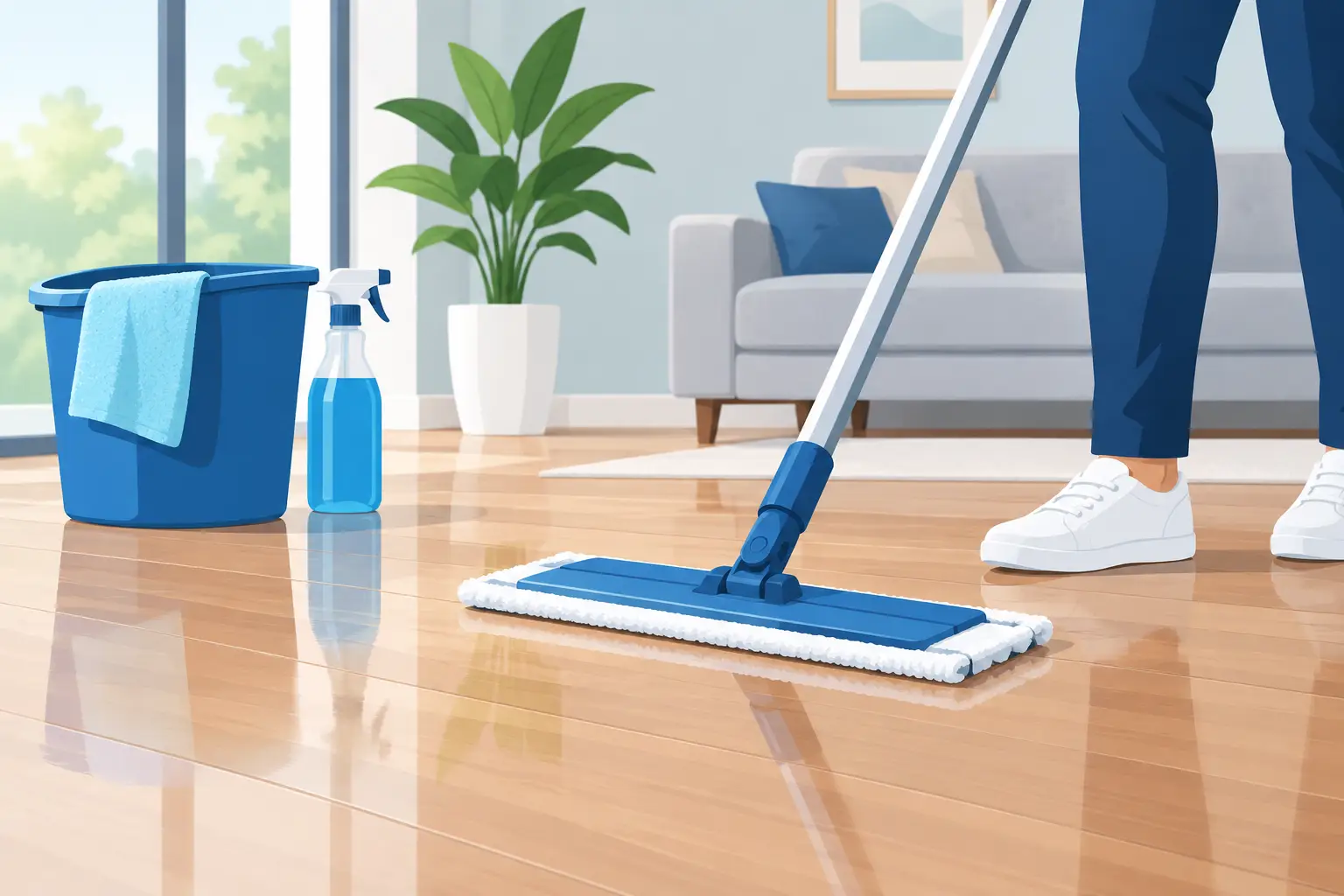
A hard floor can look clean at a glance yet still feel gritty underfoot, show dull traffic lanes or hold onto sticky marks by the kitchen. The difference is rarely more cleaning product. It is knowing how to clean hard flooring without leaving residue, soaking vulnerable joints or slowly wearing away the finish.
For busy London homes, rented flats, offices and high-footfall commercial spaces, a simple routine beats an occasional aggressive scrub. Start with the floor type, use as little water as it needs, and deal with grit before it becomes scratches.
Start by identifying the floor
“Hard flooring” covers several very different surfaces. Ceramic and porcelain tiles can usually cope with more moisture than laminate. Sealed vinyl is forgiving, but natural stone may react badly to acidic cleaners. Real wood needs particular care because excess water can enter gaps, swell boards and affect the protective coating.
If you still have the fitting paperwork, check the manufacturer’s care guidance. If not, look for clues: laminate often has a repeating printed grain; vinyl tends to feel slightly softer and warmer than tile; natural stone has natural variation and may have visible pores. When uncertain, test any cleaner in a hidden corner first.
The safest all-round approach is a pH-neutral hard-floor cleaner used exactly as directed. More product does not mean a cleaner floor. Too much can leave a tacky film that attracts fresh dust and makes the surface look cloudy.
The right equipment makes cleaning easier
A soft broom, microfibre mop and vacuum with a hard-floor setting will handle most regular cleaning. Use a clean microfibre pad rather than a worn mop head that simply moves soil around. For spills and stubborn marks, keep soft cloths, a small bucket and a non-abrasive sponge to hand.
Avoid stiff brushes, scouring pads and powdered cleaners unless the flooring manufacturer specifically approves them. They can take the shine off vinyl, scratch sealed wood and mark polished stone. Steam mops are also not a universal answer. They may be suitable for some sealed tile floors, but heat and moisture can damage laminate, unsealed timber, loose vinyl edges and certain finishes.
Vacuum attachments matter. A rotating brush bar can scratch some hard surfaces or scatter grit, so switch it off where possible and use the soft-floor head instead.
How to clean hard flooring step by step
Regular cleaning should remove dry debris first, then lift the remaining grime with minimal moisture. Trying to mop before sweeping can turn crumbs, pet hair and grit into a muddy residue.
1. Remove loose dirt thoroughly
Sweep or vacuum the whole area, paying attention to skirting boards, doorways, under tables and the space around kitchen units. In a hallway, reception area or shop entrance, do this more often than you think necessary. Fine grit brought in on shoes acts like sandpaper under feet and chair legs.
For homes, daily spot sweeping in busy areas and a full vacuum once or twice a week is usually enough. Offices, restaurants and other premises with steady foot traffic may need entrance zones cleaned several times a day.
2. Treat spills before they set
Blot spills promptly with a dry or slightly damp cloth. Do not leave water, coffee, wine, cooking oil or pet accidents sitting on wood, laminate or grout. With sticky residues, place a warm damp cloth over the mark briefly, then wipe gently rather than scraping at it.
Grease near a cooker or in a staff kitchen may need a little diluted pH-neutral cleaner. Wipe again with a clean damp cloth and dry the area afterwards. The aim is to remove the residue, not leave cleaner behind.
3. Mop with a damp, not wet, pad
Fill the bucket with warm water and the recommended amount of suitable cleaner. Dip the microfibre pad, then wring it out well. It should feel damp, not drip. Mop in small sections, rinsing the pad whenever the water starts to look grey.
On wood, laminate and many vinyl floors, dry the surface with a clean towel or dry microfibre pad if it remains wet after mopping. This extra minute helps prevent water marks, swollen edges and slip risks. Open a window where practical to speed drying, especially after cleaning a larger room.
4. Deal with marks carefully
Black heel marks often lift with a damp microfibre cloth and a little neutral cleaner. For dried-on food, soften it first rather than attacking it with a blade. A plastic scraper may be appropriate on some tiles or vinyl, but use it at a low angle and test first.
If a stain persists, stop before escalating to strong chemicals. The solution depends on the material and finish. A product that removes a mark from porcelain could permanently etch limestone or strip a wood coating.
Cleaning different hard floor types
Wood and engineered wood
Sweep regularly and mop sparingly with a cleaner made for sealed wood floors. Never flood the floor, and do not use bleach, ammonia, vinegar or steam unless the flooring supplier explicitly says it is safe. Even engineered boards have vulnerable joints and edges.
Dull patches may be a worn finish rather than surface dirt. Repeatedly adding polish can create a patchy build-up, so seek advice before applying shine-restoring products. If boards are cupping, lifting or turning dark around the edges, there may be a moisture problem that cleaning alone cannot fix.
Laminate flooring
Laminate needs the lightest touch: vacuum or sweep, then use a well-wrung microfibre mop. Keep water away from joins and wipe spills immediately. Avoid waxes and oil soaps, which can leave a slippery or smeary layer.
A streaky laminate floor is often caused by too much cleaner. Clean once with plain, barely damp water, dry it, then return to a properly diluted product next time.
Vinyl and luxury vinyl tile
Vinyl is durable, but it can still be scratched and dulled by abrasive tools. Sweep frequently, mop with a pH-neutral cleaner and use entrance mats to limit grit. Do not use solvent-based products or harsh degreasers unless they are approved for the specific floor.
Furniture pads are worthwhile in dining areas and meeting rooms. They reduce scuffs when chairs move and help protect a finish that would otherwise need more intensive attention.
Ceramic, porcelain and grout
Tile can generally handle a damp mop well, although grout needs extra care. Clean tiles with a suitable neutral cleaner, then use a soft brush on grout lines when needed. Rinse away loosened dirt so it does not settle back into the texture.
Avoid assuming that bleach is the answer to every grout mark. It can be useful in limited, well-ventilated situations on appropriate surfaces, but it may discolour coloured grout and should never be mixed with other cleaning products. Persistent dark grout may need professional deep cleaning or resealing rather than stronger chemicals.
Natural stone
Marble, limestone, travertine and slate can be beautiful, but they need stone-safe products. Acidic cleaners, including vinegar and many limescale removers, can etch calcareous stone and leave pale, dull patches. Use a stone-specific pH-neutral cleaner, a soft mop and as little water as possible.
Stone that absorbs spills quickly or looks uneven may need resealing. Cleaning cannot replace a protective seal, and applying the wrong product can make later restoration more difficult.
Prevent dirt from building up
The best floor-cleaning routine starts at the door. Use a quality doormat outside and a washable mat inside, particularly during wet weather. Ask household members, staff or visitors to wipe footwear properly, and consider a shoes-off approach in homes with light-coloured flooring.
Place felt pads under chairs and tables, clean castor wheels regularly and use protective mats under office chairs where suitable. These small measures reduce scratches, make routine cleaning faster and keep the floor looking cared for between deeper cleans.
When a professional clean is the sensible option
A regular mop cannot always remove old grease, post-building dust, ingrained grime in textured tiles or residue left by unsuitable products. The same applies when preparing a tenancy changeover, reopening a workspace or bringing a neglected floor back to a presentable standard.
The Ultimate Cleaners provides domestic and commercial cleaning across London, including one-off deep cleans and specialist work for properties that need more than a quick refresh. A professional team can assess the surface, choose suitable methods and save you from an expensive trial-and-error approach.
A clean hard floor should feel smooth underfoot, dry quickly and look natural rather than overly glossy or coated. Keep the routine gentle and consistent, and when the marks will not shift safely, it is worth getting the right help before a small problem becomes permanent damage.