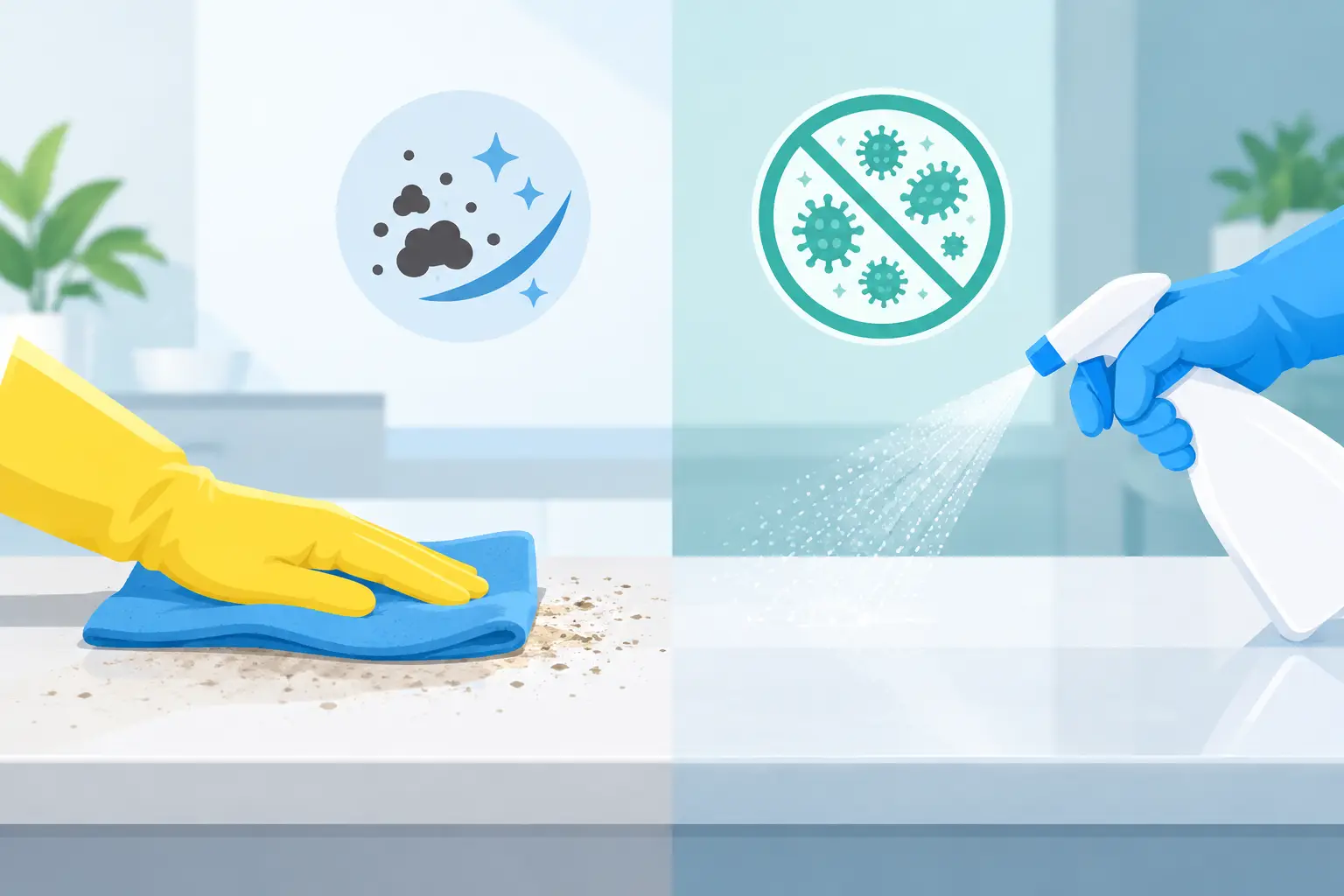
A kitchen worktop can look spotless and still carry germs from raw food preparation. A desk can be free of dust but have contamination left behind from a cough, a shared phone or a pair of unwashed hands. So, does cleaning disinfect? Usually, no. Cleaning and disinfecting work together, but they are not the same job.
For London households, landlords and busy workplaces, knowing the difference helps you put effort where it counts. You do not need to disinfect every surface, every day. You do need a sensible routine that removes grime effectively and targets higher-risk areas when hygiene matters most.
Does cleaning disinfect surfaces?
Cleaning means physically removing visible dirt, dust, crumbs, grease and some germs from a surface. It is typically done with water, detergent and friction from a cloth, mop, brush or cleaning pad. A good clean can substantially reduce the number of germs present because it lifts them away rather than simply moving them around.
But standard cleaning products are not necessarily designed to kill germs. Unless the label specifically states that the product is a disinfectant and explains what it is effective against, assume it cleans rather than disinfects.
Disinfecting uses a product formulated to kill or inactivate a stated range of bacteria and viruses on hard, non-porous surfaces. These products need to be used properly. Spraying and immediately wiping a surface dry may not give the disinfectant enough contact time to work. Always follow the product instructions, including dilution, ventilation advice and the required time the surface should remain wet.
Sanitising sits between the two. It reduces germs to a level considered safer, rather than necessarily killing as many as a disinfectant. You may see this term used for food-preparation areas, hospitality settings and some commercial products.
Why cleaning comes before disinfecting
Disinfectant works best on a surface that has already been cleaned. Grease, food residue, soap scum and general soil can shield germs from the active ingredients in a disinfectant. They can also weaken the product before it has had a chance to do its job.
Think of a cooker hob after a busy dinner service, or a bathroom basin with dried toothpaste and soap marks. Applying disinfectant straight over the mess is rarely the efficient option. First remove the dirt with an appropriate cleaner and a clean cloth. Then disinfect the areas that need it.
This two-stage approach matters in homes after illness, at the end of a tenancy and in shared commercial spaces. It is also one reason professional deep cleaning can make such a difference. Thorough work is not just about a polished finish. It is about reaching the grime that routine wipes often miss, then applying the right hygiene steps to the right surfaces.
When is disinfection actually needed?
A sensible cleaning routine is better than treating every room like a clinical space. Excessive use of strong disinfectants can irritate skin and airways, damage certain finishes and add unnecessary chemicals to your property. The right level of hygiene depends on who uses the space and what happens there.
In an ordinary, healthy household, regular cleaning of frequently touched areas is often enough. Disinfection becomes more useful when someone is unwell, when bodily fluids are involved, after handling raw meat, or when there is a higher risk of infection spreading.
For businesses, the need can be greater. Offices with shared desks, shops with card terminals, restaurants, medical facilities, nurseries, gyms and high-footfall reception areas all have touchpoints used by many different people. In these settings, a planned cleaning and disinfection schedule protects staff, customers and visitors without disrupting the working day.
Prioritise surfaces that are touched often: door handles, light switches, taps, toilet flushes, handrails, lift buttons, shared keyboards, telephones, fridge handles and payment terminals. In a kitchen, do not overlook cupboard pulls, bin lids and the outside of appliances.
Cleaning, disinfecting and cross-contamination
The cloth you use matters as much as the bottle you choose. Cleaning a toilet area and then using the same cloth on a sink, kitchen worktop or desk can spread contamination rather than remove it. This is called cross-contamination, and it is one of the easiest mistakes to avoid.
Use separate, clearly identified cloths and mop heads for toilets, bathrooms, kitchens and general areas. Wash reusable cloths thoroughly after use and let them dry completely. Disposable wipes may be useful for a quick, targeted task, but they are not a replacement for proper cleaning equipment or a full routine.
Work from cleaner areas towards dirtier ones, and from higher surfaces downwards. For example, clean a bathroom mirror and shelf before tackling the basin, then leave the toilet until last. In a commercial setting, equipment should also be maintained between shifts so it does not become a source of contamination itself.
Hand hygiene is part of the process too. Wash your hands after cleaning toilets, dealing with waste, handling dirty laundry or using chemicals. Gloves can protect your skin, but they are not magic. Touching your phone, face or clean surfaces with contaminated gloves defeats the point.
How to disinfect safely and effectively
The label is your best guide. Different products are designed for different surfaces and different types of germs. A disinfectant suitable for a hard bathroom surface may not be suitable for food-contact areas, natural stone, untreated wood, electronics or fabrics.
Start by removing loose dirt and cleaning the surface. Apply the disinfectant as directed, making sure the entire area is covered. Leave it for the stated contact time, then wipe or rinse if the instructions say to do so. Food-preparation surfaces often need a final rinse with clean water, depending on the product used.
Never mix cleaning chemicals. Bleach mixed with acids, ammonia or other products can create dangerous fumes. Open windows where possible, particularly in small bathrooms, kitchens and storage rooms, and keep products in their original labelled containers. Store them securely away from children and pets.
For electronics such as keyboards, touchscreens and phones, avoid soaking the surface. Switch equipment off where appropriate, use a suitable lightly dampened cloth or wipe, and follow the manufacturer guidance. The goal is hygiene without damaging the device your household or team relies on.
A practical routine for homes and workplaces
Daily attention should focus on the areas people touch and use most. In a home, that may mean wiping kitchen worktops after food preparation, cleaning the sink, dealing with spills promptly and keeping the toilet and basin fresh. In an office or shop, it may mean scheduled cleaning of shared touchpoints alongside emptying bins and maintaining washrooms.
Weekly cleaning is the time for the wider job: floors, skirting boards, bathroom surfaces, kitchen fronts, dust build-up and appliances. A periodic deep clean goes further, dealing with neglected areas such as behind furniture, inside cupboards, grout, high-level dust, carpets and upholstery where appropriate.
The schedule should change when the property is under pressure. A family home with a stomach bug needs more focused disinfection than usual. A restaurant after a particularly busy weekend may need extra attention to food-preparation and customer-facing surfaces. A move-out clean may need both detailed cleaning and targeted hygiene work before new occupants arrive.
Eco-conscious cleaning also has a place in this routine. For everyday dirt and maintenance, effective lower-impact cleaning products can reduce unnecessary chemical use. Where disinfection is needed, choose a suitable product, use only the amount required and apply it correctly. Being environmentally conscious should not mean compromising hygiene, but hygiene does not always require the strongest product in the cupboard.
When professional cleaning is the better call
Some jobs are too time-consuming, specialist or disruptive to manage around work, family life or a busy premises. Post-construction dust, end-of-tenancy cleaning, heavily soiled carpets, commercial kitchens and large shared offices often need more than a quick wipe-down.
The Ultimate Cleaners supports homes and businesses across London with regular cleaning, one-off deep cleans and specialist services tailored to how a property is used. A professional team can create a practical schedule, bring suitable equipment and focus on the details that keep your space presentable as well as hygienic.
If you are unsure whether a surface needs cleaning or disinfecting, start with the real risk: who touches it, what happens there and whether illness, food or high footfall is involved. A clean space is easier to maintain, more pleasant to use and far less likely to let small hygiene problems turn into a bigger one.