You notice it quickest in the kitchen. The worktops look fine, the floor has been vacuumed, and the bathroom has had a once-over – but the grease behind the hob, the limescale round the taps, and the dust on top of cupboards tell a different story. That is where the question of domestic cleaning vs deep cleaning matters. They are not the same service, and choosing the right one can save time, money, and a lot of frustration.
For many London households, the difference comes down to maintenance versus reset. One keeps your home ticking over. The other tackles the built-up grime, hidden dust, and neglected spots that routine cleaning does not always reach. If you know what each service is designed to do, it becomes much easier to book the clean that actually matches your home.
What domestic cleaning usually covers
Domestic cleaning is your regular, practical upkeep. It is the cleaning that helps a home stay comfortable, tidy, and manageable from week to week. If you have a cleaner coming weekly, fortnightly, or on another recurring basis, this is usually the type of service you are booking.
In most homes, domestic cleaning focuses on visible, high-use areas. That means vacuuming and mopping floors, wiping surfaces, cleaning sinks, tidying bathrooms, dusting reachable areas, emptying bins, and giving kitchens a standard clean. It is designed to maintain a good standard of cleanliness rather than restore a property that has been neglected or heavily used.
That distinction matters. A domestic clean is efficient by design. The cleaner works through the tasks that make the biggest day-to-day difference. If your home is already in reasonable condition and you simply want help staying on top of it, domestic cleaning is often the right fit.
It also suits busy professionals, families, landlords managing occupied properties, and anyone who would rather not spend evenings scrubbing the bathroom. The goal is convenience and consistency. You keep the home looking presentable, hygienic, and easier to live in without having to do every job yourself.
What deep cleaning includes
Deep cleaning goes further – and usually takes longer. It is a more intensive service aimed at lifting dirt, grease, soap scum, limescale, dust build-up, and grime from areas that are often skipped during regular visits.
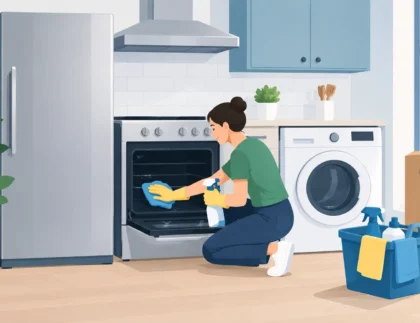
A deep clean typically covers all the basics, but with far more attention to detail. That may include descaling bathroom fittings, cleaning skirting boards, tackling inside appliances where agreed, wiping down doors and frames, cleaning behind or under movable furniture, removing heavier build-up in kitchens, and paying attention to corners, edges, vents, and other neglected spots.
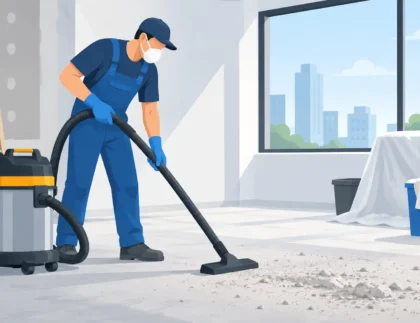
This is the service people often need when a property has gone beyond normal weekly maintenance. Maybe life got busy. Maybe the flat has been empty for months. Maybe tenants have moved out and left things less than ideal. Or maybe you simply want that fresh-start feeling before going onto a regular cleaning schedule.
Deep cleaning is not about making a home merely look clean. It is about bringing it back to a higher standard.
Domestic cleaning vs deep cleaning: the real difference
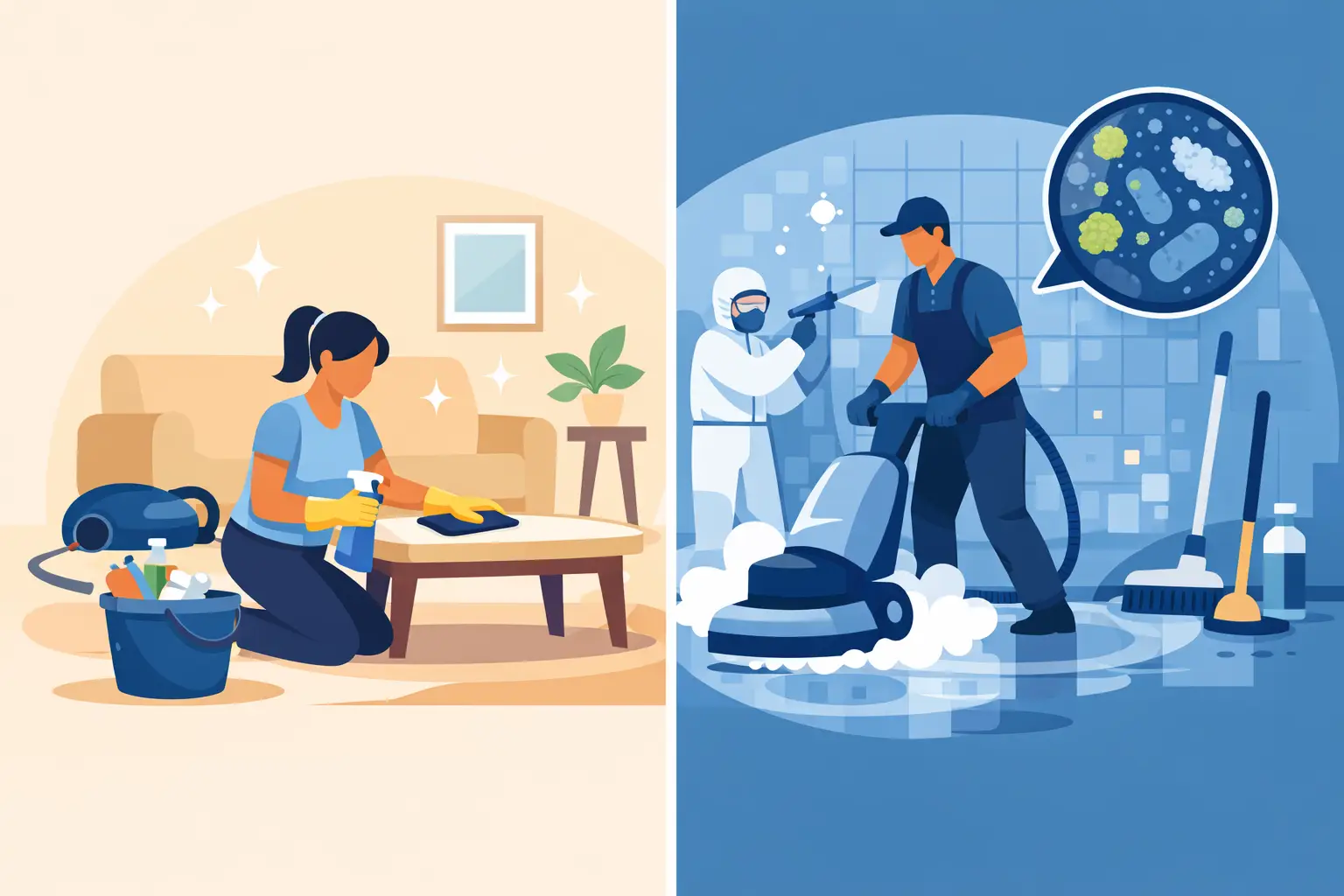
The simplest way to look at domestic cleaning vs deep cleaning is this: domestic cleaning keeps things under control, while deep cleaning deals with the dirt that has slipped out of control.
That does not mean one is better than the other. It depends on the condition of the property and what you need from the service. If your home is regularly maintained, a domestic clean may be enough. If grime has built up in the bathroom, the kitchen needs degreasing, or dust has settled in all the forgotten places, a deep clean makes more sense.
The time required is usually different too. Domestic cleaning tends to follow a familiar routine, so it can be planned efficiently. Deep cleaning is more labour-intensive and often less predictable because the cleaner may be dealing with stubborn marks, heavier build-up, or areas that need repeated treatment.
There is also a difference in expectations. With regular domestic cleaning, clients are usually looking for ongoing support. With deep cleaning, they are often looking for a one-off transformation or a strong reset before a special event, move, tenancy change, or recurring service.
When domestic cleaning is the right choice
If your home is already in decent shape, domestic cleaning is usually the most cost-effective option. It works best when dirt has not had time to build up and when you want routine help rather than a major intervention.
This is a good fit for households that need regular bathroom and kitchen cleaning, floors kept under control, dust managed, and surfaces wiped without the need for heavy scrubbing every time. It is also ideal if you want your cleaner to work to a consistent schedule and keep your home presentable with minimum hassle.
For many clients across London, regular domestic cleaning is less about luxury and more about reclaiming time. Instead of spending weekends catching up on chores, you can come back to a home that feels sorted.
When deep cleaning is worth booking
Deep cleaning earns its place when regular cleaning is not enough. If you can see grease build-up, ingrained bathroom residue, thick dust, or neglected corners, a standard clean may not shift the problem properly. In those cases, asking for a deep clean from the start is usually the smarter move.
It is especially useful before or after a house move, at the start of a tenancy, after renovations, before hosting guests, or after a period where a property has not been cleaned thoroughly. It also helps when you are starting a recurring domestic service and want the home brought up to standard first.
There is a cost difference, of course. Deep cleaning usually costs more because it takes more time and effort. But if the home genuinely needs that level of work, paying for a basic clean can be a false economy. You may end up disappointed because the service was never designed to tackle that much build-up.
Why people get the two confused
Part of the confusion is that cleaning companies do not always describe services in the same way. One firm may include certain detailed tasks in a standard domestic clean, while another treats them as part of a deep clean. That is why asking exactly what is covered matters.
The wording also sounds similar enough to blur expectations. People hear “house cleaning” and assume everything will be cleaned thoroughly from top to bottom. In practice, cleaners work to time, scope, and condition. A bathroom that needs a wipe-down and a bathroom with months of limescale are two very different jobs.
Being clear at the booking stage helps everyone. If there are areas of concern – oven grease, mould, soap build-up, pet hair, or dust after building work – say so early. A good cleaning company will tell you whether you need a domestic clean, a deep clean, or possibly a specialist service.
How to choose the right service for your home
Start by looking honestly at the condition of the property, not the result you want. Everyone wants a spotless finish, but the better question is how far the cleaner has to go to get there.
If the home is mostly tidy and hygienic, and you just need regular support, domestic cleaning is likely enough. If certain rooms have been neglected, if there are stubborn marks and deposits, or if you want the property refreshed to a noticeably higher standard, deep cleaning is the stronger option.
It also helps to think about timing. A domestic clean works best as a repeat service. A deep clean is often the right first step before settling into a regular schedule. That combination can work well: reset first, then maintain.
If you are managing a rental property, preparing for tenants, or trying to get a family home back under control after a hectic stretch, this is often the most practical approach. At The Ultimate Cleaners, that is usually where clients get the best results – choosing the service based on the property’s real condition rather than hoping a lighter clean will do a heavier job.
A quick word on value
Cheaper is not always better if it leaves you booking a second clean to fix what the first one could not handle. On the other hand, booking a deep clean every week would be unnecessary for most households. The right service is the one that matches the job.
That is where a straightforward quote and clear scope make all the difference. You want to know what is included, how long it is likely to take, and whether your cleaner is maintaining cleanliness or restoring it.
If you are deciding between the two, think less about labels and more about outcomes. Do you need help keeping up, or do you need help catching up? Once you answer that honestly, the choice becomes much easier – and your home gets the clean it actually needs.