A pale coffee ring by the sofa, muddy hallway traffic and that slightly stale smell you only notice after returning from a weekend away all raise the same question: carpet cleaning vs steam cleaning – which one will actually sort it out? The short answer is that steam cleaning is often one type of professional carpet cleaning, not a completely separate service. The right choice depends on the fibre, the stain, how dirty the carpet is and how quickly you need the room back in use.
For busy London homes, rental properties and workplaces, getting this right matters. A method that cleans deeply but leaves a carpet damp for too long can be impractical. A quicker surface clean may look good initially but fail to remove the grime trapped lower down in the pile.
Carpet Cleaning vs Steam Cleaning: The Key Difference
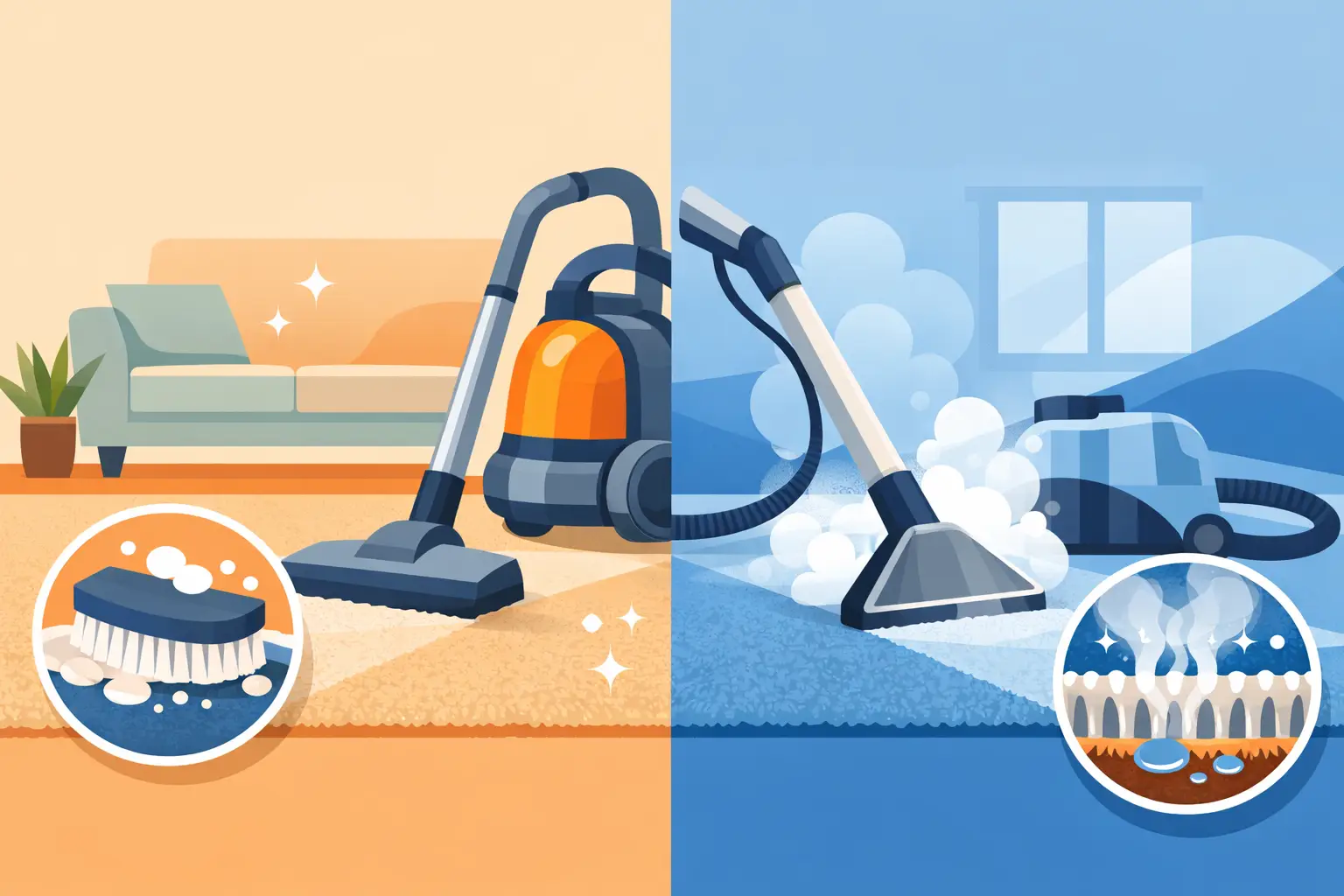
Carpet cleaning is the broad term for methods used to remove soil, marks, odours and allergens from carpets. It can include hot water extraction, low-moisture cleaning, shampooing, dry compound cleaning and other specialist approaches.
Steam cleaning is the name many people use for hot water extraction. In professional use, this process normally sprays heated water and a suitable cleaning solution into the carpet before immediately extracting the dirty water with powerful suction. It is not usually a jet of dry steam blown across the carpet. That distinction matters because the extraction stage is what helps lift dissolved dirt and leave the carpet ready to dry.
So, when comparing carpet cleaning vs steam cleaning, you are often comparing a general service category with one popular deep-cleaning method. A reliable cleaner should assess the carpet first rather than apply the same process to every room.
When Hot Water Extraction Is the Better Choice
Hot water extraction is usually the strongest option for carpets with built-up grime. It works particularly well in high-use areas such as halls, stairs, living rooms, office walkways and communal spaces. The combination of pre-treatment, agitation, heated water and extraction can remove embedded soil that vacuuming cannot reach.
It is also a sensible choice after a tenancy, before new occupants move in or following building work, provided the carpet is suitable for the method. Dust from decorating and construction can settle deep into the fibres, while everyday oils hold soil in place. A proper deep clean can improve both appearance and freshness.
This method is often helpful for food and drink spills, pet accidents and general odours. However, no honest cleaning company should promise that every stain will disappear. Old red wine, bleach marks, dye transfer, rust and some pet stains can permanently alter the carpet’s colour. Cleaning can reduce the mark, but it cannot always reverse fibre damage.
The main trade-off is drying time. Depending on the carpet type, airflow, weather, heating and how heavily soiled it was, a freshly extracted carpet may take several hours to dry. Good equipment removes a significant amount of moisture, but it is still wise to plan around the drying period. Open windows where practical, use ventilation and avoid replacing heavy furniture until the carpet is dry.
When a Low-Moisture Carpet Clean Makes More Sense
Not every carpet needs a heavy wet clean. Low-moisture methods use less water and can offer a faster return to normal use. They may involve an absorbent compound, encapsulation solution or a machine designed to lift surface soil with controlled moisture.
This approach can suit offices, shops and other commercial spaces where closing an area for most of the day is not realistic. It can also be useful for routine maintenance between deeper cleans, particularly where the carpet is lightly soiled and needs to look presentable quickly.
Low-moisture cleaning has limits. It may not be the best answer for a neglected carpet with ground-in dirt, persistent odours or a large number of stains. Think of it as maintenance rather than a replacement for a periodic deep clean. The condition of the carpet should decide the method, not just the desire for the fastest drying time.
What About Carpet Shampooing?
Traditional shampooing creates foam that helps loosen dirt, but it can leave residue if the carpet is not rinsed and extracted properly. Residue may attract fresh soil, making a carpet look dull again sooner than expected. Modern professional cleaning tends to focus on controlled products and thorough extraction for that reason.
A home rental machine can be useful for a small fresh spill, but it is rarely equal to professional-grade extraction. Too much detergent, insufficient suction or overwetting can leave behind sticky residue, a musty smell or a carpet that takes far too long to dry.
How Professionals Choose the Right Method
The carpet’s material is the starting point. Synthetic carpets are often more forgiving, while wool and delicate natural fibres need careful product selection, temperature control and moisture management. Using an unsuitable chemical or soaking a sensitive backing can create bigger problems than the original stain.
A professional assessment should also consider the carpet’s age, pile type, backing, existing damage and the source of any marks. A dark patch near a doorway may be ordinary traffic soil. It could also be water damage, mould, oil or a stain that needs a different treatment.
The room itself matters too. A ground-floor sitting room with good ventilation can cope with a deeper wet clean more easily than a carpeted office corridor that must be open for staff at 8am. For landlords and tenants, timing the clean near the end of a move can prevent fresh foot traffic from undoing the results.
Getting Better Results Before the Cleaner Arrives
A little preparation helps the appointment run smoothly and gives the cleaning process the best chance of success. Vacuum thoroughly beforehand if possible, especially along edges and under furniture that can be moved. Dry vacuuming removes loose grit, hair and dust that would otherwise turn into muddy residue during wet cleaning.
Point out every stain, even if it looks minor. Tell the cleaner what caused it and roughly when it happened. Coffee, curry, ink, make-up, pet accidents and oil-based marks do not all respond to the same treatment. The more accurate the information, the more targeted the stain removal can be.
Move small, fragile or valuable items from the area. If large furniture is staying in place, confirm this in advance so expectations are clear. Some items can be carefully worked around; others may need to be moved for an even clean.
How Often Should Carpets Be Professionally Cleaned?
There is no single timetable that works for every property. A quiet household without pets may only need a professional deep clean every 12 to 18 months. A family home with children, pets or a busy entranceway may benefit from cleaning every six to 12 months.
Commercial carpets usually need more frequent attention because footfall is higher and appearance affects customers, staff and visitors. Regular maintenance in reception areas, shops, restaurants and offices can protect the carpet from premature wear as well as keeping the space cleaner.
Vacuuming regularly is still essential. It removes dry soil before it is walked deeper into the pile, where it can act like abrasive grit. Deal with spills promptly by blotting, not rubbing, with a clean cloth. Rubbing spreads the stain and can damage the fibres.
Choose the Method Around the Carpet, Not the Label
If your carpet needs a genuine reset after months of use, hot water extraction is often the practical choice. If you need a quick refresh in a busy space with minimal downtime, a low-moisture method may be more suitable. The label matters less than an honest assessment of what the carpet needs.
At The Ultimate Cleaners, we help London households and businesses choose a practical cleaning approach based on the condition of the carpet and the demands of the property. A clear conversation before the job can prevent surprises, protect delicate fibres and leave you with a cleaner space that is ready to use when you need it.