
A refurbishment can look finished when the builders leave, yet the property may still be covered in fine dust, plaster marks, adhesive residue and fingerprints. So, who needs post construction cleaning? Anyone preparing a newly built, renovated or repaired space for people to live, work, shop or visit should consider it. It is the step that turns a completed project into a clean, usable property.
Builders are there to build, fit and repair. Their clear-up is often limited to removing large waste and leaving the site broadly tidy. That is not the same as detailed cleaning of skirting boards, sockets, internal windows, cupboards, floors and every surface where construction dust settles.
Who needs post construction cleaning?
Post construction cleaning is useful for more people than major developers. In London, a small bathroom renovation or kitchen installation can create enough dust and residue to make the rest of a flat feel unfinished. The right service depends on the scale of work, the condition of the space and how soon it needs to be used.
Homeowners after building or renovation work
Homeowners are the most obvious group. Whether you have added a loft room, renovated a kitchen, fitted a new bathroom or replastered one wall, the dust does not stay neatly inside the work area. It travels through hallways, settles on furniture and clings to window frames, radiators and flooring.
A post-build clean is particularly worthwhile before moving furniture back, unpacking a newly fitted kitchen or allowing children and pets into the space. Fine dust can be irritating, and trying to clean it with ordinary household methods can mean repeatedly wiping the same surfaces as more particles resettle.
For a small, contained project, you may be able to manage the final clean yourself if the builders have protected the room well and no residue is left behind. Larger work, or a home with several affected rooms, usually calls for professional equipment, time and a systematic approach.
Landlords and letting agents preparing a property
A refurbished rental needs to look genuinely ready, not simply newly painted. Prospective tenants notice dusty radiators, paint splashes on switches, dirty window sills and debris caught in cupboards. These details can undermine an otherwise excellent refurbishment and delay a tenancy.
Landlords and agents often need a clean on a tight turnaround between works finishing, photography, viewings and move-in day. A professional post construction clean helps present the property properly while reducing the pressure on the person managing the handover. If the property has also been vacant, it may need elements of a move-in clean as well, such as kitchen and bathroom sanitising.
Tenants moving into a refurbished flat
Tenants do not need to accept a home that is technically complete but still dusty from recent work. If a landlord has upgraded the property before your tenancy begins, raise any cleaning concerns before moving boxes in. Once furniture and personal belongings are in place, access becomes harder and dust is easier to spread.
Where responsibility sits will depend on the tenancy agreement and the work carried out. In practical terms, the property should be safe, hygienic and reasonably clean for occupation. Clear photographs and early communication make it easier to resolve any issue.
Developers, contractors and property managers
For new builds and larger renovations, cleaning is part of the handover process. A development may need several stages: an initial builders’ clean to remove heavy dust and residue, a detailed sparkle clean before inspection, then a final touch-up after snagging works or furniture installation.
Contractors benefit too. Handing over a clean site helps protect their finish and gives clients confidence that the project is complete. It also allows defects, scratches or unfinished details to be seen clearly rather than hidden beneath dust.
Timing matters. Cleaning too early can be wasteful if further drilling, sanding or painting is still planned. Cleaning too late can hold up inspections, marketing or occupation. Good coordination with the project manager prevents both problems.
Offices, shops and hospitality venues
Commercial spaces have a different pressure point: opening day. An office refit, retail renovation, restaurant refurbishment or showroom update has to look professional from the first person through the door. Construction dust on desks, display shelving, glass or ventilation grilles does not create the right impression.
Businesses also have a duty to provide a clean working environment. Depending on the site, that may mean cleaning workstations, washrooms, staff areas, floors, internal glass and high-touch points before employees return. Restaurants, clinics and customer-facing premises may require extra attention to hygienic surfaces and back-of-house areas.
A commercial post-construction clean should be scheduled around contractors, deliveries and opening plans. For some sites, an evening or weekend clean is the most practical choice because it keeps disruption to a minimum.
What makes post construction cleaning different?
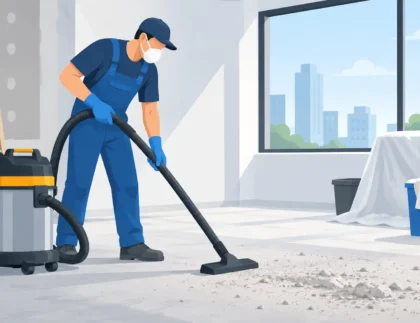
This is not a standard weekly clean with a quick hoover and surface wipe. Construction dust is exceptionally fine and can settle in places that are easy to miss: door tops, extractor covers, sockets, inside cupboards, window tracks, skirting boards and behind radiators. Paint, silicone, grout haze, labels and protective-film residue may need careful removal without damaging new finishes.
A thorough service normally includes dust removal from high and low surfaces, vacuuming and mopping suitable floors, detailed kitchen and bathroom cleaning, cleaning accessible internal windows and frames, and wiping fixtures, switches and woodwork. The exact scope should be agreed in advance. Exterior window cleaning, heavy waste removal, paint stripping, specialist floor treatment and cleaning at height may need to be quoted separately.
That distinction is worth making because a cheap quote can sometimes cover only general labour, not the detailed finish you expect. Ask what rooms, surfaces and appliances are included, whether cleaners bring supplies and equipment, and whether a return visit is available if dust settles again after the first clean.
When should you book the clean?
Book when the dusty work is genuinely complete. Ideally, all sanding, cutting, drilling, grouting and painting has finished, builders’ materials have been removed, and water and electricity are available. If possible, leave a short gap before moving in or reopening so the cleaners can work freely.
For a large project, booking before the final handover date is sensible. It gives you a place in the schedule and lets the cleaning team plan the right number of cleaners for the size and condition of the property. Sharing a realistic description of the works, room count and any particular concerns leads to a more accurate estimate.
If furniture has already arrived, cleaning is still possible, but it will take longer and some areas may be inaccessible. The clean may also need to be split into stages, especially where final fittings or snagging work remain outstanding.
A cleaner finish with less stress
The best time to arrange post construction cleaning is before dust becomes someone else’s problem: the new tenant’s, the first customer’s or your own after a long move. For homes and businesses across London, The Ultimate Cleaners can help make the final stage of a project feel finished, with practical scheduling and a detailed clean tailored to the site.
Before you book, walk through the space in daylight, make a note of residue, dust-prone areas and deadline dates, then request an estimate based on the actual condition of the property. A clean handover gives you the breathing room to enjoy the work that has just been done.