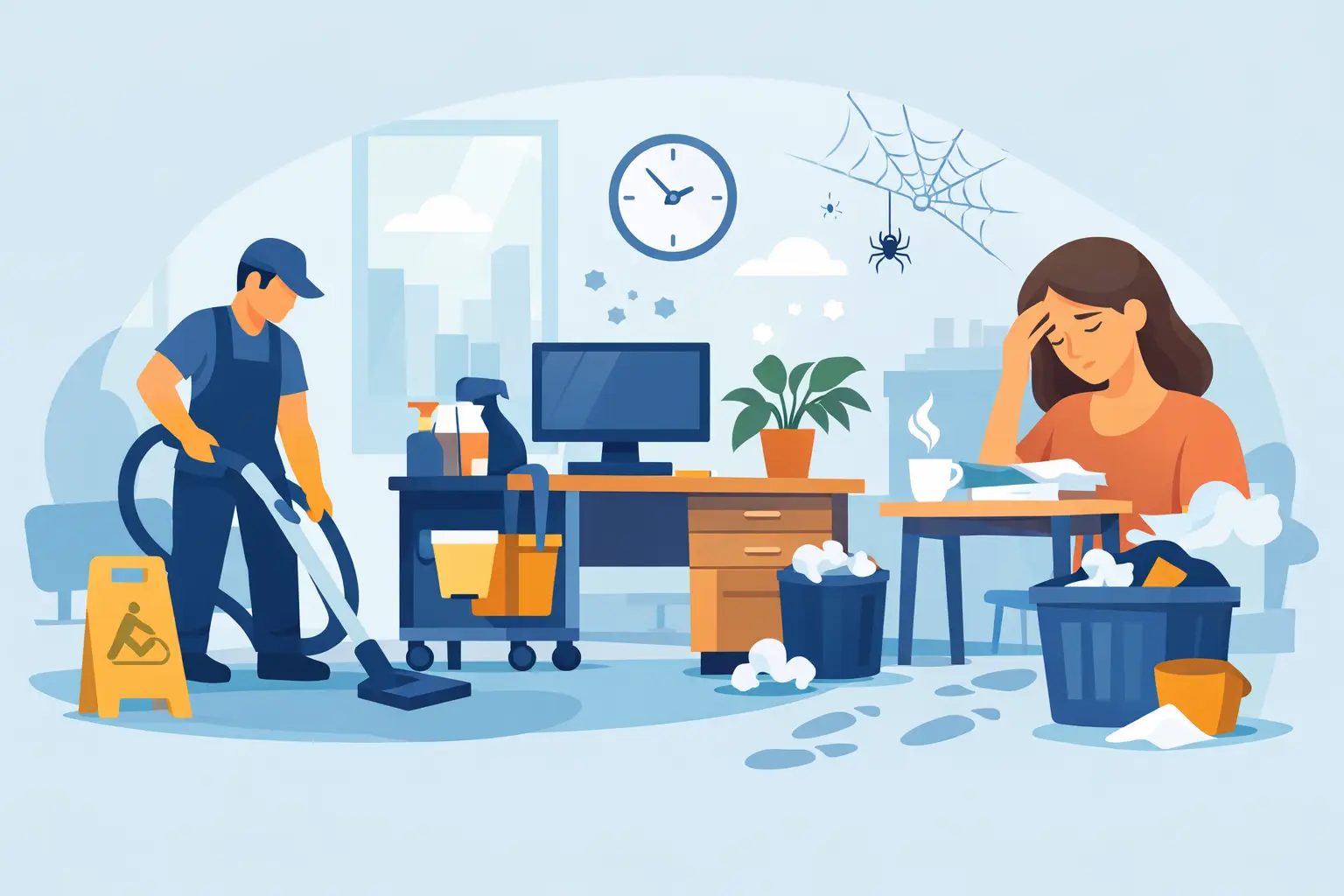
A dusty keyboard or a full bin is easy to spot. The bigger issue is the grime that builds quietly on carpet fibres, shared touchpoints, kitchen cupboards and washroom fittings. If you are asking when should offices be deep cleaned, the answer is usually before staff, visitors or clients notice that routine cleaning is no longer enough.
Regular office cleaning keeps the working day running smoothly. A professional deep clean resets the areas that need more time, equipment and attention. For busy London offices, it is a practical way to protect the standard of the workplace without placing extra pressure on your team.
When should offices be deep cleaned?
Most offices benefit from a full deep clean every six to 12 months, alongside a regular cleaning schedule. That is a useful baseline, not a fixed rule. An office with a small team, low visitor numbers and a clear-desk policy may only need an annual deep clean. A busy shared workspace, customer-facing premises or office with daily kitchen use may need one every three to six months.
The right interval depends on footfall, the type of work you do, how often people eat at their desks and the condition of your building. Carpeted offices can hold on to dust and tracked-in dirt, while hard floors show scuffs and wear more quickly. Older buildings may also need closer attention around entrances, vents, high ledges and neglected corners.
A deep clean is not a replacement for daily or weekly cleaning. Think of it as the detailed work that supports it. Routine cleaners focus on the visible essentials, while a deep-cleaning visit gives the whole office a more thorough reset.
7 signs your office needs a deep clean
You do not need to wait for an inspection or a major complaint. These are the usual signs that it is time to book a deeper clean.
- The office still looks tired after the regular clean. Marks around door handles, dusty skirting boards, stained carpets and smudged glass can make a clean space feel neglected.
- Kitchens and break areas are becoming difficult to manage. Grease on splashbacks, crumbs in drawers, fingerprints on appliances and lingering food smells need more than a quick wipe-down.
- Washrooms no longer feel fresh. Limescale, grout discolouration, marks around fittings and odours are clear signals that detailed cleaning is overdue.
- There has been a period of high footfall. An event, client meeting series, recruitment drive or return-to-office change can quickly increase dirt around reception areas, lifts and communal spaces.
- Staff are reporting dust or stale air. Dust accumulates on blinds, vents, radiators, tops of cupboards and behind furniture. It can affect how comfortable people feel at their desks, particularly during allergy season.
- You are moving premises or rearranging the office. Once desks and storage are shifted, the hidden dust and debris become obvious. This is the ideal time to clean behind and beneath furniture before the new layout is in use.
- You are preparing for an important visit. A client presentation, landlord inspection, audit or team gathering is a good reason to address the details that regular cleaning may not cover.
One sign alone may not mean the office needs a full service. Several appearing at once usually do. Acting early is often easier and more cost-effective than trying to recover a workplace that has been allowed to deteriorate over many months.
How often should different offices be deep cleaned?
There is no one-size-fits-all timetable. The best approach is to match the schedule to how your workplace is actually used.
A small office with fewer than ten people and limited visitors will often do well with an annual deep clean, supported by regular weekly cleaning. If staff work hybrid patterns and the office is empty for parts of the week, that may be enough.
For medium-sized offices with shared kitchens, meeting rooms and frequent visitors, a deep clean every six months is usually more realistic. These spaces receive regular wear even when desks are tidy, especially in reception areas and washrooms.
High-traffic workplaces may need quarterly attention. This includes coworking spaces, sales offices, showrooms, call centres and offices attached to shops, warehouses or other commercial sites. More people passing through means more dirt at entrances, more touchpoints to sanitise and faster build-up in communal areas.
Medical settings, food-related premises and other specialist workplaces may have separate hygiene requirements and should follow a cleaning plan designed around their operational needs. In these environments, a general office schedule is rarely sufficient.
Seasonality matters too. Winter brings wet shoes, grit and mud into London offices, making entrance mats, carpets and hard floors work harder. Spring can expose dust on blinds and high surfaces, while summer heat can make kitchen and washroom odours more noticeable. Booking a deep clean after winter or ahead of a busy summer period can make a real difference.
What does an office deep clean usually cover?
The exact scope should be agreed before work begins, because every workplace has different priorities. A proper deep clean commonly focuses on the details that are difficult to cover during a normal visit: detailed cleaning of desks and shared equipment, doors and frames, skirting boards, internal glass, light switches, radiators, blinds, high and low surfaces, and areas behind accessible furniture.
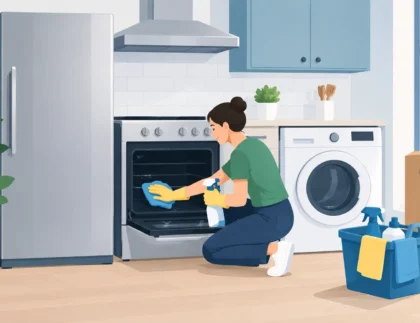
Kitchens often receive extra attention, including cupboards, worktops, appliances, tiles and floors. In washrooms, the focus is usually on descaling fittings, cleaning tiles and grout, treating touchpoints and refreshing floors. Carpet cleaning, upholstery cleaning, window cleaning and floor treatments can be added where needed, rather than assumed to be part of every service.
That distinction matters. A quick surface clean of a carpet is not the same as professional carpet cleaning, and external window work may require separate access arrangements. Being clear about the areas, finish and timing you expect helps you compare estimates properly and prevents surprises on the day.
Choose the right time with minimal disruption
Deep cleaning takes longer than a standard office clean, so timing is part of the plan. Evening, early morning and weekend appointments can reduce disruption for staff and visitors. If your office has several floors or departments, the work can sometimes be phased so one area remains available while another is cleaned.
Before the cleaners arrive, ask staff to clear personal items, paperwork and valuables from desks where possible. This makes detailed cleaning more effective and reduces the risk of important items being moved. It is also worth telling the cleaning team about restricted rooms, alarm procedures, fragile equipment and any site-specific rules.
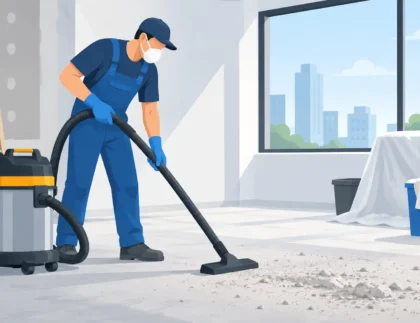
A clear brief is particularly useful after construction work, an office move or a refurbishment. Fine dust can travel further than expected, settling on ledges, inside cupboards and around cables. In that situation, a post-construction clean may be more suitable than a standard office deep clean.
Build deep cleaning into your office plan
The easiest way to stay ahead of dirt is to schedule deep cleaning before it becomes urgent. Put a provisional date in the diary after a busy season, ahead of your lease review, or before the next important client event. Your regular cleaner can also flag recurring problem areas, such as the kitchen floor, reception carpet or washroom limescale, so the next service is targeted where it will have the most impact.
The Ultimate Cleaners provides flexible office cleaning and one-off deep cleans across London, using eco-friendly products where appropriate and arranging work around your operating hours. Requesting an estimate with your office size, team numbers, cleaning frequency and priority areas is the fastest way to get a service that fits the building rather than a generic checklist.
A well-kept office does more than look presentable. It gives staff a more comfortable place to work and shows visitors that the details are handled. Book the deep clean while the signs are minor, and your regular cleaning routine will have a much easier job keeping standards high.