A new build, refurbishment or extension can look finished long before it is ready to use. Fine construction dust settles again after the builders leave, paint flecks cling to glass, and hidden debris can turn up in cupboards, vents and corners. A proper post-build cleaning review gives you a clear way to check whether the property is genuinely ready for handover, occupation or reopening.
This is not the same as a quick tidy-up after trades have packed away their tools. Post-construction cleaning is a detailed service designed to remove the residue of building work safely and methodically. Whether you are preparing a family home in North London, a rental flat, an office refit or a retail unit, the final inspection matters.
Start the review in the right conditions
Do not inspect straight after a cleaner has finished if surfaces are still damp or the light is poor. Natural daylight is the best test for smears, dust and marks, especially around windows, glossy kitchen units and bathroom fittings. If possible, walk through the property after the building work is complete and all contractors have removed their equipment and waste.
Bring a torch for cupboards, utility spaces and behind doors. Take photographs of anything that needs attention, and make notes room by room rather than relying on memory. This is particularly useful where a contractor, landlord, managing agent and cleaning team are all involved in the same handover.
It also helps to separate cleaning issues from defects. A scratched worktop, cracked tile or badly applied sealant is not something cleaning can put right. Conversely, grout haze, paint spots and dusty skirting boards may be removable with the correct products and careful technique. Knowing the difference keeps the conversation practical and avoids delays.
Post-build cleaning review: the first checks
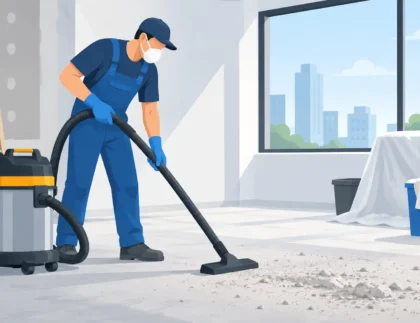
The first impression should be simple: the space should look clean, smell fresh and feel safe to enter. There should be no loose rubble, packaging, offcuts, nails, screws or sharp fragments left behind. Floors should be clear enough to walk on without tracking dust from room to room.
Look at the highest surfaces first. Dust falls downwards, so a good cleaning process normally begins with ceilings, light fittings, vents, ledges and the tops of doors before moving to furniture-level surfaces and floors. If you can run a fingertip over a high shelf or door frame and pick up a visible layer of dust, the clean is not yet complete.
Pay attention to protective films, labels and tape too. These are easy to miss on appliances, window frames, bathroom fixtures and cabinetry. They should be removed where appropriate, without damaging a newly fitted surface or leaving sticky residue behind.
Check each room, not just the obvious areas
A spotless-looking main room can hide unfinished work in the places people use every day. Take your time with kitchens, bathrooms and storage areas, as these are usually where post-build dust and residue are most noticeable.
Kitchens and utility rooms
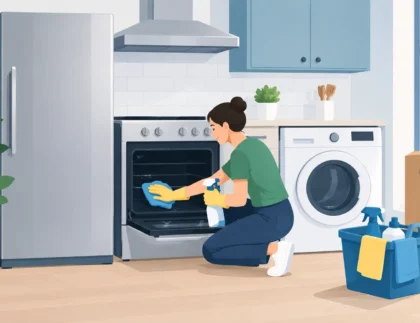
Open every cupboard, drawer and appliance space. Internal shelves, hinges, runners and handles should be free from sawdust, plaster dust, adhesive and packaging remnants. Check the tops of wall units as well. They are often out of sight, but accumulated dust can quickly drop onto freshly cleaned worktops.
Worktops should be free from streaks, sealant residue and dried marks. Sinks need particular care: builders may have used them for rinsing tools, leaving paint, grout or silicone traces. A professional cleaner should use products suitable for the material, whether that is quartz, stone, laminate, stainless steel or a composite surface. Strong chemicals may remove a mark but cause dulling or damage, so the right method matters as much as effort.
Bathrooms and cloakrooms
New bathrooms often show water marks, grout haze and dust around fittings. Check taps, shower screens, tiles, mirrors, toilet bases and the edges of basins. Chrome should be polished without cloudy smears, while glass should be clear from both sides.
Look closely at corners and joins. Dust can gather around pipework, behind toilets and inside vanity units. If silicone has only recently been applied, tell the cleaning team before work begins. Fresh sealant may need time to cure, and aggressive cleaning too soon can affect the finish.
Windows, frames and glass
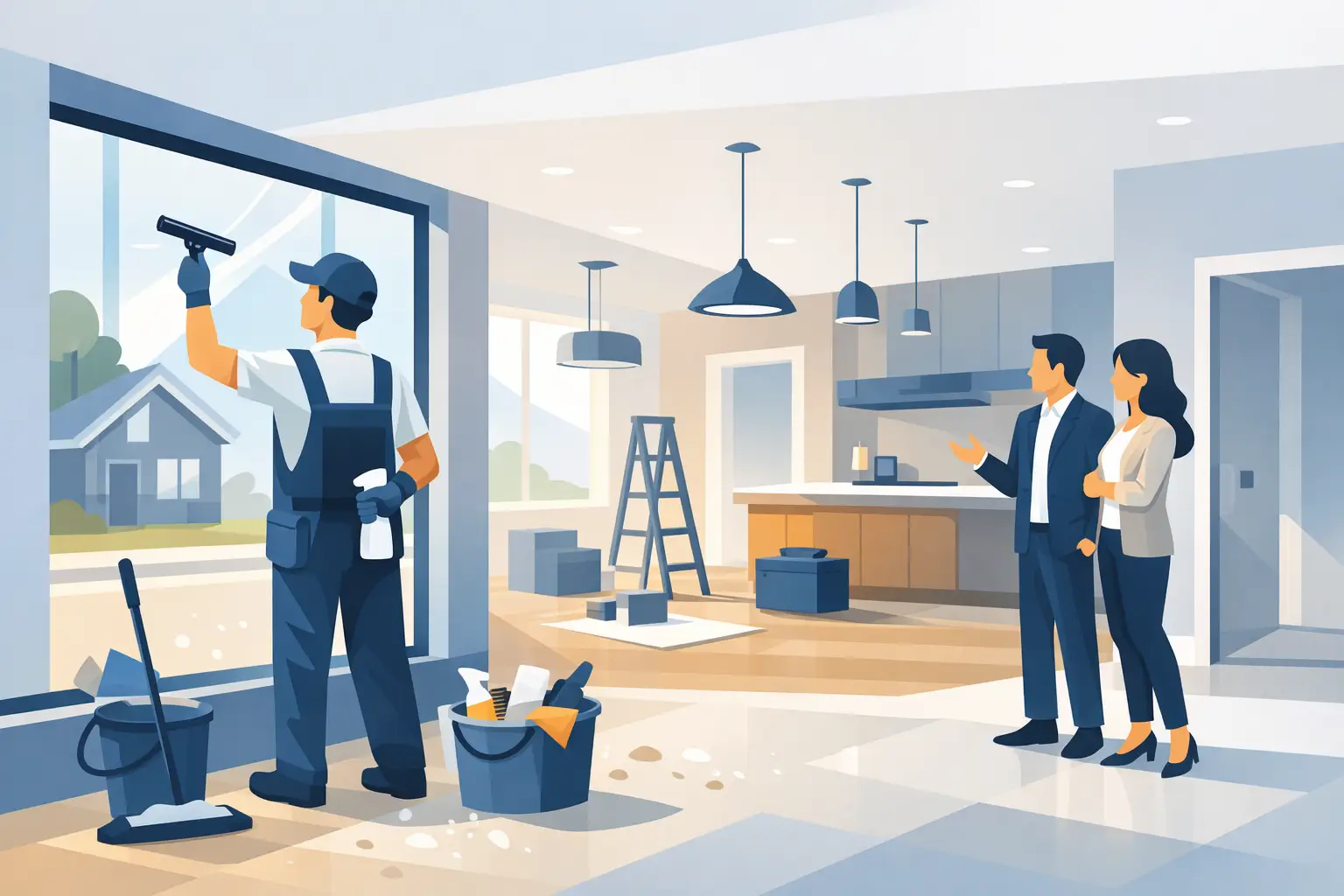
Windows reveal the quality of a post-build clean very quickly. Stand at different angles and look for paint flecks, plaster spots, fingerprints, sticker residue and streaks. Frames, tracks, sills and handles should also be cleaned, not just the pane of glass.
There is a sensible limit here. Scraper use on glass requires care, particularly where the glass has coatings or where debris could scratch the surface. If marks appear permanent, pause before anyone uses more force. It may be a glazing issue rather than a cleaning issue.
Floors, skirting and internal joinery
Construction dust finds every edge of a room. Check skirting boards, radiators, door frames, sockets, switches, stair spindles and the grooves in engineered flooring. Carpet edges and hard-floor perimeters deserve a close look because these areas are easily missed during a rushed clean.
The floor itself should be free from dust, footprints, dried paint and adhesive. However, newly laid floors can have manufacturer-specific care instructions. A cleaning team should adapt to the surface rather than use one approach everywhere. For example, excessive moisture on certain timber or laminate floors can create problems, while stone may need a pH-neutral product.
Look for the dust that comes back
Post-build dust is finer than everyday household dust and can keep settling after the first clean. That does not automatically mean the cleaning was poor. If decorators, fitters or electricians are still returning to site, more dust is likely.
The key question is whether the property has had a proper final clean after the last dusty task. For larger refurbishments and commercial fit-outs, a two-stage approach is often the better choice: an initial builders clean to remove heavy debris, followed by a sparkle clean shortly before handover. It can cost more than a single visit, but it usually delivers a better finish when the project schedule is busy.
If you are moving in immediately, consider checking air vents, extractor covers and filters as well. Dust in these places can circulate after the clean, leaving surfaces looking untidy again sooner than expected.
Review safety and readiness, not only appearance
A clean property should also be practical to use. Waste should be removed from internal areas, access routes should be clear and no cleaning products or equipment should be left behind. In commercial premises, this is especially relevant around fire exits, shared corridors, stockrooms and customer-facing spaces.
For landlords and letting agents, the standard should support a smooth tenancy start. New occupants should be able to unpack, cook, wash and use storage without first wiping down every surface. For offices, restaurants, shops and medical settings, the cleaning plan may need to account for hygiene expectations, high-touch areas and the timing of reopening.
A good review is not about looking for fault for the sake of it. It is about making sure the space is fit for the people who will use it next.
What to do if something has been missed
Raise concerns promptly, ideally while the cleaning team can return without disrupting the handover. Be specific: “dust inside the upper kitchen cupboards” is much easier to act on than “the kitchen is not clean enough”. Photos and a room-by-room list make the process faster for everyone.
Ask whether the issue is a missed area, a mark needing specialist treatment or damage that should be referred to the builder. A reliable cleaning provider will be clear about what can be corrected and what falls outside cleaning work. The Ultimate Cleaners team approaches post-construction jobs with that practical mindset, using suitable products and a detailed scope rather than treating every surface the same.
Before you sign off, do one final walk-through with the lights on, cupboards open and floors clear. The last five minutes are often when you spot the small details that make the difference between a building site that looks better and a property that feels ready to enjoy.
If your project is nearing completion, arrange the clean after the final trade visit wherever possible, then allow time for this inspection before keys change hands. It is a simple step that protects your move, your handover and your first impression of the finished space.