A warehouse can look busy without looking dirty, yet dust on racking, spill residue by loading bays and debris in pedestrian routes can quickly become safety and stock-control problems. This guide to warehouse cleaning standards sets out what a practical cleaning programme should cover, how often tasks need doing, and where professional support can make day-to-day operations easier.
Why warehouse cleaning standards matter
Warehouse cleaning is not simply about presenting a tidy workplace. It supports safe movement, protects goods, reduces fire risks and helps staff work with confidence. In a high-traffic site, small issues build up fast: shrink wrap gathers around pallet areas, tyre marks bring in moisture, cardboard dust settles on stock, and leaked products can create slip hazards.
Good standards should reflect the actual activity in the building. A quiet storage facility with sealed goods needs a different approach from a distribution warehouse with frequent deliveries, food products, chemicals or machinery. The aim is not to clean every surface to the same level every day. It is to control the risks in each zone, without interrupting operations unnecessarily.
For London facilities teams, this is particularly relevant where space is tight and loading schedules are demanding. Clear routes, clean welfare areas and well-managed waste points help keep the site moving.
Start with a zone-by-zone cleaning plan
The most workable warehouse cleaning standards are specific. A vague instruction to keep the warehouse clean leaves staff guessing about priorities, responsibility and acceptable results. Divide the premises into zones, then set tasks according to risk, footfall and the nature of the stock.
Loading bays, entrances and vehicle routes
These areas often need attention every day, sometimes between shifts. Dirt, water and contaminants are brought in on footwear, pallet trucks and forklifts, particularly during wet weather. Sweep or machine-scrub as appropriate, remove loose packaging promptly, and keep dock edges, access doors and emergency exits unobstructed.
Oil, fuel or chemical leaks need a separate response. Staff should know where spill kits are kept, who can use them and when the area must be isolated. Do not simply mop an unknown liquid into a drain. Identify it first and follow the site procedure.
Storage aisles and racking
Aisles must stay clear enough for people and handling equipment to move safely. Daily checks should remove litter, broken pallets, loose strapping and discarded labels. Cleaning beneath racking may happen less often, but it should be scheduled rather than left until dirt is visible from the aisle.
High-level dust is easy to overlook. It can collect on racking beams, light fittings, ducting and pipework, then fall onto stock or equipment. The right frequency depends on the site, but warehouses with cardboard handling, timber products or frequent vehicle movement usually need more regular high-level cleaning. This work should only be carried out with suitable access equipment and trained operatives.
Packing, picking and dispatch areas
These workstations benefit from cleaning during and at the end of every shift. Wipe benches, remove waste, clean scanners and shared equipment in line with manufacturer guidance, and keep labels, tape and packaging materials organised. Where stock is food, cosmetics, pharmaceuticals or another sensitive product, the cleaning specification may need tighter controls and documented checks.
Welfare facilities and offices
Toilets, changing rooms, kitchens and rest areas need routine cleaning that reflects staff numbers and shift patterns. They are also the spaces employees notice most. Clean washrooms, stocked consumables and hygienic eating areas show that site standards apply to people as well as pallets.
Set cleaning frequencies that match the risk
A cleaning schedule should be realistic enough to be followed. Daily tasks normally include clearing walkways, managing waste, spot-cleaning spills, cleaning welfare facilities and checking entrances. Weekly work may cover more thorough floor cleaning, lower-level racking, doors, skirting, workstations and bins.
Monthly or periodic tasks can include deep cleaning under racking, high-level dust removal, machine cleaning of larger floor areas, internal window cleaning and attention to hard-to-reach surfaces. Some sites need these jobs more frequently, especially where dust is generated or where hygiene requirements are strict.
There is a trade-off to manage. Cleaning too lightly allows dirt and hazards to build up. Cleaning at the wrong time can block routes and slow dispatch. Many warehouses therefore schedule deeper work outside peak hours, while keeping a responsive daytime team or contractor available for spills and urgent issues.
Floor care deserves special attention
Warehouse floors take the hardest treatment. Forklift traffic, pallet movement, wet shoes and dropped loads all affect the surface. A clean floor should not just look better – it should provide safe grip and allow line markings, signs and hazards to remain visible.
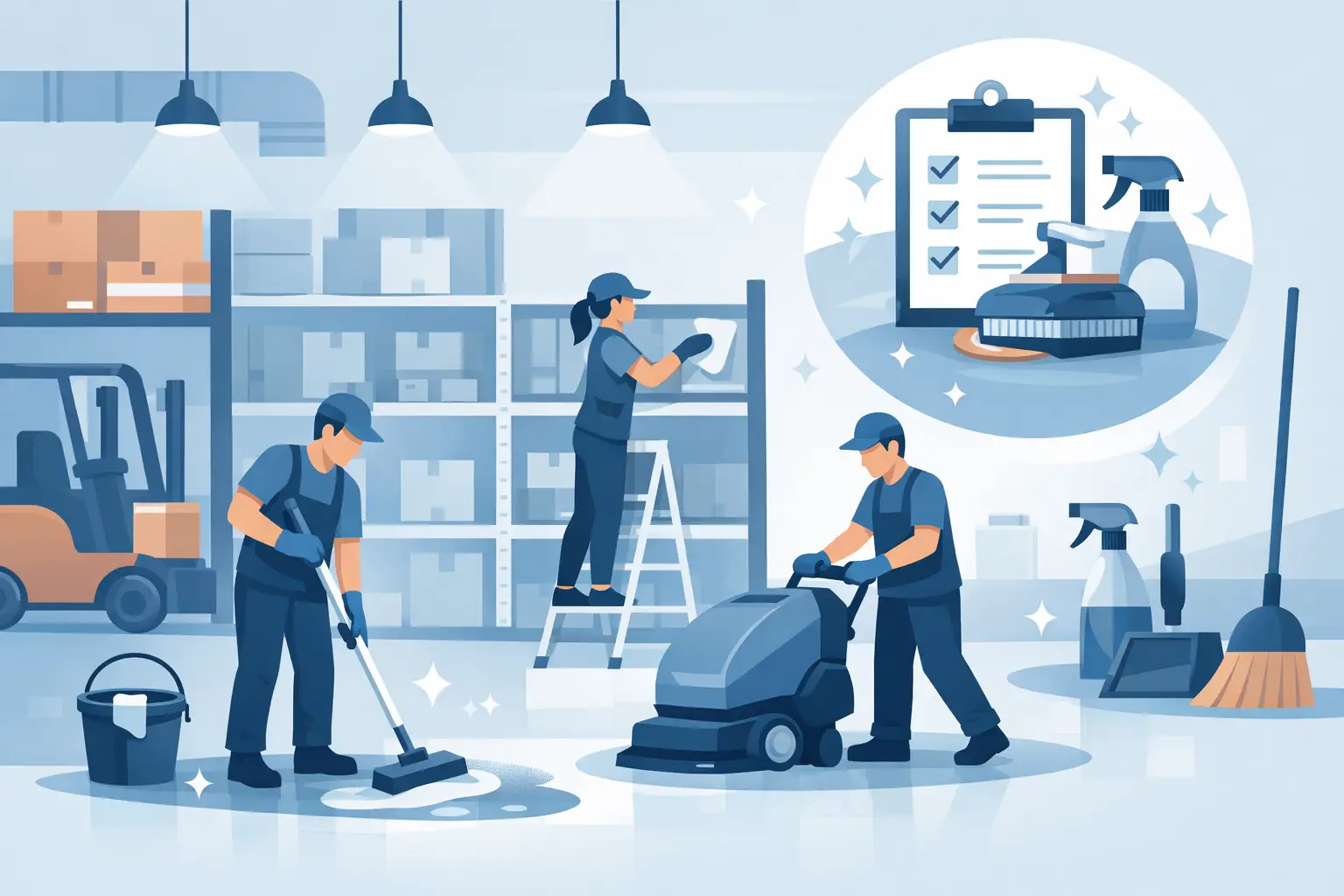
The method matters. Sweeping is useful for dry debris but can lift fine dust into the air. Vacuum sweeping or industrial equipment may be a better option in dust-sensitive areas. Machine scrubbing can remove ingrained grime effectively, but excess water creates its own slip risk, so floors need time to dry and routes should be managed while cleaning is underway.
Choose cleaning products for the floor type and soil present. Strong chemicals are not automatically better. The wrong product can damage coatings, leave residue or make a surface more slippery. Eco-friendly products can be a sensible choice when they are effective for the task, correctly diluted and compatible with the material being cleaned.
Keep chemicals, waste and hazards under control
Cleaning chemicals should be stored securely, labelled clearly and used according to the supplier instructions and site assessments. Teams should understand the relevant COSHH controls, including required protective equipment, safe dilution and what to do if a product is spilled or splashed.
Waste handling needs the same level of organisation. Cardboard, plastic wrap, damaged stock, general waste and hazardous materials should have clear collection points. Overflowing bins invite clutter, pests and fire risks. Keep waste away from fire exits, electrical panels and vehicle routes, and arrange collections often enough to prevent build-up.
Pay particular attention to combustible dust and packaging waste. Fire safety arrangements vary by site, but keeping dust off ledges and preventing cardboard from accumulating around charging points, heaters or plant areas is basic good practice.
Train staff and record what has been done
A professional standard relies on people knowing what good looks like. Give warehouse teams simple instructions for daily housekeeping, spill reporting, waste disposal and keeping routes clear. Supervisors should carry out regular checks rather than waiting for an audit or incident to reveal a problem.
A cleaning log is useful when it is short and meaningful. It can record completed tasks, reported spills, deep-clean dates, equipment issues and corrective action. For regulated or high-care environments, more detailed records may be necessary. In a general warehouse, the key is proving that checks happen and ensuring problems are not passed from shift to shift.
When to bring in warehouse cleaning specialists
In-house teams are often well placed to manage daily tidying and immediate spill responses. Specialist cleaners add value where the work needs industrial machinery, trained access at height, intensive floor restoration or a deep clean that your team cannot fit around normal operations.
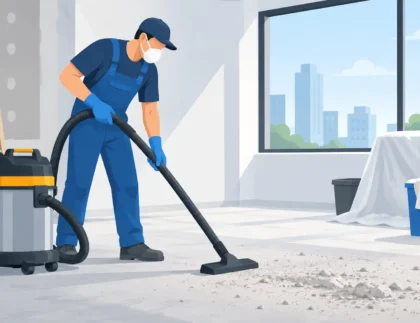
This is also helpful before an inspection, after building work, following a stockroom reorganisation or when dust has reached high-level areas. A planned periodic clean can prevent the site reaching the point where a disruptive shutdown is needed.
The Ultimate Cleaners supports commercial sites across London with flexible warehouse cleaning planned around operational hours. Whether you need one-off deep cleaning or ongoing support, the scope should be agreed in advance: which zones are included, what machinery is required, how stock will be protected and who signs off the work.
A clean warehouse is easier to run, safer to work in and more ready for the unexpected. Start with the areas that carry the greatest risk, make responsibilities clear, and build a routine your team can genuinely maintain.