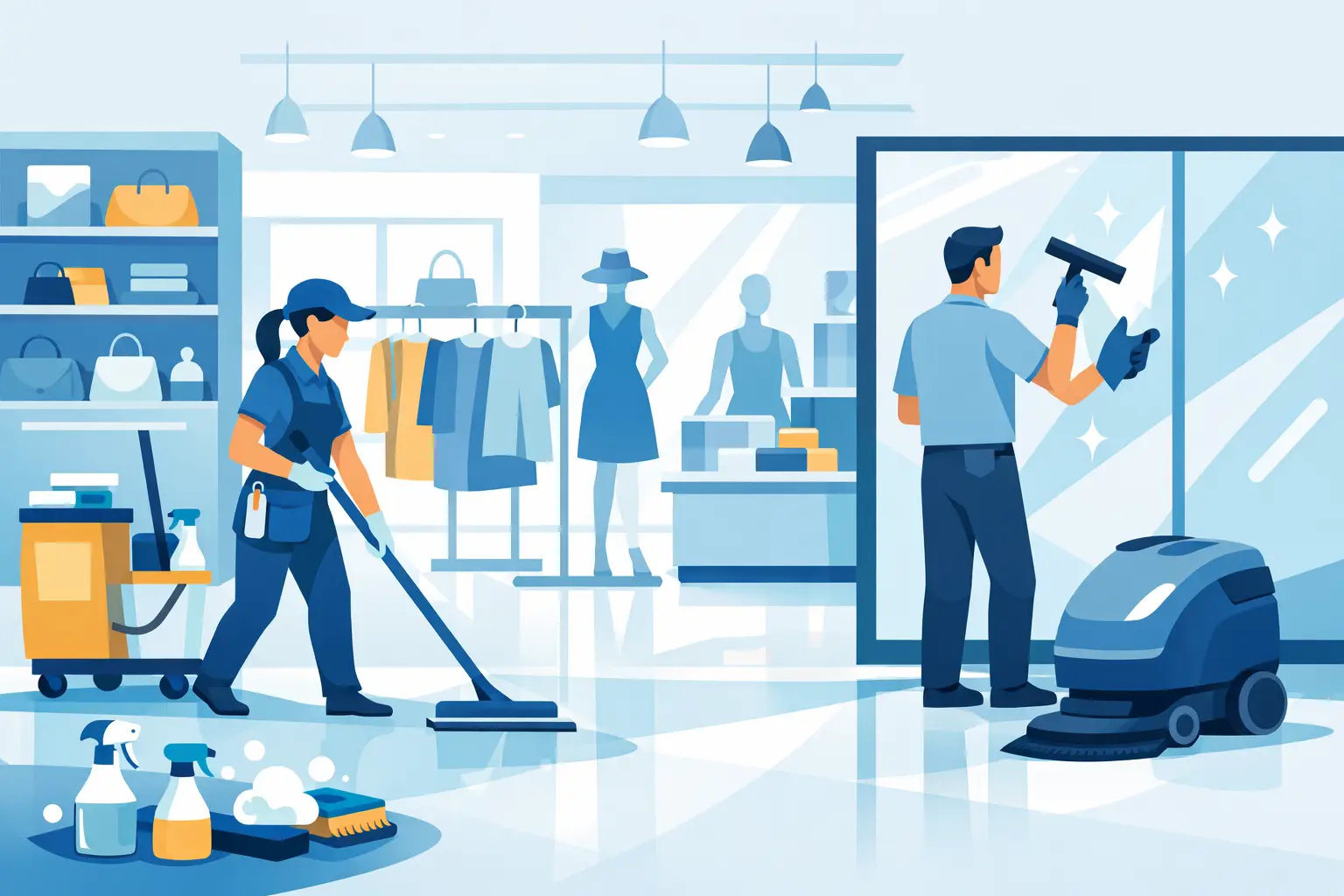
A customer may never comment on a dusty shelf or a streaked entrance door, but they notice. In a retail setting, cleanliness affects how shoppers judge your products, your staff and your attention to detail within seconds. The best cleaning approach for retail spaces is not simply a quick tidy before opening. It is a planned routine that keeps high-traffic areas presentable, protects surfaces and deals with hygiene risks before they become a problem.
For London retailers, that routine also needs to work around deliveries, staff rotas, busy trading periods and limited storage space. A good cleaning plan should support the way your shop operates, rather than create extra work for your team.
Start with the customer journey
The most effective retail cleaning plans follow the route a customer takes through the premises. Begin outside the front door, then look at the entrance, windows, sales floor, fitting rooms, tills and any customer toilets. These are the areas where a missed cleaning task is most visible.
Entrance mats, glass doors and window displays deserve particular attention. Wet pavement, leaves and street dust can be brought straight into a shop, especially during a typical London autumn or winter. Dirty flooring near the entrance can make the whole premises feel neglected, while wet floors can become a safety issue. Regular vacuuming or sweeping, prompt spot cleaning and properly maintained entrance mats reduce both problems.
Once customers are inside, their attention naturally goes to displays and merchandise. Dust on shelves, fingerprints on glass cabinets and marks on mirrors can distract from the products you are trying to sell. Cleaning should be scheduled around stock handling so staff do not have to choose between serving customers and maintaining standards.
Build a retail cleaning schedule around footfall
A shop does not need the same level of cleaning in every area, every hour of the day. The right frequency depends on your footfall, the type of goods you sell, the weather and whether customers use facilities such as changing rooms or toilets.
For most retail spaces, a combination of daily cleaning, daytime checks and planned periodic deep cleaning delivers the best result. Daily work covers the visible essentials: floors, touchpoints, bins, counters, mirrors and washrooms. Daytime checks focus on fast fixes, such as removing a spill, wiping a counter or refreshing a fitting room after a busy period. Deep cleans tackle the build-up that daily work cannot fully address, including skirting boards, vents, high shelving, upholstery and hard-to-reach corners.
A quiet independent boutique may only need a thorough clean before opening and a quick close-down each evening. A busy convenience shop, showroom or shopping-centre unit may need several inspections throughout the day. There is no benefit in paying for a one-size-fits-all schedule if it does not reflect how your customers actually use the space.
Before opening: set the standard
Pre-opening cleaning is when your premises should look their best. Floors should be clean and dry, glass should be free from smears, bins should be emptied, and counters should be ready for staff and customers. This is also the right time to clean display surfaces without disrupting browsing or sales.
If your shop opens early or has a tightly managed set-up period, an out-of-hours cleaning service can make a real difference. Your staff arrive ready to trade rather than spending the first part of the day dealing with yesterday’s mess.
During trading hours: clean little and often
Daytime retail cleaning should be discreet and practical. The aim is not to conduct a major clean around shoppers, but to prevent small issues from becoming noticeable. A visible spill, overflowing bin or grubby mirror should be dealt with promptly.
Keep cleaning supplies safely stored but easy for authorised staff to reach. Where an external cleaner is on site during opening hours, agree clear priorities in advance. Customer toilets, fitting rooms, entrance areas and checkout points usually need the quickest response.
After closing: deal with the real build-up
Closing time is the opportunity for a fuller reset. Vacuuming or mopping floors, cleaning staff areas, removing waste and sanitising high-touch surfaces helps keep the next day on track. It is also the best time to address marks around tills, doors, baskets, rails and handles.
The key is consistency. A rushed clean once a week cannot compensate for small daily tasks being missed across six trading days.
Focus on floors, touchpoints and washrooms
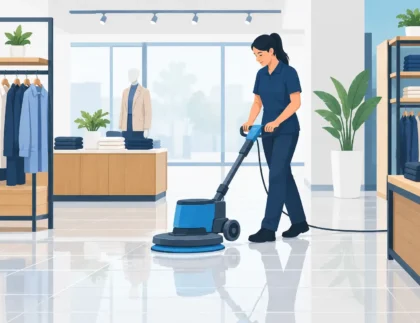
Retail floors work hard. They carry customers, pushchairs, delivery trolleys and staff for hours at a time, so the method needs to match the material. Carpeted areas require regular vacuuming and occasional professional carpet cleaning to lift embedded dirt. Vinyl, tile and laminate need suitable products that clean without leaving residue or making the surface slippery. Natural stone and specialist finishes may need gentler treatment to avoid dulling or damage.
Using the wrong product can be costly. A strong cleaner may remove a mark quickly but leave streaks on a polished floor or affect a protective coating. That is why cleaning instructions should be based on the surface, not just the visible dirt.
High-touch points deserve the same care. Card machines, till screens, door handles, baskets, handrails and fitting-room hooks are handled repeatedly throughout the day. They should be cleaned and sanitised with products suitable for the surface and used according to the manufacturer’s guidance. In food retail, beauty counters and shops with customer toilets, hygiene controls need to be even more rigorous.
Washrooms can shape a customer’s impression more than almost any other area. They need a clear cleaning frequency, stocked soap and paper supplies, fresh-smelling bins and regular checks during busy periods. A spotless sales floor will not fully outweigh a poorly maintained toilet.
Keep windows and displays part of the plan
Retail windows are selling space. Smudges, rain marks and accumulated dust reduce the impact of a display before anyone has entered the shop. Internal glass around cabinets, mirrors and partitions needs regular attention too, particularly in fashion, jewellery, beauty and showroom environments.
Window cleaning frequency depends on your location. A shop on a busy high street or near a main road may need more frequent exterior cleaning than one in a sheltered arcade. Weather, traffic pollution and nearby building work all make a difference. Rather than waiting until the glass looks obviously dirty, set a realistic recurring schedule.
Display cleaning should be carried out carefully, especially around delicate stock and electrical equipment. Dusting, vacuuming and wiping need to be coordinated with merchandising so products are returned correctly and nothing is damaged or misplaced.
Use eco-friendly products without compromising results
Many retailers want to reduce the use of harsh chemicals, and customers increasingly expect responsible business practices. Eco-friendly cleaning products can be a sensible choice for retail premises, particularly where there are children, food products, fragrance-sensitive customers or enclosed spaces.
However, eco-friendly should not mean ineffective. Products still need to be appropriate for the task, whether that is degreasing a staff kitchen, sanitising a washroom or cleaning glass without streaks. The best approach is to use professional products in the correct dilution and apply them with the right tools. That reduces waste, protects surfaces and avoids leaving strong chemical smells in the shop.
Microfibre cloths, well-maintained vacuum equipment and colour-coded cleaning materials also help improve standards. Colour coding can prevent a cloth used in a washroom from being used on a counter or display area, which is a simple but valuable hygiene control.
Make responsibilities clear
Even an excellent cleaning contractor cannot maintain a retail space alone if staff are unsure who handles spills, waste or end-of-day checks. The strongest arrangements divide responsibilities clearly. Your team may manage immediate customer-facing issues, while professional cleaners handle the scheduled daily work, periodic deep cleans and specialist jobs.
A simple site checklist is useful, but it should be short enough to be used. Record the areas that matter most, the expected frequency and any site-specific instructions, such as alarm procedures, keyholding arrangements or stockroom access. Review the plan after busy seasons, refits or changes to opening hours.
For larger stores or multi-site operators, regular quality checks help spot recurring issues. If a fitting room is constantly untidy by mid-afternoon, the answer may be an additional daytime check rather than asking the evening cleaner to work faster.
When to bring in professional retail cleaners
Routine cleaning can cover a great deal, but some tasks benefit from specialist equipment, trained staff and more time than an in-house team can spare. Carpet extraction, high-level dusting, post-refit cleaning, stubborn floor marks, external windows and intensive washroom cleaning are common examples.
A professional service is especially useful when you need cleaning outside trading hours, during seasonal peaks or before an inspection, opening or promotional event. The Ultimate Cleaners can tailor commercial cleaning around your hours, whether you run a small shop, a busy showroom or a larger customer-facing site.
The best retail cleaning approach is the one your customers barely have to think about. When floors are safe, windows are clear, stock areas are dust-free and washrooms are properly maintained, your team can focus on the service and products that bring people through the door.