
A landlord or letting agent will not judge a property by how hard you worked. They will judge what is left behind when they walk through the door. This end of tenancy cleaning results example shows what a proper move-out clean can change, what needs extra attention and where even a professional service has limits.
For tenants, the aim is simple: leave the home clean, presentable and ready for inspection. For landlords, it is about protecting the condition of the property for the next occupant. A thorough clean helps both sides avoid last-minute disputes over dust, grease, limescale and forgotten cupboards.
End of tenancy cleaning results example: what changed
Picture a two-bedroom London flat at the end of a 16-month tenancy. The tenants had kept it reasonably tidy, but busy work schedules meant the deeper jobs had built up. The kitchen extractor was greasy, the bathroom had limescale around the taps and shower screen, and dust had settled behind furniture and along skirting boards. The oven had visible burnt-on residue, while the carpets showed everyday traffic marks near the entrance and sofa.
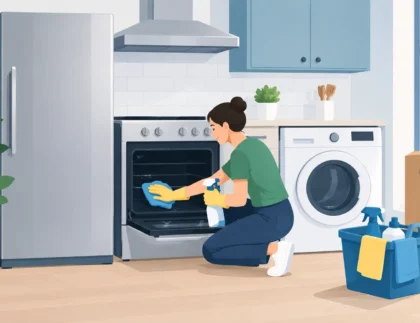
After an end of tenancy clean, the difference should be clear rather than cosmetic. Kitchen worktops, cupboards and drawers are wiped inside and out. Appliances are cleaned externally and, where included, internally. The oven is degreased, racks are treated, and food debris is removed from the door seals and tray area. In the bathroom, taps, tiles, shower fittings and the screen are descaled as far as their condition allows, leaving a brighter, fresher finish.
Across the rest of the flat, the cleaners vacuum and mop floors, wipe doors, switches, skirting boards and accessible woodwork, dust blinds and ledges, and clean the inside of wardrobes and cupboards. Windows may be cleaned internally as part of the agreed service. The result is a property that feels reset: no stale odours from bins, no crumbs in drawers and no obvious dust waiting to be found during the check-out inspection.
That does not mean every aged surface looks brand new. A scratched hob, permanently etched shower glass, stained silicone or worn carpet is not a cleaning failure. It is wear, damage or deterioration that may need repair, replacement or specialist treatment.
Room-by-room results that matter at inspection
Kitchen: the room that causes the most comments
Kitchens often decide whether a handover feels smooth or stressful. Grease settles on cupboard tops, extractor filters and tiles, while spills dry inside drawers and under the fridge. A professional result means these areas are dealt with, not simply wiped around.
In our example, the oven door went from cloudy with baked-on grease to clear enough to see through. The hob was free from food residue, cupboard interiors were emptied of crumbs and the sink was polished. The extractor filter improved after degreasing, although a very old filter may still retain discolouration. This is exactly why condition matters as much as cleaning effort.
Before the clean, the kitchen could have raised questions at check-out. Afterwards, it looked cared for and ready for the next tenant to use.
Bathroom: limescale is the real test
In London, hard water can make a bathroom look tired quickly. White marks around taps, dull shower screens and residue in the toilet rim are all common. The right cleaning products and enough contact time can make a noticeable difference, especially when cleaning is done methodically rather than in a rush.
In this example, the chrome taps regained their shine, the basin and bath were sanitised, and the toilet was cleaned thoroughly inside and out. The shower screen was clearer and the tile grout looked brighter once surface build-up was removed. However, one section of silicone remained dark because mould had penetrated the sealant. Cleaning can treat surface mould, but damaged sealant usually needs replacing.
This distinction is useful when discussing a deposit. Cleanliness can be addressed. Maintenance issues should be recorded separately.
Bedrooms and living areas: detail creates the finish
Bedrooms and living spaces may appear clean at first glance, but inspection standards tend to rise around edges and hidden areas. Dust behind radiators, marks on switches, debris in wardrobe tracks and fluff along skirting boards all affect the final impression.
Following the clean, the wardrobes in our flat were empty and wiped down, floors were vacuumed thoroughly and hard flooring was mopped. Light switches, door handles and internal glass were cleaned, leaving the rooms bright without a heavy chemical smell. Fresh air and an orderly finish matter here. A clean home should feel ready to move into, not just recently sprayed.
Carpets are a separate consideration. Vacuuming removes loose dust and hair, but it will not always lift embedded marks or old odours. A professional carpet clean can be added where the tenancy agreement, inventory report or carpet condition calls for it. It is particularly worthwhile for pets, spills, heavy footfall or a visible difference in colour where furniture has been moved.
What a professional clean cannot fix
A reliable cleaning company should be clear about expectations before work begins. End of tenancy cleaning is intensive, but it is not a substitute for repairs or refurbishment.
Burn marks, chipped paint, cracked tiles, damaged blinds, broken appliances and deep stains that have permanently altered a surface may remain. So can mould caused by a leak or ongoing ventilation issue. If a property has been empty for a long time, pest activity, construction dust or severe nicotine staining may require specialist work beyond a standard move-out clean.
The most useful approach is to check the original inventory early. Compare the property room by room, take date-stamped photographs and identify anything that needs more than cleaning. This gives you time to arrange carpet cleaning, rubbish removal, repair work or a specialist treatment before the final inspection.
How to get better end of tenancy cleaning results
The best results start before the cleaners arrive. Remove all personal belongings, empty cupboards and drawers, and take rubbish out of the property. Cleaners can focus fully on the surfaces when they do not need to sort through items left behind.
Make sure electricity, hot water and access are available. If there are particular areas of concern, such as an oven, mould around a window or a stained carpet, mention them when requesting your estimate. A clear brief helps the team allow the right time, equipment and cleaning products.
It is also sensible to agree what is included. Internal windows, appliances, balcony areas, carpet cleaning and external window cleaning may depend on the property and the service booked. There is no value in assuming a task is covered and finding out otherwise on handover day.
At The Ultimate Cleaners, we approach move-out cleans with the same practical aim our customers have: make the property inspection-ready without adding more pressure to an already busy move. Eco-friendly products can be used where suitable, while the work stays focused on the details that tenants, landlords and agents notice.
A clean handover starts with realistic expectations
A good end of tenancy clean does more than make a flat smell fresh. It removes the everyday build-up that can make an otherwise well-kept home look neglected, and it gives everyone a clearer view of the property’s true condition.
If your move date is close, do not leave the inspection to chance. Book enough time for the clean, flag any specialist needs early and walk through the property once more before you hand back the keys. That final ten minutes can save a great deal of back-and-forth later.