
A dirty entrance at 9am, a streaked shopfront at lunchtime or an overflowing bin during the evening rush can affect how customers judge your business in seconds. Shop cleaning opening hours should not force a choice between a clean premises and a productive trading day. With the right plan, much of the work can happen discreetly while you are open, with deeper tasks scheduled around your quietest periods.
For London retailers, convenience stores, salons, showrooms and larger commercial units, the best cleaning timetable reflects the way the premises actually operates. That means understanding footfall, deliveries, staff routines and the areas customers see first.
Why shop cleaning opening hours need careful planning
Shops are active workplaces, not empty rooms waiting to be cleaned. Customers browse, staff replenish shelves, deliveries arrive and tills need to remain accessible. A cleaner working without a clear schedule can create avoidable obstructions, wet-floor risks and disruption at exactly the wrong time.
At the same time, postponing every task until after closing can leave high-touch and high-traffic areas looking tired before the day is over. Entrance floors, changing rooms, counters, mirrors, washrooms and door handles often need attention during opening hours. The goal is not to clean constantly. It is to keep the space presentable, hygienic and safe without making customers feel as though they are walking through a work site.
The right approach depends on your type of premises. A boutique with a calm mid-afternoon period may suit a short daytime visit. A busy food retailer may need more frequent checks to manage spills and waste. A showroom may prioritise flawless glass, display areas and reception spaces before appointments begin.
Build cleaning around the customer journey
Start at the pavement and work inwards. The customer journey usually begins with the exterior glass, entrance matting and door furniture, then moves through the sales floor, fitting rooms or consultation areas, and finishes at the till or exit. These are the places where a missed detail is most visible.
Opening hours are particularly useful for light, low-disruption tasks. A professional cleaner can spot-clean entrance glass, remove fingerprints from doors, sanitise touchpoints, empty small bins, tidy washrooms and deal with isolated spills. These jobs protect presentation throughout the day without turning cleaning into a distraction.
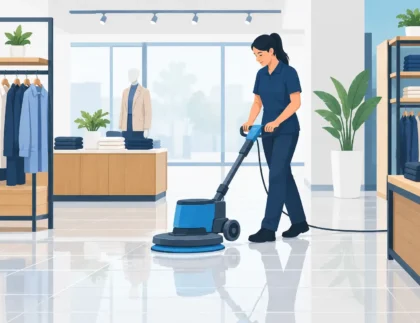
More intensive work is usually better before opening, after closing or during a planned quieter window. Machine floor cleaning, full carpet treatment, high-level dusting, deep washroom cleans and extensive window cleaning need more space and sometimes drying time. Trying to squeeze them into a packed Saturday afternoon is rarely worth the risk.
Separate daily presentation from deep cleaning
A reliable schedule normally has two layers. The first is routine cleaning that keeps essential areas under control each day or several times a week. The second is periodic deep cleaning that tackles build-up behind fixtures, in corners, on floors and in staff areas.
This split helps you budget accurately too. You do not need a full deep clean every evening, but you do need a standard that remains consistent between intensive visits. If there is a visible problem recurring in the same area, such as scuffed flooring near the entrance or grime around a self-service station, adjust the routine rather than waiting for the next major clean.
Choose the right time for each task
There is no single best cleaning slot for every shop. Your opening times are only one part of the decision. Footfall patterns, staff coverage, access arrangements and noise restrictions also matter.
Early-morning cleaning works well when you want a polished shop floor before the first customer arrives. It gives floors time to dry and lets cleaners work freely around displays. The trade-off is access: someone may need to open up, deactivate alarms or provide keys under a secure agreed process.
After-hours cleaning allows for heavier work and a more thorough reset. It can be ideal for shops in busy areas such as Soho, Canary Wharf or Westfield-adjacent locations, where daytime footfall stays high. However, late work may need to consider building rules, staff safety and the timing of rubbish collections.
Daytime cleaning is often the most practical choice for washroom checks, emergency spill response and presentation touch-ups. It works best when tasks are planned in short sections, with clear signage and cleaners who know how to work around the public. A wet floor sign is essential, but it is not a substitute for sensible timing and careful technique.
Keep staff and customers safe while cleaning
A clean shop should feel calm, not hazardous. Floors must be cleaned in manageable sections so customers can move safely around the premises. Cables, equipment and supplies should never be left where they block aisles, fire exits or access to stock.
Good communication matters just as much. Your shop manager should know when cleaners are expected, which areas are being covered and who to contact if an urgent issue arises. Cleaning teams should also be briefed on sensitive areas, such as stockrooms, cash offices, customer records or medical and beauty treatment rooms.
Eco-friendly products can be a sensible fit for occupied spaces, particularly where staff and customers are present throughout the day. They should still be selected for the surface and task at hand. A product that is gentle on the environment but ineffective on greasy flooring or heavily used washrooms will not deliver the result your business needs.
Do not forget the areas customers notice indirectly
Customers may not inspect your staff room, but the condition of back-of-house areas affects how smoothly the business runs. A neglected stockroom can create trip risks and make replenishment slower. Dirty staff facilities can lower morale. Poor waste management can lead to unpleasant odours reaching the sales floor.
Plan regular cleaning for break areas, stockrooms, delivery zones and staff washrooms alongside the public-facing space. For food, beauty, healthcare or hospitality-related retail, the standard may need to be more frequent and more specialised. Your cleaning provider should be able to tailor the work rather than applying the same checklist to every shop.
Prepare for busy periods and unexpected mess
Seasonal sales, product launches, weekend trading and poor weather can change a shop’s cleaning needs very quickly. More people through the door means more dirt, litter, fingerprints and pressure on washrooms. Rainy days can make entrance matting and hard floors a safety priority within minutes.
It pays to agree what happens outside the usual schedule. Can extra visits be arranged? Who reports a spill? Is there a clear procedure for urgent cleaning before an inspection, event or important client visit? A flexible cleaning plan is not about paying for services you never use. It is about having dependable support when normal routines are not enough.
What to ask when arranging shop cleaning
Before committing to a service, be clear about the results you expect during trading hours and the jobs that must happen out of hours. Ask how cleaners will gain access, whether they can work around customers, what equipment they bring and how they manage safety signage and waste.
It is also worth discussing consistency. The lowest quote is not always the best value if cleaners rush through key areas or the schedule changes every week. A dependable team that understands your premises can spot problems early, protect your finishes and help your staff focus on serving customers.
The Ultimate Cleaners can build commercial cleaning around your shop’s real operating pattern, from regular daytime maintenance to deeper after-hours work. Request a free estimate with your opening times, floor type, busiest periods and priority areas, and you can create a schedule that supports trading rather than getting in its way.
A well-kept shop does more than look good at opening time. It reassures every customer who walks through the door, right up to the last sale of the day.