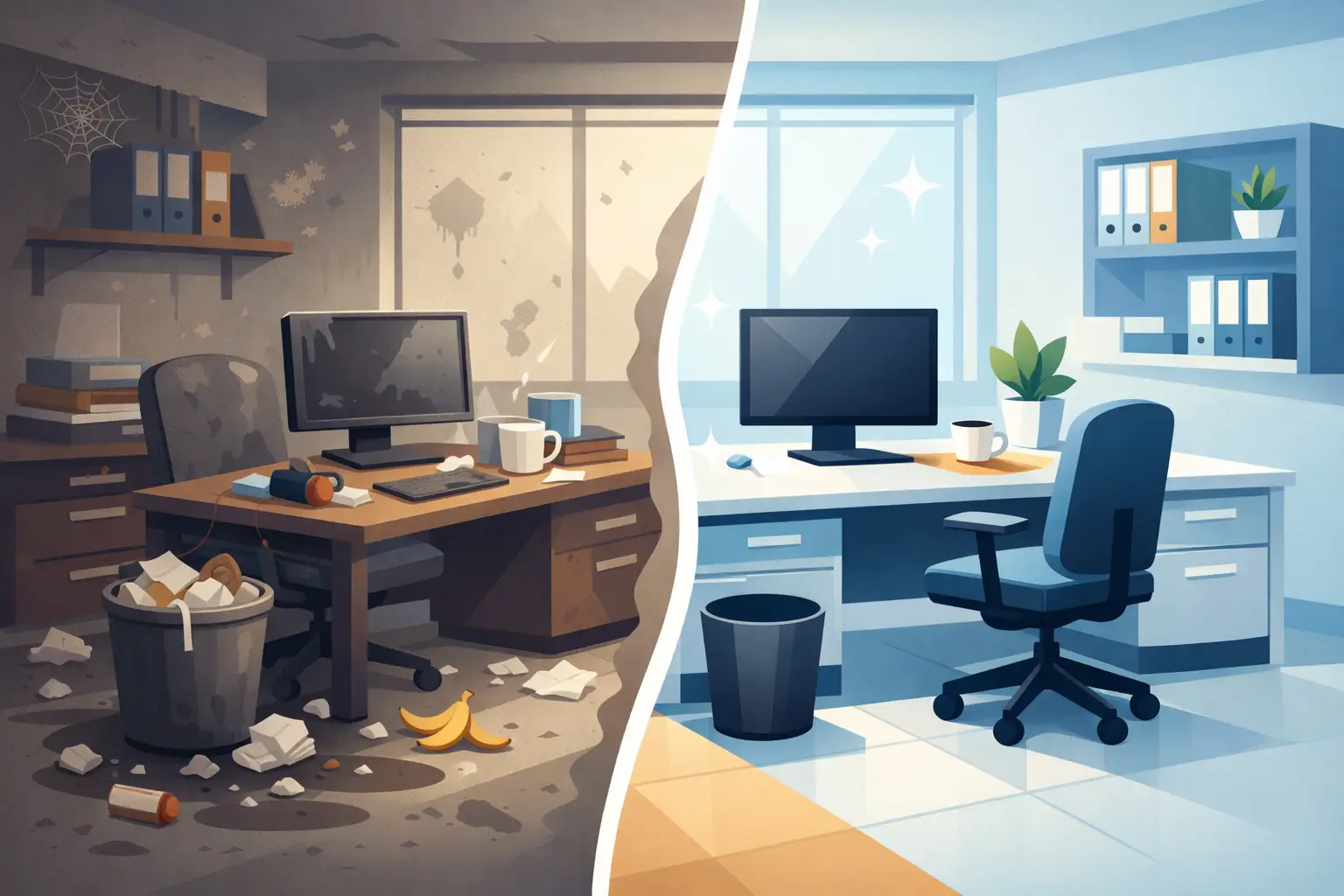
A proper office deep clean before and after is not about making a workspace look briefly presentable for visitors. It is the difference between cleaning around daily activity and removing the built-up dust, marks, crumbs and grime that ordinary routines tend to miss. For busy London offices, that difference is visible the moment staff walk in – and it is felt in the kitchen, washrooms, meeting rooms and every shared surface.
What changes after an office deep clean?
The obvious change is visual. Glass looks clearer, hard floors regain their finish, desks lose their dusty edges and kitchens stop looking like they have survived a hectic fortnight. But the real value goes further. A deep clean restores the areas people use repeatedly, making the workplace more comfortable for staff and more professional for clients, candidates and visitors.
Routine office cleaning keeps a site under control. It usually covers bins, vacuuming, washrooms, kitchen touchpoints and general surface cleaning. A deep clean gives the space the extra attention needed when standard cleaning is no longer enough. Think beneath desks, behind furniture, on skirting boards, inside appliances, around taps and door frames, and across the areas that collect fingerprints without anyone noticing until they are gone.
For an office manager, the before-and-after effect can also make facilities management easier. A cleaner baseline means recurring cleaners can maintain a better standard, rather than spending every visit trying to catch up with neglected areas.
Before the deep clean: signs your office needs more than a tidy
Most workplaces do not become dirty overnight. Small issues build gradually, especially in high-footfall offices, shared workspaces and sites with long operating hours. A kitchen may be wiped daily but still have grease around cupboard handles and splashbacks. Carpets may be vacuumed regularly while retaining tracked-in dirt at entrances and under chairs.
You may need an office deep clean if meeting-room tables feel sticky, the office has lingering food or washroom odours, windows and internal glass are marked, or dust returns quickly after a general clean. Other common warning signs include grimy light switches, stained upholstery, dull floors and washrooms that look tired even after being cleaned.
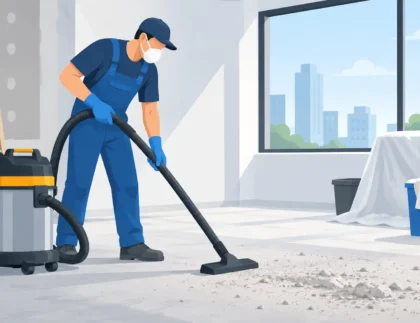
A move, refurbishment, seasonal reset or return-to-office programme is another sensible time to book. Deep cleaning before staff return after construction work, a long closure or a major office rearrangement helps the site start on the right footing. It can also be useful before an important client event, although booking early gives cleaners enough time to work thoroughly rather than rushing through the job.
Office deep clean before and after: the areas people notice
Desks, screens and shared touchpoints
Before a deep clean, desks often have dust around monitor stands, in cable areas and along the edges where a quick wipe does not reach. Shared equipment such as printers, telephones, keyboards, door handles and light switches can also look marked from constant use.
Afterwards, surfaces are cleaned with suitable products and close attention is paid to high-contact points. Care is needed around electronics, of course. Screens, keyboards and devices require appropriate methods rather than excess moisture or harsh chemicals. The goal is a visibly cleaner workstation without putting equipment at risk.
Kitchens and break areas
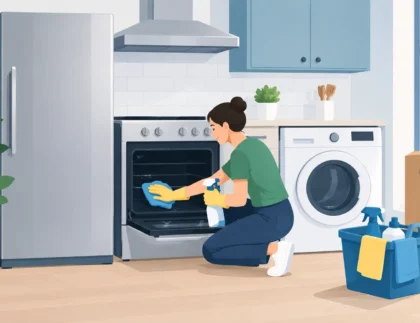
The office kitchen is usually where the strongest before-and-after results appear. Microwaves, fridge handles, cupboard fronts, sinks, taps, splashbacks and worktops all take daily punishment. Tea and coffee spills, food debris and fingerprints can make an otherwise smart office feel poorly managed.
A deep clean deals with the detail: cleaning around fixtures, removing built-up residue and refreshing the surfaces people touch all day. Depending on the agreed scope, appliances and internal cupboards may need extra attention too. This is worth discussing at the estimate stage, as an empty fridge is far quicker and more practical to clean than one full of staff lunches.
Washrooms
Washrooms shape people’s view of the whole business. Even a well-designed office can leave the wrong impression when taps are dull, tiles are marked or sanitary areas look neglected. A deep clean targets the edges and hidden build-up that a quick daily service may not fully address.
After cleaning, fittings look brighter, floors and tiles feel fresher, and difficult areas around toilet bases, dispensers and door hardware receive the attention they need. Regular cleaning still matters afterwards, particularly in busy offices, but a deep clean gives washrooms a much-needed reset.
Floors, carpets and entrances
Entrance flooring works hard. Rain, pavement dirt and debris are carried straight into reception, corridors and communal areas. Carpeted offices can then hold dust and grime around desk clusters, under seating and along skirting boards, while hard floors can develop a dull appearance from repeated foot traffic.
The right result depends on the material. Carpet cleaning, intensive vacuuming, spot treatment or a hard-floor clean may be appropriate, but not every floor should be treated in the same way. A professional cleaner should assess the surface and use methods suited to it. The aim is to improve appearance and hygiene while protecting the finish and avoiding unnecessary wear.
Meeting rooms, reception and internal glass
These are the spaces where first impressions happen. Before the clean, reception desks can show hand marks, chairs can collect dust in seams, and internal glass can make the whole workplace appear less cared for than it is. Meeting rooms often reveal the evidence of back-to-back calls: rings on tables, crumbs near chairs and marks around door handles.
After a detailed clean, these spaces feel ready for business. Clearer glass lets in more light, clean tables look more inviting and a fresh reception area gives visitors confidence from the first minute.
What a professional deep-clean visit should involve
A good office deep clean begins with a clear scope, not a vague promise to “clean everything”. The size of the office, number of washrooms, floor types, kitchen condition, occupancy and access hours all affect the work required. A small office with a neglected kitchenette may need more time than a larger, well-maintained workspace.
The cleaning team should work methodically, usually from high areas to low areas and from cleaner spaces towards heavier-use zones. Dusting high surfaces before vacuuming and floor cleaning prevents work being undone. Detail cleaning then focuses on edges, fittings, furniture, touchpoints and the places routine cleaning cannot always reach.
For offices in areas such as Islington, Canary Wharf or Camden, out-of-hours scheduling can be particularly useful. Cleaning when the office is quieter allows the team to work efficiently and helps avoid disruption to staff, meetings and visitors. It depends on building access, security arrangements and whether desks need to be cleared beforehand.
Eco-friendly products can be part of the plan, particularly where teams want to reduce strong chemical smells in enclosed workspaces. They still need to be matched to the task. Grease in a kitchen, scale in a washroom and marks on a specialist floor may require different products and techniques.
A deep clean is not a substitute for ongoing cleaning
One intensive visit can make a dramatic improvement, but it will not keep an active office spotless forever. Once staff are making drinks, taking calls, hosting meetings and coming in from the street each day, dust and mess return. That is normal.
The practical approach is to use a deep clean as a reset, then follow it with a routine office cleaning schedule that matches how the site is used. A compact office with a small team may only need regular weekly support, while a busy shared office, clinic or customer-facing workplace may need more frequent attention. Kitchens and washrooms usually set the pace because they show wear first.
Get the best result from your office clean
A little preparation helps the cleaning team focus on cleaning rather than moving paperwork and chasing access. Ask staff to clear desks of confidential documents, remove food from fridges if internal cleaning is included, and identify any fragile or restricted areas. If there are stains, maintenance issues or surfaces needing special care, mention them before the visit.
The Ultimate Cleaners can provide a tailored office cleaning estimate based on your workspace, priorities and preferred schedule. A clear brief means no guesswork and a result that suits the way your office actually operates.
When an office starts to look worn rather than simply busy, do not wait for an inspection or a visitor to point it out. A well-timed deep clean gives staff a fresher place to work and gives everyone who walks through the door a better reason to take your business seriously.